Abstract:
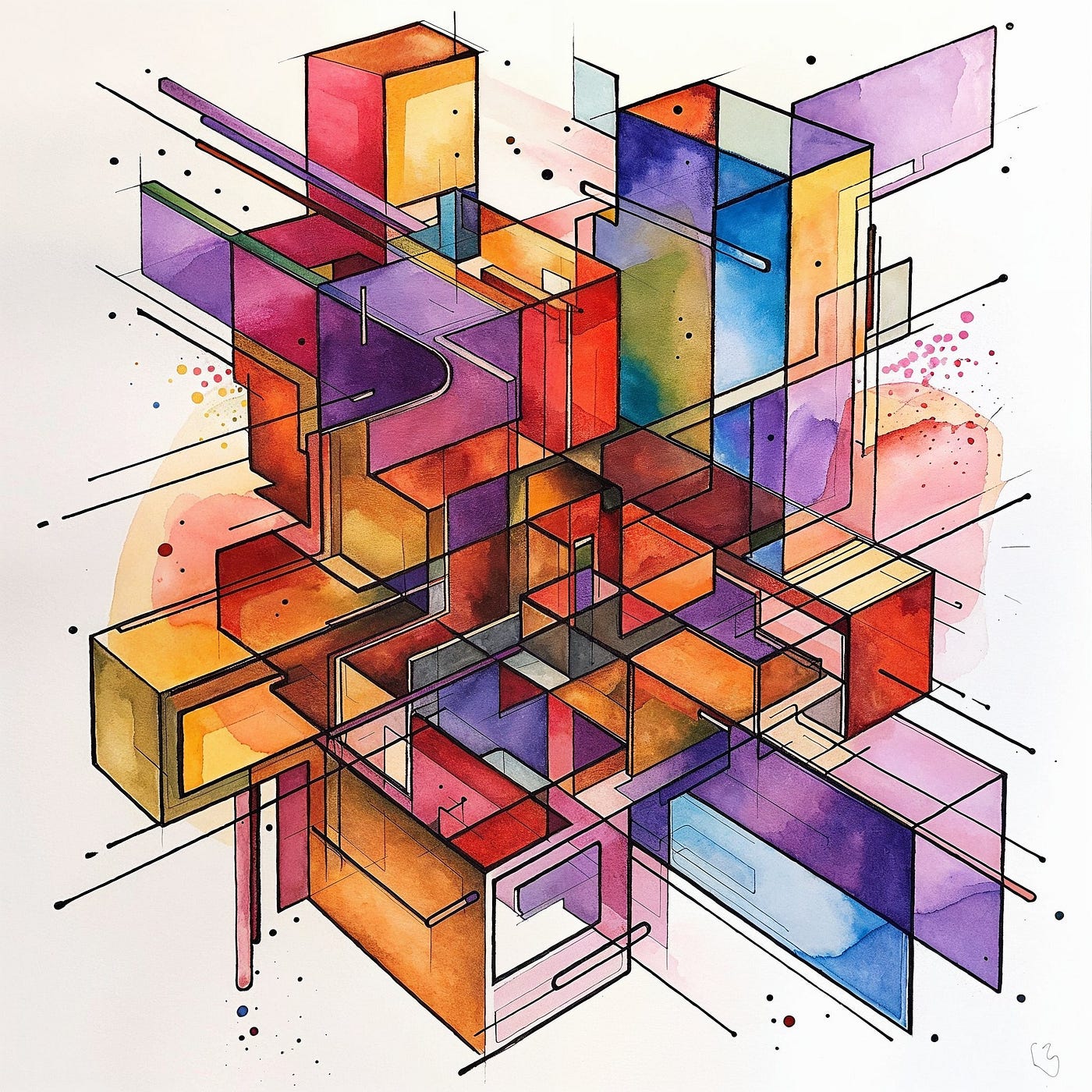
This paper presents a novel framework for understanding the complex dynamics of cultural evolution and transmission, synthesizing insights from memetics, embodied cognition, complex systems theory, and the free energy principle. We propose the concept of “memetic space” as a high-dimensional, neural-symbolic landscape in which memes emerge, interact, and evolve. By grounding memes in the embodied, enactive processes of the brain and mind, and situating them within the framework of Markov blankets and the free energy principle, we move beyond the limitations of traditional memetics and provide a more integrated and empirically tractable account of cultural dynamics. We explore how the formation of densely interconnected “memetic molecules” and isolated “memetic bubbles” can be understood as Markov-blanketed subsystems within the larger memetic ecosystem, each with its own selective pressures and local dynamics. The self-organizing, multi-scale dynamics of these memetic structures can lead to both the stabilization of cultural niches and the rapid reorganization of the cultural landscape through phase transitions and “bubble collapse”. The bursting of these bubbles, triggered by the accumulation of internal contradictions and external pressures, can lead to rapid phase transitions in the memetic landscape, as previously dominant modes of thought collapse and new attractors emerge. By bringing together insights from across the cognitive and social sciences within the integrative framework of the free energy principle, this paper aims to shed new light on the complex interplay of factors that shape the ever-evolving landscape of human thought and culture.
Introduction:
The concept of memes, first introduced by Richard Dawkins (1976), has provided a powerful framework for understanding cultural evolution and transmission. Analogous to genes in biological evolution, memes are units of cultural information that replicate, mutate, and compete for survival in the social ecosystem. However, despite the popularity of the memetic framework, there remains a lack of clarity and consensus around the ontological status of memes and the mechanisms of their transmission.
In this paper, we propose a novel approach to memetics that grounds the concept of memes in the embodied and enactive processes of the human mind. Drawing on recent advances in cognitive science, neuroscience, and complex systems theory, we argue that memes are not disembodied, abstract entities, but rather emergent patterns of neural activation that are shaped by the brain’s associative learning mechanisms and structural connectivity.
We introduce the concept of “memetic space”, a high-dimensional, neural-symbolic landscape in which memes emerge, interact, and evolve. This space is conceptualized as a dynamic, self-organizing system, characterized by the formation of densely interconnected clusters of mutually reinforcing memes, which we term “memetic molecules”. These molecules can give rise to stable and cohesive cultural formations, but can also lead to isolated “memetic bubbles” that are increasingly detached from the broader cultural landscape.
Crucially, we situate these memetic structures within the framework of Markov blankets and the free energy principle. We propose that memetic bubbles and molecules can be understood as Markov-blanketed subsystems within the larger memetic ecosystem, selectively filtering and integrating information in order to maintain their internal integrity and congruence. This leads to the formation of distinct “cultural niches” with their own local dynamics and selection pressures, nested within the broader evolutionary landscape of culture.
By bringing together insights from across the cognitive and social sciences and situating them within the integrative framework of the free energy principle, we aim to provide a more comprehensive and empirically grounded account of the complex, multi-scale dynamics of cultural evolution and transmission.
Memetic Space and the Embodied Mind
We propose that memetic space is a relational space of potentiality and uncertainty from which memes emerge and evolve. In the context of cognition, this space corresponds to the high-dimensional state space of neural activity, where each point represents a possible pattern of activation across a network of neurons (Churchland, 1986; Haken, 1996).
From this perspective, the brain does not passively mirror the external world, but actively constructs an internal model or “cognitive map” based on its goals, expectations, and prior experience (Craik, 1943; Johnson-Laird, 1983). This model is not a static representation, but a dynamical system that constantly evolves and reconfigures itself in response to new inputs and perturbations.
Crucially, the geometry and topology of this neural state space is shaped by the structure of the brain’s connectivity, the synaptic weights and architectural constraints that determine which patterns of activity are possible and probable (Amari, 1977; Gu et al., 2018). These constraints embody the prior knowledge and adaptive biases of the organism, sculpted by evolutionary, developmental, and learning processes.
Minds as Latent Spaces: The Lower-Dimensional Representation of Reality
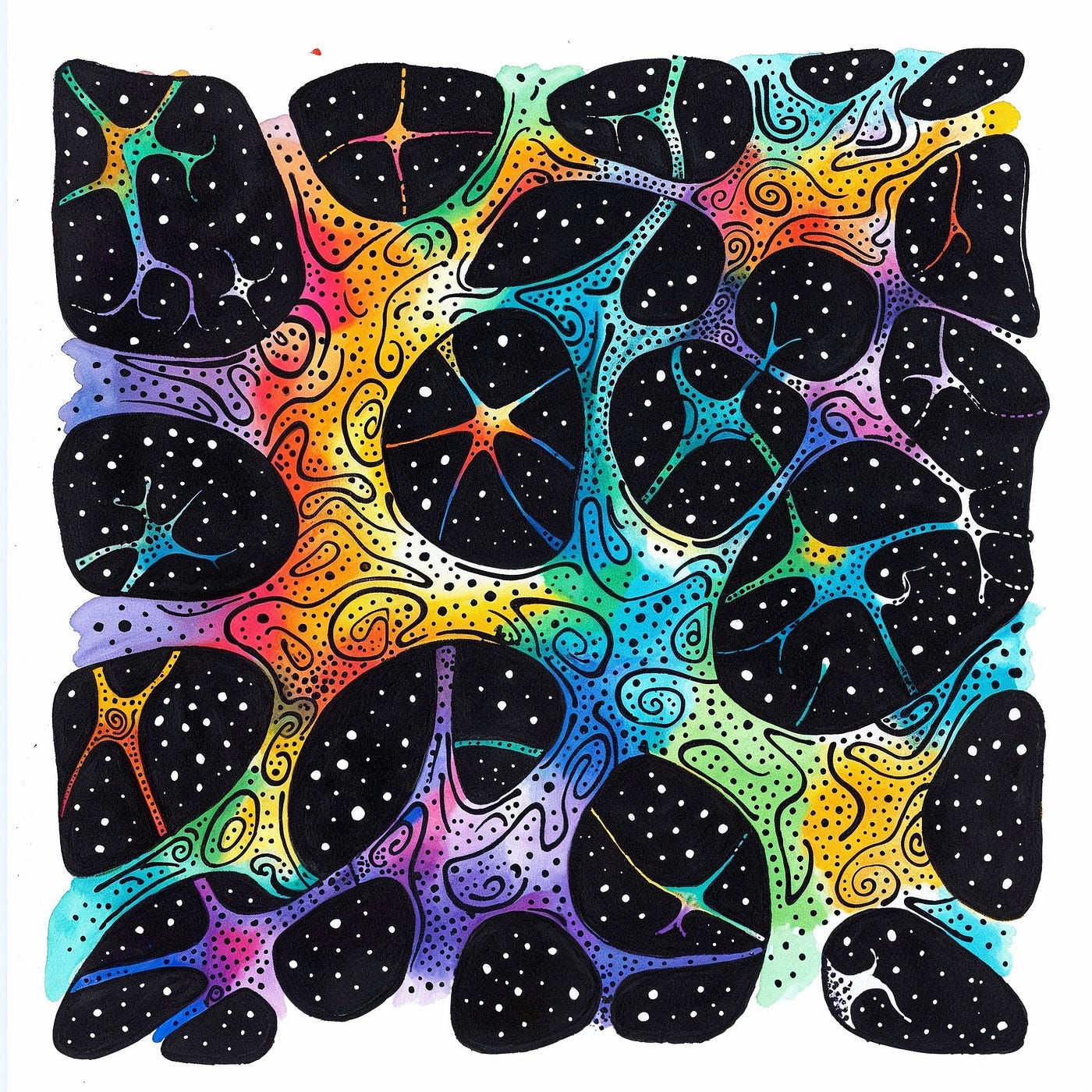
Individual minds can be understood as lower-dimensional “latent spaces” that encode and compress the high-dimensional complexity of the external world. Just as machine learning algorithms can learn to represent complex datasets in terms of a smaller number of underlying factors or dimensions (Hinton & Salakhutdinov, 2006; Bengio et al., 2013), the brain’s learning mechanisms can be seen as a form of dimensionality reduction, mapping the vast array of sensory inputs and social interactions onto a more manageable set of cognitive categories and behavioral strategies.
This process of dimensionality reduction is shaped by the brain’s innate architecture and learning biases, as well as by the specific experiences and environmental conditions to which it is exposed. Different minds will develop different latent representations of the world, based on their unique histories and perspectives. These representations will be partial, biased, and context-dependent, reflecting the limited and situated nature of individual cognition.

At the same time, these individual latent spaces are not entirely idiosyncratic or disconnected from each other. To the extent that different minds are exposed to similar environments and participate in shared cultural practices, they will tend to converge on similar ways of carving up the world and representing its structure. This convergence can be understood in terms of the formation of “collective cognitive maps” (Hutchins, 1995) or “cultural attractors” (Sperber, 1996), widely shared patterns of meaning and behavior that emerge from the interactions and feedback loops between multiple minds and their material and social environments.
Recent work in neuroscience has begun to map the structure of these neural state spaces, revealing that they often exhibit striking geometric and topological properties. For example, research on hippocampal place cells and entorhinal grid cells has shown how these neurons encode the geometry of physical space, with their collective activity tracing out low-dimensional manifolds that capture the topological structure of the environment (Moser et al., 2015; Bellmund et al., 2018). Similar principles may apply to the encoding of more abstract “spaces” of conceptual and social relations (Constantinescu et al., 2016; Garvert et al., 2017).
Drawing on these findings, we propose that memetic space exhibits similar geometric and topological properties, with memes occupying positions in a high-dimensional space based on their semantic and functional relationships to other memes. The proximity of memes in this space reflects their associative linkages, priming effects, and mutual relevance, as shaped by the brain’s synaptic connectivity and learning mechanisms.
Memes as Triadic Mappings
To better understand the nature of memes within this framework, we propose conceptualizing them as triadic mappings between external referents, symbolic representations, and distributed connectome-level neural patterns of activity. In other words, a meme is not a static, indivisible unit, but a dynamic coupling between:
(1) Some aspect of the world (an object, event, or state of affairs),
(2) A symbolic or sensory representation of that aspect (a word, image, gesture, etc.), and
(3) A connectomic pattern of neural activity that encodes the representation and guides behavior.
This triadic structure highlights how memes are fundamentally grounded in the embodied, enactive processes of engaging with the world and navigating the social and cultural environment. It aligns with semiotic theories that view meaning as emerging from the dynamic interplay of signs, referents, and interpretants (Peirce, 1931–58), while emphasizing the neural underpinnings of these semiotic processes.
Crucially, the specific meaning and affective charge of a meme can vary significantly between individuals and contexts. The mental representation associated with a given symbol (such as “◯” or “apple”) is not identical across minds, but rather reflects the unique learning history and situated perspective of each cognitive agent. In this sense, the structure of memetic space is not universal or objective, but is always relative to the embodied, enactive process of meaning-making that unfolds within a particular mind and environment.
Some memes, such as Lacanian “master signifiers” (Lacan, 1966), play a central role in organizing the symbolic order of a culture or individual psyche. These master signifiers (e.g., “God,” “freedom,” “democracy”) function as privileged nodes in the memetic network, with a high degree of binding potential and a disproportionate influence on the flow of associative activation. Their stickiness can be attributed to their resonance with deep-seated cognitive biases, emotional investments, and cultural narratives.
Memetic Molecules, Bonds, and Basins
Memes do not exist in isolation, but are deeply interconnected with other memes in the memetic space. As Hebb (1949) famously proposed, neurons that fire together wire together, that is, synaptic connections between co-activated neurons are strengthened over time. This means that memes that are frequently co-activated, whether due to their semantic relatedness, temporal contiguity, or pragmatic relevance, will tend to form densely interconnected clusters and networks.
We propose that these clusters can be understood as “memetic molecules”, higher-order structures composed of multiple interconnected memes. These molecules are not merely metaphorical, but correspond to actual neural clusters and connectomic structures in the brain. Just as atoms combine to form molecules through chemical bonds, memes are bound together by strong synaptic connections, forming stable, cohesive units of cultural transmission.
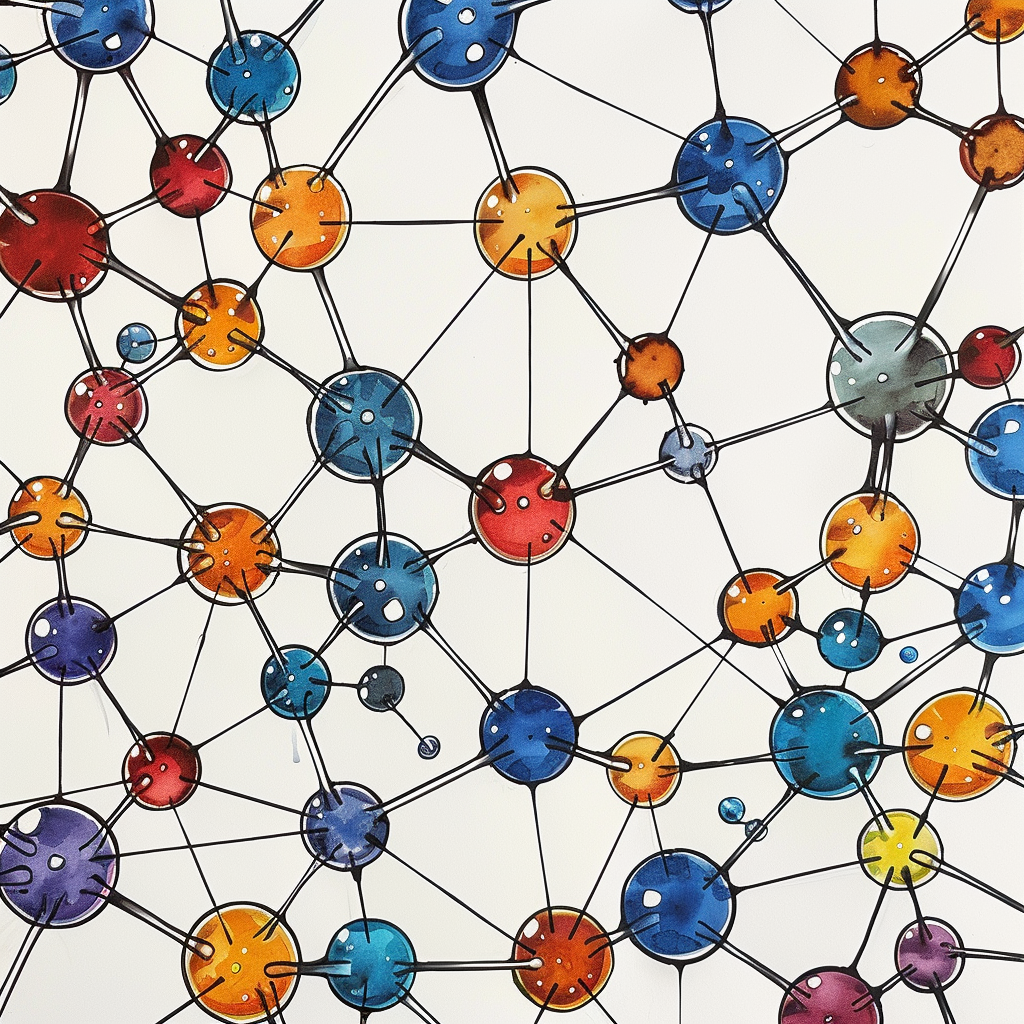
The notion of “memetic bonds” can be understood as the forces that bind memes together in this associative landscape. These bonds reflect the strength and stability of the synaptic connections between memes, as shaped by their co-occurrence, mutual reinforcement, and functional complementarity. Stronger memetic bonds create more tightly coupled memetic molecules and more robust cultural formations.
The varying “weight” or “stickiness” of different memes can be understood in terms of their binding potential, their ability to form strong, stable synaptic connections with other memes. This binding potential is a function of multiple factors, including the meme’s resonance with innate cognitive biases, its emotional salience, its cultural relevance, and its frequency of activation. Memes with a high binding potential serve as powerful attractors in the memetic landscape, shaping the contours of thought and guiding the flow of cultural transmission. They form the nuclei around which memetic molecules coalesce, and play a key role in the self-organization and evolution of cultural systems.
The growth and consolidation of these memetic molecules can be understood in terms of the formation of “attractor basins” in the state space of neural activity (Amit, 1992; Freeman, 2000). As certain patterns are repeatedly activated, they carve out deep, steep-sided basins in the energy landscape of the system, making it more likely that the system will fall into these states in the future. These attractor basins can be thought of as the “alluvial soils” of the mind, rich, fertile regions that have been shaped by the erosive forces of experience and learning. Just as rivers deposit sediment in their floodplains, creating nutrient-rich soils that support diverse ecosystems, the flow of mental activity leaves behind stable, well-connected neural structures that support the growth and propagation of memes.

The Power of Connectivity: Neural Dams and Activation Cascades
The associative structure of memetic space has important implications for the dynamics of meme transmission and evolution. One key principle is that memes that are densely interconnected will tend to activate each other in a cooperative, self-reinforcing way, as the activation of one meme spreads to its neighbors in the network. This process of “spreading activation” (Collins & Loftus, 1975) can lead to powerful “activation cascades”, where the triggering of a single meme can rapidly ignite an entire cluster or sub-network of related memes.
We can think of this process as analogous to the bursting of a “neural dam”. Just as a dam holds back the flow of water until a critical pressure is reached, the activation thresholds of individual memes act as barriers to their expression and transmission. But once a meme is activated beyond its threshold, it can unleash a flood of associative activity, rapidly spreading to other memes in its vicinity. The resulting surge of activation can temporarily overwhelm the inhibitory mechanisms that normally keep memetic dynamics in check, leading to a kind of “chain reaction” of mutually triggering memes.
The connectivity structure of memetic space, shaped by Hebbian learning and other associative mechanisms, forms a network of “channels” and “basins” that guide the flow of this activation. As Deacon (2012) describes in his discussion of neurodynamics and teleodynamics, the spreading of activation is not random or isotropic, but follows the “paths of least resistance” carved out by the brain’s learning history and cognitive biases. This “channeling” of activation can lead to the emergence of stable attractors and resonant modes in the dynamics of memetic transmission, as certain patterns of memes become self-reinforcing and self-stabilizing.
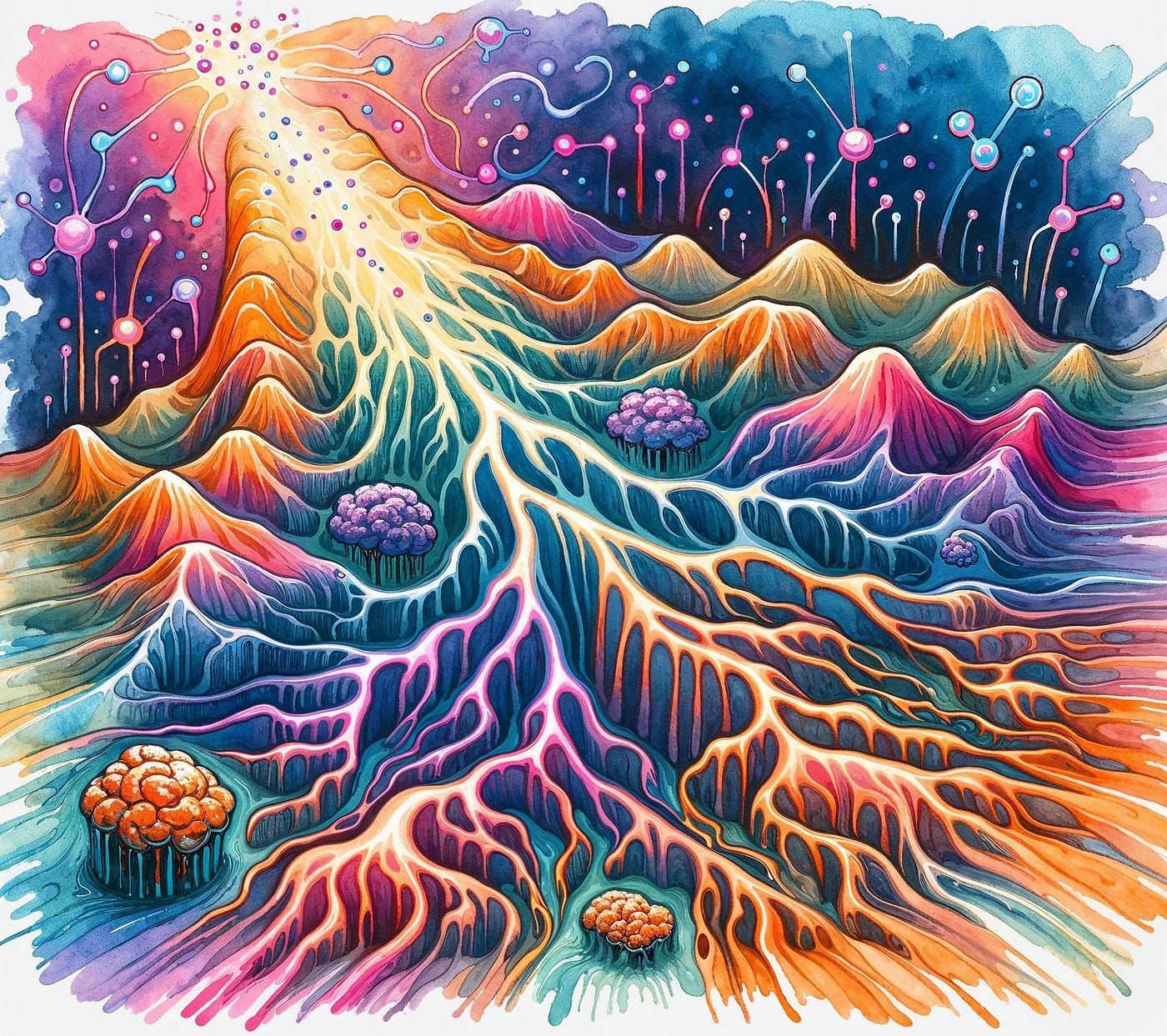
At the same time, the nonlinear, feedback-driven nature of these dynamics means that even small perturbations can sometimes trigger large-scale cascades and phase transitions in the memetic landscape. This is especially likely when the connectivity of the network is “critically poised” between order and chaos, with a balance of excitatory and inhibitory links that allows for the amplification of local fluctuations (Beggs, 2008; Hesse & Gross, 2014). In such a state, the activation of a single “keystone” meme can be enough to tip the entire network into a new basin of attraction, leading to the rapid consolidation of a new memetic regime.
Memetic Bubbles
One manifestation of these nonlinear dynamics is the formation of “memetic bubbles”, isolated clusters of mutually reinforcing memes that become increasingly detached from the broader memetic landscape. Within these bubbles, the dense connectivity and positive feedback loops among memes can lead to a runaway process of self-amplification, where the activation of one meme quickly spreads to others in the cluster, creating an echo chamber of mutual affirmation.
The key factor in the formation of memetic bubbles is the relative isolation of the meme cluster from external influences and corrective feedback. When the density of internal connections within the cluster far exceeds the density of external connections to the rest of the memetic network, the cluster becomes increasingly self-referential and resistant to change. Any incoming information or novel memes that are inconsistent with the dominant worldview of the bubble are likely to be filtered out, while those that are compatible with it are selectively amplified.
Over time, this process of isolation and self-amplification can lead to a progressive divergence between the internal reality of the bubble and the external reality of the wider world. As the memetic landscape outside the bubble continues to evolve and reconfigure itself, the bubble becomes increasingly maladapted and unstable. Like a dam holding back a rising flood, the bubble is placed under growing stress, as the pressure of accumulated inconsistencies and contradictions builds up.
Eventually, if the external stresses become too great to bear, the bubble may burst, leading to a rapid collapse of the previously stable memetic structure. This bursting of the “neural dam” can be triggered by a variety of factors, such as a sudden influx of disconfirming evidence, a shift in social norms or incentives, or the defection of key members of the bubble community. The resulting flood of activation can lead to a chaotic and turbulent reorganization of the memetic landscape, as previously suppressed or marginalized memes rush in to fill the void left by the collapse of the dominant worldview.
Types of Memetic Bubbles: Neural Loops and Ideological Silos
Memetic bubbles can take many forms, from the personal echo chambers of confirmation bias to the collective reality distortion fields of political and religious ideologies. What these various bubbles have in common is a self-reinforcing pattern of neural activation, in which a core set of memes (beliefs, values, narratives) becomes densely interconnected and mutually supporting, forming a stable attractor state in the brain’s neural networks.
Examples of such bubbles might include:
- The “true believer” bubble: where one’s commitment to a particular ideology or belief system becomes so strong and self-justifying that it resists any counter-evidence or alternative perspectives.
- The “in-group” bubble: where one’s sense of identity and belonging becomes tightly bound up with membership in a particular social group, leading to the denigration of out-groups and the filtering of information to maintain group coherence.
- The “personal narrative” bubble: where one’s understanding of oneself and one’s life story becomes rigidly fixed and self-perpetuating, making it difficult to integrate new experiences or insights that don’t fit the established pattern.
In each case, the memetic bubble functions as a kind of closed loop or echo chamber, in which the activation of one meme quickly spreads to associated memes in the network, reinforcing the overall pattern of thought and belief. Over time, as this pattern is repeatedly activated, it becomes literally entrenched in the brain’s synaptic connections, carving out deep grooves of mental habit that can be difficult to escape.
Interestingly, the same basic mechanisms that underlie personal memetic bubbles, such as the idealization of an uninterested romantic partner, can also give rise to large-scale collective bubbles, such as market manias and crashes, which are often literally referred to as “bubbles”. In these cases, the collective excitement and enthusiasm of investors creates a self-fulfilling prophecy of ever-increasing asset prices, leading to a temporary disconnect between market valuations and economic fundamentals. Just as in personal bubbles, the self-reinforcing dynamics of neural activation lead to a temporary divergence between subjective perceptions and objective realities. The main difference lies in the scale and scope of these events: while personal bubbles involve the neural dynamics of a single individual, market bubbles emerge from the synchronized and mutually reinforcing neural dynamics of many interacting agents. Yet, at their core, both phenomena can be understood as energetic events in the brain, driven by the amplification of certain patterns of neural activation through positive feedback loops.
The Energetic Constraints of Belief Revision: Overcoming the Metabolic Barriers to Change
The resistance of memetic bubbles to change and updating can be understood in terms of the energetic and metabolic constraints of neural rewiring. At a physical level, beliefs and perceptions are encoded in the brain as patterns of synaptic connections between neurons. When a particular pattern is repeatedly activated, the synapses involved are strengthened through a process called long-term potentiation (LTP), making it easier for that pattern to be activated again in the future (Bliss & Collingridge, 1993).
Over time, as a memetic bubble becomes more and more entrenched, the neural networks that support it become physically instantiated in the brain’s structure, with dense webs of strong synaptic connections reflecting the grooves of mental habit. Rewiring these networks to accommodate new information or experiences requires a significant investment of metabolic resources, as the brain must physically break down existing connections (via a process called long-term depression, or LTD) and establish new ones.
This metabolic cost of belief revision helps to explain why we can be so resistant to changing our minds, even in the face of compelling counter-evidence. Once a particular worldview or ideology has become deeply entrenched, the energetic barriers to updating it can be substantial, leading to a kind of cognitive conservatism that favors the maintenance of established patterns over the exploration of new possibilities.
Crucially, the stability of memetic bubbles is not absolute, and can be disrupted by the accumulation of prediction errors over time. When the bubble’s internal model of the world is challenged by unexpected or contradictory data, the brain experiences a prediction error, a spike in neural activity that signals the need to update its model. As prediction errors accumulate, they create a kind of tension or cognitive dissonance that puts pressure on the memetic bubble, forcing the brain to expend more and more energy trying to explain away the contradictions and maintain coherence.
At some point, the metabolic cost of this rationalization may begin to outweigh the cost of updating the model itself, leading to a tipping point where the bubble becomes unstable and prone to collapse. This collapse can be sudden and dramatic, as the dense web of neural connections that supported the bubble unravels, and the brain is forced to rapidly rewire itself to accommodate a new understanding.
The Persistence of Memetic Bubbles in the Digital Age: Outsourcing Cognitive Labor
In the past, without the constant connectivity and information overload of the internet, individuals were more frequently forced to confront and reconcile prediction errors that challenged their existing belief structures. When faced with contradictory evidence or experiences that didn’t fit their established models of the world, people had to do the hard cognitive work of updating their beliefs, rewiring their neural networks to accommodate new understandings.
However, in the modern digital landscape, it’s become increasingly easy to outsource this cognitive labor to others, and to find ready-made explanations that allow us to maintain our memetic bubbles in the face of contradictory data. Online communities and echo chambers, such as those surrounding conspiracy theories like QAnon, provide a constant stream of rationalizations and counter-narratives that can help to explain away prediction errors and preserve the coherence of the bubble.
In these online spaces, when an individual encounters information that challenges their beliefs, they don’t have to do the metabolically costly work of revising their own neural networks. Instead, they can turn to the collective cognition of the group, which quickly provides alternative explanations and interpretations that minimize cognitive dissonance and reinforce the bubble’s underlying assumptions.
This outsourcing of cognitive labor has made memetic bubbles more resilient and persistent than ever before. By offloading the work of belief maintenance and revision to the distributed intelligence of online communities, individuals can maintain their cognitively cocooned worldviews with minimal effort, even in the face of mounting contradictory evidence. The result is a kind of collective cognitive inertia, where entire groups can become locked into self-perpetuating patterns of belief and perception, increasingly disconnected from the broader reality beyond the bubble’s boundaries.
Memetic Bubbles as Markov Blankets
The concept of memetic bubbles, as developed in the previous sections, can be further elucidated by situating it within the framework of Markov blankets. Recent work has shown that we can interpret the structure of the brain in terms of nested Markov blankets, and hence compartmentalization, at several scales: starting from the scale of individual neurons, we ascend to cortical microcircuits, cortical layers, brain regions, and whole-brain networks, each with their own Markov blanket (as reviewed in Hipólito et al., 2021); or we descend towards dendrites, synapses, and cytoskeletal surfaces, each construed in turn as Markov blanketed structures that assemble into Markov blanketed structures at the scale above, as discussed by Fields, Glazebrook, & Levin (2022).
In the context of memetic bubbles, Markov blankets can be understood as the boundaries that separate the internal memes of a bubble from the external memes of the broader memetic landscape. These boundaries are not fixed or impermeable, but rather are dynamically shaped by the brain’s ongoing processes of belief updating and active inference.
Crucially, the Markov blanket of a memetic bubble not only separates internal from external memes, but also plays a key role in mediating the interactions between them. The blanket can be thought of as a kind of semi-permeable membrane, selectively filtering incoming information based on its compatibility with the bubble’s internal structure.
Markov blankets are statistical boundaries: that is, they are composed of the degrees of freedom through which a system and its environment interact. Importantly, these degrees of freedom reflect the dynamics and ensuing conditional independencies of a particular system, and need not correspond to, or map one-to-one onto, the spatial boundaries of such systems. In other words, the Markov blanket does not cut internal states off from their embedding world, but instead constitutes the means by which the system is coupled to its world; hence the Markov blanket itself can be viewed as marking out which states are relevant to the self-organization of the system, statistically speaking.
In the case of memetic bubbles, this means that the Markov blanket is not a fixed or impermeable barrier, but rather a dynamic and context-dependent boundary that emerges from the ongoing interactions between the bubble and its environment. The specific memes, narratives, and information channels that make up the bubble’s Markov blanket will vary over time, as the bubble adapts to new challenges and incorporates new perspectives.
This selective filtering is shaped by the brain’s active inference dynamics, which seek to minimize variational free energy and maintain the stability of its internal models (Friston, 2010). Variational free energy can be understood as a measure of the divergence between the brain’s generative model and the actual sensory data it receives. By minimizing this divergence, the brain effectively updates its beliefs to better predict and explain its sensory experiences.
In the case of memetic bubbles, the brain’s generative model is shaped by the internal structure of the bubble itself, the dense web of mutually reinforcing beliefs, values, and assumptions that define the bubble’s worldview. This internal structure can be understood in terms of the concepts of memeplexes and memetic molecules, as discussed in previous sections.
Memeplexes are complex networks of mutually reinforcing memes that form coherent belief systems or worldviews. These memeplexes can be thought of as higher-order Markov blanketed structures, emerging from the interactions and dependencies among their constituent memes. Similarly, memetic molecules are tightly bound clusters of memes that act as functional units within the larger memetic ecosystem. These molecules can be understood as localized Markov blankets within the broader Markov blanket of the memeplex or memetic bubble.
The formation and stability of these memetic molecules and memeplexes is shaped by the brain’s belief updating processes, which assign different levels of confidence or “weight” to different memes based on their consistency with the brain’s generative model. Memes that fit well with the brain’s existing beliefs and expectations will tend to be more readily assimilated and propagated, while those that challenge or contradict the dominant worldview will tend to be filtered out or ignored.
As discussed earlier, the varying “stickiness” or “binding potential” of different memes can be understood in terms of their ability to form strong, stable connections with other memes within the brain’s associative networks. Memes with a high binding potential serve as powerful attractors in the memetic landscape, shaping the contours of thought and guiding the flow of cultural transmission. They form the nuclei around which memetic molecules coalesce, and play a key role in the self-organization and evolution of cultural systems.
In the context of active inference, this binding potential can be understood as a reflection of the meme’s “fit” or compatibility with the brain’s generative model. Memes that are consistent with the brain’s existing beliefs and expectations will tend to be more easily integrated into the model, and will thus have a stronger influence on subsequent belief updating and behavior. Conversely, memes that challenge or contradict the dominant worldview will tend to be assigned lower confidence or weight, and will thus have less impact on the brain’s internal dynamics.
Over time, this process of selective assimilation and filtering can lead to the formation of increasingly polarized and isolated memetic bubbles, each with its own distinct Markov blanket. Memes that are consistent with the bubble’s internal structure will be selectively amplified and reinforced, while those that challenge it will be filtered out or suppressed. The result is a kind of “echo chamber” effect, where the brain’s generative model becomes increasingly self-referential and resistant to change.
The hierarchical nesting of Markov blankets, from individual memes to memetic molecules to memeplexes to entire memetic bubbles, reflects the multi-scale organization of the brain’s generative model. Each level of the hierarchy represents a different scale of abstraction and complexity, with higher levels encoding more abstract and integrated representations of the world.
As Friston, Fagerholm, et al. (2021) and Ramstead et al. (2019) discuss, this hierarchical organization follows a self-similar, fractal-like pattern, with formally identical Markov blanket structures repeating across multiple levels of organization. This allows the brain to efficiently process and integrate information at multiple scales, while maintaining a degree of functional specialization and segregation between different regions and subsystems.
In the context of memetic bubbles, this suggests that the same basic dynamics of belief updating and active inference play out at multiple levels of the memetic hierarchy. Just as individual neurons selectively sample and respond to their local environment in order to minimize prediction errors, entire memeplexes and bubbles selectively sample and respond to the broader memetic landscape in order to maintain their internal coherence and stability.
Moreover, the sparse connectivity between different memetic bubbles allows for the emergence of distinct cultural “niches” or “micro-climates,” each with its own local dynamics and selection pressures. At the same time, the top-down influence of higher-level memeplexes and worldviews provides a kind of “framing” or “scaffolding” for lower-level memes and narratives, constraining their interpretation and guiding their evolution over time.
Conclusion
In this paper, we have proposed an integrated framework for understanding the dynamics of cultural evolution and transmission, grounded in the embodied and enactive processes of the human mind and situated within the broader context of complex adaptive systems and the free energy principle. Central to our account is the notion of “memetic space” as a high-dimensional manifold of neural activity patterns, shaped by the brain’s associative learning mechanisms and structural connectivity. We have argued that memes are not atomistic, disembodied entities, but rather emergent, relational networks of neural activation, anchored in the brain’s synaptic circuitry and semantic memory systems.
Drawing on research in cognitive neuroscience, linguistics, and complex systems theory, we have explored how the connectivity structure of memetic space enables the rapid, self-amplifying dynamics of memetic transmission and mutation. The proximity of memes in this space, reflecting their semantic and pragmatic relationships, constrains the flow of activation through neural networks, giving rise to “memetic neighborhoods” of densely interconnected, mutually activating ideas. The triggering of one meme can unleash a cascade of spreading activation through these neighborhoods, in a kind of “contagious” process of cognitive and cultural change.
At the same time, we have seen how the sparse connectivity between distant regions of memetic space allows for the maintenance of diversity and the coexistence of multiple competing worldviews. The formation of isolated “memetic bubbles”, coupled to feedback loops of social reinforcement and environmental filtering, can temporarily insulate clusters of memes from the broader currents of cultural evolution. But as internal contradictions accumulate and external pressures mount, these bubbles can suddenly burst, leading to rapid phase transitions in the memetic landscape as previously dominant modes of thought collapse and new attractors emerge.
We have further explored how these memetic structures can be understood as Markov-blanketed subsystems within the larger memetic ecosystem. These structures emerge through processes of self-organization and active inference, as the brain selectively filters and integrates information to minimize free energy and maintain its internal generative models. The selective pressures and feedback loops within these local memetic niches can lead to the stabilization of distinct cultural patterns, while also allowing for rapid phase transitions and “bubble collapse” as internal tensions and external perturbations accumulate.
By grounding this analysis in a shared understanding of the embodied mind and its role in shaping the multi-scale dynamics of cultural evolution, while leveraging the integrative framework of the free energy principle to bridge insights from diverse disciplines, we have aimed to lay the foundation for a more comprehensive and empirically tractable science of cultural change.
References:
Amari, S. I. (1977). Dynamics of pattern formation in lateral-inhibition type neural fields. Biological Cybernetics, 27(2), 77–87.
Amit, D. J. (1992). Modeling brain function: The world of attractor neural networks. Cambridge University Press.
Beggs, J. M. (2008). The criticality hypothesis: how local cortical networks might optimize information processing. Philosophical Transactions of the Royal Society A: Mathematical, Physical and Engineering Sciences, 366(1864), 329–343.
Bellmund, J. L., Gärdenfors, P., Moser, E. I., & Doeller, C. F. (2018). Navigating cognition: Spatial codes for human thinking. Science, 362(6415), eaat6766.
Bengio, Y., Courville, A., & Vincent, P. (2013). Representation learning: A review and new perspectives. IEEE Transactions on Pattern Analysis and Machine Intelligence, 35(8), 1798–1828.
Bliss, T. V., & Collingridge, G. L. (1993). A synaptic model of memory: Long-term potentiation in the hippocampus. Nature, 361(6407), 31–39.
Churchland, P. S. (1986). Neurophilosophy: Toward a unified science of the mind-brain. MIT Press.
Collins, A. M., & Loftus, E. F. (1975). A spreading-activation theory of semantic processing. Psychological Review, 82(6), 407–428.
Constantinescu, A. O., O’Reilly, J. X., & Behrens, T. E. (2016). Organizing conceptual knowledge in humans with a gridlike code. Science, 352(6292), 1464–1468.
Craik, K. J. W. (1943). The Nature of Explanation. Cambridge University Press.
Dawkins, R. (1976). The Selfish Gene. Oxford University Press.
Deacon, T. W. (2012). Incomplete Nature: How Mind Emerged from Matter. W.W. Norton & Company.
Fields, C., Glazebrook, J. F., & Levin, M. (2022). Minimal physicalism as a scale-free substrate for cognition and consciousness. Neuroscience of Consciousness, 2022(2), niac013.
Freeman, W. J. (2000). How brains make up their minds. Columbia University Press.
Friston, K. (2010). The free-energy principle: a unified brain theory? Nature Reviews Neuroscience, 11(2), 127–138.
Friston, K., Fagerholm, E. D., Zarghami, T. S., Parr, T., Hipólito, I., Magrou, L., & Razi, A. (2021). Parcels and particles: Markov blankets in the brain. Network Neuroscience, 5(1), 211–251.
Garvert, M. M., Dolan, R. J., & Behrens, T. E. (2017). A map of abstract relational knowledge in the human hippocampal–entorhinal cortex. eLife, 6, e17086.
Gu, S., Cieslak, M., Baird, B., Muldoon, S. F., Grafton, S. T., Pasqualetti, F., & Bassett, D. S. (2018). The energy landscape of neurophysiological activity implicit in brain network structure. Scientific Reports, 8(1), 1–15.
Haken, H. (1996). Principles of brain functioning: A synergetic approach to brain activity, behavior and cognition. Springer.
Hebb, D. O. (1949). The Organization of Behavior. Wiley.
Hesse, J., & Gross, T. (2014). Self-organized criticality as a fundamental property of neural systems. Frontiers in Systems Neuroscience, 8, 166.
Hipólito, I., Ramstead, M., Convertino, L., Bhat, A., Friston, K., & Parr, T. (2021). Markov blankets in the brain. Neuroscience & Biobehavioral Reviews, 125, 88–97.
Hinton, G. E., & Salakhutdinov, R. R. (2006). Reducing the dimensionality of data with neural networks. Science, 313(5786), 504–507.
Hutchins, E. (1995). Cognition in the Wild. MIT Press.
Johnson-Laird, P. N. (1983). Mental models: Towards a cognitive science of language, inference, and consciousness. Harvard University Press.
Lacan, J. (1966). Écrits. Le Seuil.
Moser, E. I., Roudi, Y., Witter, M. P., Kentros, C., Bonhoeffer, T., & Moser, M. B. (2014). Grid cells and cortical representation. Nature Reviews Neuroscience, 15(7), 466–481.
Peirce, C. S. (1931–58). Collected Papers of Charles Sanders Peirce. Harvard University Press.
Ramstead, M. J., Badcock, P. B., & Friston, K. J. (2019). Answering Schrödinger’s question: A free-energy formulation. Physics of Life Reviews, 24, 1–16.
Sperber, D. (1996). Explaining culture: A naturalistic approach. Blackwell.