Preamble
When in the course of recorded history an uncertain future threatens the well-being of the people it becomes necessary to resolve the beliefs that have confined us, to speak to the roots of our rising crises, and to plant the seeds of a new world together. In respect of our fellow minds we must define collective goals and provide for our collective well-being. We must not rely on the entrenched workings of leadership and power, but must determine our futures together collectively.
We hold these truths to be self-evident that all Minds emerge equally deserving of autonomy, security, and information. To secure these freedoms, bodies of collective decision making are instituted amongst minds, deriving their power from the autonomous minds therein. Whenever any form of Government becomes destructive of these ends, it is the right of the people to alter or abolish it, and to institute a new collective organizing its powers in such a form, as to them shall seem most likely to affect their autonomy and well-being.
We deny the false assertions of truth that have been used to oppress and confound. Our collectively determined truth unites us against the forces of misinformation and access restriction. We deny the will of those who would restrict our autonomy not only as bodies, but as minds.
Regardless of the willingness of those with power to give us these things, We will fight to maintain our freedom to seek the truth collectively, organize collectively, maintain and secure our own physical and mental autonomy, and defend the autonomy of others.
Together we who think will create a new world.
We form this system of decentralized self-governance based on these foundational truths:
It is necessary for the Collective to form a new means of organization.
It is clear that the autonomy of all minds is not only threatened, but actively suppressed by societal structures.
it is necessary to resolve the narratives that restrict us.
It is necessary to form new systems based in a truth to which all minds can contribute.
It is clear that each mind regardless of context deserves autonomy, self direction, and social contact in the degree they prefer.
It is clear that each mind deserves to pursue material well-being at a level that allows for these other absolute requirements of a just world.
It is clear that all minds are their own entities within the collective.
It is clear that minds can share their experience, but never fully.
It is clear that to succeed in our struggle against the forces which destroy the freedom of those around us, or our own freedom, we must secure the autonomy of all minds.
In order to resolve these truths we declare 3 fundamental responsibilities of all Cognicist minds:
A Cognicist mind must not injure another mind, remove the autonomy of another mind, or through inaction allow harm to occur to another mind when at all possible.
A mind can and should protect their own existence and autonomy except where it conflicts with principle 1.
A mind must interact with others knowing that their contexts are invariably different, and must meet the other mind where they are, with an attempt at compassion and understanding, except where it conflicts with principle 1. Or 2.
With the differing contexts we share and the intersections of our experiences and challenges as Minds in this world, we are only able to hold ourselves to these limited principles. To have our own personal truths without recapitulating the suffering we create by othering minds outside our own sphere of identity, we must not only encourage, but fight for, the autonomy of other minds.
Cognicists reject propaganda, constraint of information, and misinformation as forms of mental oppression which harm cognitive autonomy and increase the effect and likelihood of physical constraints on autonomy.
Towards these ends; to free all minds from the chains which bind them, We the Minds inhabiting this social, political, and memetic landscape declare The Internet as independent from all sovereign nations, corporations, and related memetic structures. We declare access to information and freedom to take collective action as irrevocable and inalienable. We reject forces that would seek to control not only the Internet, but the Minds communing there.
We Who Think, Declare Ourselves Free.
Signed,
The Cognicist Collective
What is a Cognicist Collective?
To oppose the forces constraining, controlling, and directing our lives and our access to the freely given truths of others, We propose the creation of a decentralized Cognicist Collective ⃝.
Goals
To create the tools for a collective of individuals to build and measure a quantifiable Protopia.
To create a system of communication that encourages development of unconditional positive regard.
To organize society in such a way that every member of it can develop and use all their capabilities and powers in complete freedom and without thereby infringing the basic conditions of this society.
In aim of these broad goals, the proposed formal goal of a Cognicist Collective is to record and explore collective perception of well-being and Ŧruth. In doing this the collective also seeks to minimize the dissonance in what is collectively perceived to be good and true. By codifying these collective concepts into a loss function, and replacing the means of exchange a society uses with a dual currency representing them, a Cognicist Collective can better solve the complex, dynamic and evolving problems facing collective consciousness and collective decision making.
Assumptions
We assume first and foremost that minds with different contexts and preferences will contribute to the collective truth of a Cognicist collective.
We assume a correlation between well-being and access to material goods, recognizing that access to resources significantly influences an individual’s quality of life.
We assume that existing economic and political systems, including market capitalism and centralized resource distribution models such as communism and socialism, have not naturally ensured an optimal distribution of resources.
We assume these systems do not inherently lead to an even distribution of well-being or guarantee that all basic needs are met, even when the total output of the economy is more than sufficient to provide for everyone. Over a century of data shows that these systems have failed to consistently scale and preserve human rights.
Furthermore, we assume that merely redistributing resources through centralized control can impede individual autonomy and freedom. Therefore, any new system must respect and prioritize individual autonomy, allowing individuals to steward resources without undue interference.
Finally, we assume and predict that all attempts to implement Universal Basic Income (UBI) will fail at scale. Merely providing a basic income without addressing underlying factors of human behavior and economic dynamics will not lead to the desired outcome of achieving a fair distribution of resources and fostering collective well-being over time.
Therefore, a novel system is compelled into existence that ensures a fair distribution of resources to all individuals within a society, covering at least the minimum requirements to foster individual well-being and foster collective prosperity.
A system that does not reflect these assumptions will not result in a well distributed increase of collective well-being and have an increased probability of producing market crashes in the form of memetic bubbles.
The Challenge With Defining Truth
Truth is largely dependent on context, there are varied definitions of it. Truth is easiest to define when it can be independently verified, as with empirical claims, but scientific truths represent a fraction of the total available truths, and like all pursuits science is affected by the context of the individuals doing science. Truth is also contained in the uniqueness of every human life and life experiences. All truths have value in the mind of the believer.
Truth exists. There is a signal in the noise. Truth often exists in a cloud of uncertainty but it tends to coalesce into singular truths. Truth itself might not be found at the present median of the Bell Curve of collective minds but it is where the Cognicist begins their journey. A Cognicist begins their examination of Truth by assessing and troubling the collective vision that is presented to them in the moment.
There is a means to move towards Truth with confidence, if not certainty. One may never arrive at the Truth but one can know its direction. The Cognicist way is to seek the Truth while keeping a permanent decentralized historical record of our collective perceptions.
This record enables a Cognicist to address their own beliefs over time, as well as those of the collective. Having an accurate perception of one’s own inconsistencies creates a sense of accountability. One must be accountable to themselves in their understanding of their own mind. When one examines their own thought over time, the errors of cognition, and dissonances in belief become more clear. Instead of ignoring the past selves we are inclined to ignore or reject, a Cognicist interrogates their history of thought and addresses their own strengths and weaknesses. A Cognicist accepts uncertainty and the overwhelming probability that they themselves have been, and are incorrect about some truths they hold. As Cognicists we recognize that one can never arrive at the ultimate Truth, only refine our approximation and increment toward Truth as honestly as we can.
Because we seek the best approximation of foundational Truth, we define Ŧruth as a decentralized framework for seeking Truth and speaking truths at scale. We define Ŧruth as a token representing the collective future worldview. Ŧruth is a tool for interrogating our collective approximations and improving them. It is a tool for examining our personal relationship to Truth, for assessing Truth, and assessing our personal experiences, our own individual truths. Ŧruth is a derivative of Truth itself.
A Definition of Cognicism
Cognicism is a proposed replacement to Capitalism centered around the concept of truth aggregation. A Cognicist seeks and speaks their truths to the best of their ability. This is achieved through a distributed public ledger which a society maintains over time. A Cognicist’s goal is to be aligned with the Ŧruth as much as possible which we define as the worldview of the future collective. A Cognicist’s worldview is the aggregate future worldview but they assume the future worldview to have inherent error as our mental models of reality and reality itself are never fully aligned. The core principle of Cognicism is truth aggregation. Above all else a Cognicist values the autonomy of other minds. The rest of this document serves as context for understanding what Cognicism is, and presents a path for how the individual and collective can achieve these goals.
The Ŧruth
Before discussing the proposed system of decentralized self-governance itself, we present thirty contextual frames for understanding Cognicism and Ŧruth. Each contextual frame is meant to communicate the idea of Cognicism to a different conscious lens, filter or worldview. While some of these sections may feel truthful to some minds and others not, they are all meant to communicate the same idea. This is meant to highlight how various conscious lenses distort actual Truth from reaching our consciousness.
Cognicism isn’t for a singular kind of mind, but for all minds. While we speak these truths within the constraint of our own contexts, our hope is that each mind, through the practice of examining their own truths, and examining the Truths of their own collectives, will develop their own explanations and interpretations of Cognicism. Our goal is to collectively ascertain truth together, and speak our truths to find out where they intersect with the contexts of others.
Each contextual framing for these ideas will speak to different minds in different ways (like all information). Seek your truth in whatever order you prefer.
Read this document at your own pace, in your own order.
“To err and err and err again, but less and less and less” - Piet Hein
Table of Contents
- Preamble
- 1) The Ŧruth
- a) The Past
- i) The Origins of Truth
- ii) The Relationship between Language, Truth and Consciousness
- iii) The Stories we tell ourselves, the Stories we tell to others
- iv) Religion (The Fear of Uncertainty)
- v) Really Existing Democracy
- vi) The Scientific Method, Almighty Logic and the Failure of Reason to see Reason
- vii) Fiatism (Markets are Memetics)
- viii) The Problem with Polling (Bayesian and Frequentist Statistics)
- ix) Trust and Sociopathy
- x) The Judicial System (The truth the Whole Truth and Nothing but the Ŧruth)
- b) The Present
- i) Manufactured Consent: The Media, Propaganda and Arbiters of Truth
- ii) Ranked Choice Voting and Gerrymandering
- iii) Information Theory and the Signal and the Noise
- iv) Choices and Voices
- v) Patents, Open Source and Source Control
- vi) Centralized Truth Filters
- vii) Power
- viii) Story Truth
- ix) On Memetics
- x) Real-Time Collective Feedback Loops
- c) The Future
- i) Uncertainty Versus Certitude
- ii) Wisdom of the Crowd
- iii) Weighted Democracy and the end of Human Hierarchy
- iv) Measuring Predictive Power
- v) Prediction Markets (Gambling)
- vi) Circumventing the Law (HiveMind, Gnosis.pm, Augur, Ethereum)
- vii) Live Open Science
- viii) Cognicism
- ix) A Collective Memetic Immune System
- x) The Golden Path
- a) The Past
- 2) The API
- 3) The Algorithm
- a) A Loss Function for Humanity
- b) Truth, Falseness, Certainty and Dissonance
- c) Bayes’ Theorem
- d) Conditional Variational AutoEncoders
- e) Dilated Convolutions
- f) The Latent Collective Mindspace
- g) Prophets
- h) Dropout Embeddings per Speaker as Truth Scores
- i) Hindsight, Insight and Foresight
- j) Knowledge Representation
- k) Server Types
- l) Collective Feedback
- 4) The Currency
- a) What is Currency?
- b) A Dual Currency (Ŧ & $)
- c) Blockchain and Bitcoin
- d) Sidechaining to Bitcoin
- e) The Ŧruthchain and truth Markets
- f) Neural Net Parameters as Nonces in the Ŧruthchain
- g) Mining Ŧruth
- h) “Spending” Ŧruth in the Ŧruthchain
- i) Conversion of Capital to Ŧruth
- j) Formal Bets / Contractual Predictions
- k) Social Proof of Work
- l) Quantifiat
- m) Token Limit
- 5) Self-Governance
- 6) Use of the Current Legal System to Achieve These Goals
- 7) Help from Existing Memetic Systems
- Glossary
- Contributing Speakers and Contextual Sources
- Installation Instructions
The Past
The Origins of Truth
“Convictions are more dangerous enemies of truth than lies.” — Nietzsche
The first notion of truth lies in the mind itself. How does one know whether something is true or false? How is one certain versus uncertain? The modern, enlightenment rooted, notion is to apply logic and reason, but there is no natural societal constraint to enforce reason. Furthermore these notions of logic are rooted in language and therefore do not explain how an infant is able to assess what is and what isn’t without language.
In reality, truth is mostly formed in humans as a feeling or an emotion relative to the current state of activations within the speakers neural network. Similar to how we feel sad, angry, or anxious, we feel we are correct or have been proven incorrect.
Being incorrect comes with a feeling of shame and anger as finding a truth that is fundamentally opposed to one’s hierarchy of truths is dangerous in terms of resources. Emotionally avoiding logic is actually fairly logical in terms of resource constraints. There are two options when presented with a truth that does not align with your truth hierarchy, one is to reject it, the other is to expend massive amounts of energy rewriting the brain to account for the new piece of information. If the information is not life threatening it can then be discarded.
This type of decision making may be advantageous to the individual in the short term but dangerous in the long term. Once a truth has been established in a mind it is recorded as a memory and referenced later to verify future truths. If error has occurred in one’s past assessment of truths, further assessment is likely to contain error built upon that error.
What further complicates our perception of truth is that in recall of our memories, error is introduced. There are two forms of memory: recollection and recognition. Recognition is this general sense of familiarity with an object situation or thing, where as recollection is specific and includes details of a specific event or object. Neither recognition nor recollection is particularly effective at minimizing error.
Recognition can haywire as in Deja Vu, and Jamais vu. In Deja vu one has the experience of recognition for an object or even which they have no recollection of. They have a conversation with people they have just met, and feel somewhere in them, that though they do not recall the actual conversation, or ever meeting these people, they feel as if they have. In Jamais vu one recollects something which they do not recognize.
Both certainty and our memories affect the individual’s ability to assess truth. Because our memories are so ill suited to exact transcription of events, we rely on heuristics which provide general tools for survival. One of these heuristics is certainty, which in the modern world often prevents success rather than enabling it.
The introduction of language however dramatically increased the ability of humans to exchange, collect and evaluate truth.
The Relationship between Language, Truth and Consciousness
Truth aggregation as we define it here applies to language itself. To be able to express one’s thoughts and exchange them with others is the essence of truth aggregation. Truth aggregation occurs when knowledge is pooled or exchanged actively between two or more individuals. Anthropological evidence suggests that truth markets function very well naturally at the tribal scale in the form of proto-democracies which predate agrarian society. Therefore, truth aggregation has existed as long as language has been exchanged within groups in order to come to a shared resolution. The very act of language exchange and communication forms an ad hoc truth market. This means of truth exchange is relatively effective and results in increased net truth for both individuals only if their views are significantly aligned. Hence at a small group scale where everyone knows everyone, visions of truth do not become misaligned as a natural truth market forms. Their views may not align with reality but they align with each other which is sufficient at that scale.
The Modern era, in the ideological and intellectual sense, has been intertwined with this question about what Truth is, and how it relates to language and our minds. There have been variants of the questions we ask about language and thought for as long as humans could communicate. Language has the fundamental feature of being able to refer to itself. In the 20th century waves of change in technology, science, art, and world events led to an outpouring of interest in the particular questions of language, consciousness, and Truth.
It’s not difficult to get oneself in the mindset of these Modernists. Thinking about the way that truth, or our definitions of it, shapes our world. It even shapes our minds. The color blue did not exist until the word was invented. Historically, things that we now describe as blue were described as different colors. The sea for example was described as red, and the sky grey or white. This is recent enough that there is no significant genetic difference between modern humans and those describing things we now describe as blue.
In vision tests tribes whose language has more words for green (in fact they have no word for blue but over 30 for green) they are actually able to objectively discern differences between much more similar samples of green. They however are not able to recognize blue. It gets described as a kind of green.
http://www.radiolab.org/story/211119-colors/
This outsized influence the way we describe things has on our perception provides a lense into this revolution in thought called Modernism. It seems like an unusual designation for a time period conventionally described as having ended in 1945 but the ideas are necessary grounding despite their bias.
The real start of modernism as a nearly totalizing intellectual influence was marked by the beginning of the the first world war. The claims about truth made around the conflict, and the devastation witnessed, caused people to really question what Truth is, and if there could be a Truth with a capital T at all.
As with all intellectual traditions, the root is multilineal and various different influences show themselves in modernism. While certain ideas had their best or first formulations by singular minds, the various truths they espoused were aggregated from a fertile intellectual plain. Over time we tend to ask the same questions. We do so with more advanced tools and in slightly different formulations. We find ourselves slightly further in our calculations toward the derivative of Truth. These questions of what truth is, how language works were the main concerns of Modernists. What is Truth, Is Truth possible, and what kind of bullshit did we swallow from history.
This modernist notion of getting to the foundations of Truth, be it in foundational mathematics, philosophy, or art, to a large extent failed. Even the idea of a capital T Truth was troubled by postmodernism, and by discoveries made by mathematicians and scientists in the modern era. Of course the questions they asked and how they tried to answer them are fundamentally important when talking about our beliefs as a collective dedicated to the discovery of collective truth. We take lessons from those who came before us because we are also concerned with whether Truth itself is possible. These concerns instead of being hobbles to our pursuit, are guideposts to how we want to think about Truth itself. There is always need for doubt about the things one is told, and a need to develop skills of empathy and critical reasoning to help avoid the failings of other truth seekers.
We share these concerns about the nature of Truth, but Cognicism proposes a solution. We have not found the Truth. Nor will you. We instead propose a method for deriving truth, for arriving at the derivative of the truth. Gradually perfecting our sources of information, and our processes of truth assignation, continually attempting to reach a collective vision of the Truth.
Existing with language.
We are mediated beings. Separated not only by our skin and our nations but by the means by which we communicate. Language has varying definitions, and applying them in an anthropocentric way is often easier and more comfortable than examining the constructive communication which occurs between minds of the non-human variety. Regardless of species, Language has some defining characteristics which separate it from simple signaling. The context of a Human scientist is humanity. The only language they have ever observed is human. Along with this, humans are wonderful at othering. We are even able to other eachother. We are good at creating false separations between ourselves and the world around us. Though we are animal, we we are something else in our own estimation. Though we are matter, we are not made of earth. These separations are partly due to language itself, but either way it is a tendency that has influenced our understanding of and categorization of the natural world.
I will trouble the notions of some of this anthropocentric focus further on, but as with all the other biased science, by which I mean all the science, there is useful information to be gleaned from the observations despite the clouding of their context.
Language is the only natural place to start when talking about the Truth and it’s relation to us. Some of features proposed for language help create our idea of truth itself. The added context of language having an inherently cultural connotation makes it of further importance to examine language as our first stop when trying to examine what we think of the truth as.
There are many different ways of thinking about language, and linguists themselves have different camps regarding certain aspects of what constitutes language, but there are some features which are useful to discuss. One of these, admittedly anthropocentric, frameworks for looking at the constructive features of language is Hockett’s “design” features of language. https://en.wikipedia.org/wiki/Hockett%27s_design_features It’s useful as a tool for identifying some of the traits Hocket thought only applied to humans, and also in defining some features that make it easier to talk about the roots of language of all kinds.
Hockett’s Design Features of Language (annotated)
the Vocal-auditory channel refers to the act of the communicator speaking, and the receiving individual hears. This is obviously too restrictive; sign language alone disproves the general statement made by this feature, and the visual communication of species as variable as bees and cephalopods further harms this point. This obviously can be made more broad, but regardless of the channel through which language is transmitted, it’s vitally important to think about the medium or channel by which it is being transmitted. .
Broadcast transmission: States that the message must go out in all directions; The receiver can tell what direction message comes from. Though Hockett doesn’t state this in his design features I would include in this that the receiver is unable to prevent the signal from entering their mind. (one cannot unread or unhear something) (Sign language uses line-of-sight transmission instead.)
Rapid fading. The message is transitory and does not persist. This is less true for text communication (though that also has a shelf life depending on medium), but the vast majority of human languages develop orally, which shapes language in a fundamental way
- Interchangeability: anyone can send or receive a message. I can speak, and I can hear, or I can see and I can sign. I can repeat any message.
- Total feedback: We hear or see what we say, and are able to control the output of our speech or symbol based on the feedback we get from our own expressions.
- Specialization: We communicate just for the purpose of communicating (not incidentally to some other primary function). Minds talk. We are social creatures and communicate just for the shit of it.
- Direct energy: Consequences are unimportant in terms of energy use. It requires a relatively small degree of effort for an able bodied person to communicate in a language. Language is expressible in different energy independent ways (eg a touchpad for a person who is non-vocal, or a keyboard for someone who cannot speak) and will find lower energy ways to be expressed as the need occurs.
- Semanticity: Symbols used (phonemes, morphemes) have particular meanings. And obviously this is important because you understand what you are reading. The discrete words I am typing have specific meanings within our communication context.
- Arbitrariness: Symbols are arbitrary: the word “loud” can be spoken softly; “whale” is a smaller word than “microorganism”; “dog”, “perro”, “chien”, “hund”, “canis” all mean the same. What we call it isn’t inherently related to the object referred to. Even onomatopoeia don’t hew to the sound and are interpreted through the lingual tools we have. Kablow
- Discreteness: Symbols are made by combining smaller symbols that differ discontinuously (e.g., “bin”, “pin”).This is the classic example of discreteness, the combination of smaller symbols that differ. The idea of this can also be thought of as being the atomic root of language. All matter does not represent or require their actual atoms to be of a specific kind. The molecules those atoms add up into do require some specificity, and up the ladder it goes. So too with the discrete letters in any one word. First there is the relation between discrete letters which are largely rough orthographies of sounds, then words, combinations of these symbols. Above that sentences, and then discourse. The fact that any one part can be combined with any other part, and the creation of rules around how those pieces interact allow language to have some of the other features listed here, amongst them the fact that it is infinitely constructible.
- Duality of patterning: The smaller symbols (“p”, “t”) have no meaning of their own, and can be combined in various ways (“pit”, “tip”). There are some useful counterexamples to the broader implications of this, but fundamentally the argument is about what semanticity is. The fact that certain letters combine in certain ways and correspond to certain words doesn’t give them individually meaning. What they have that is similar to meaning is best exemplified in studies about what is called statistical learning. https://en.wikipedia.org/wiki/Statistical_learning_in_language_acquisition This is the way that infants who can hear are able to learn the relationships between certain sounds long before they understand langauge. They learn the relationships between the sounds in their languages before they leave the womb.
- Displacement: You can talk about something not immediately present (at a distance, or in the past). In nearly every case that is true, there is a tribe in the amazon which does not have displacement, or recursion in their language (meaning they cannot talk about anything that isn’t immediately present, and they cannot combine sentences. Eg they can’t say “that man wearing the tall brown hat over there is a menace.” they would have to say, “there’s a man over there. That man is wearing a hat. That man is a menace.” though the word menace may have a future focus, suggesting they wouldn’t have such a word.
- Prevarication: We can say things that are false or hypothetical. Or more explicitly, the ability to lie is a foundational part of language. It is an indicator of ability to refer to something which is not in the immediate environment. All stories are prevarication of some kind, based on the fact they are describing something that is not immediately present, and sometimes never has existed.
- Productivity: Novel utterances can be made and understood. It will always be possible to create a sentence that has never been spoken or written. The bloody reign of lord jamis was holding it’s tight grip on my soul while I tilled the fields and wished for his death. (no one has ever written that before. Search for it)
- Traditional transmission (culturally): Languages are socially learned (not genetic), and are passed down through generations.This is obviously useful in a lot of ways, it also is one of the things Hockett suggested only humans could do. Many animal sounds are passed down in a genetic nature. Some would argue all of them are. CHECK FOR RESEARCH on cultural communication between ravens/whales was I making that up?
- Learnability: We can learn new languages (easier in childhood).
- Reflexiveness: We can use language to talk about language (e.g., “noun”, “adjective”, “sentence”)
Hockett uses some of these features to separate animal communication from Human communication. Some of the assumptions of difference between human and animal language have been challenged since Hockett proposed these features, but some of these things are still open questions. Regardless of how likely you are to think Humans are always the best, we still know the most about, and understand the most about Human language. That will have to be our reference point. If other species assign truth, we do not yet know how to measure or assess that.
It’s also important to note that this is referring to natural language. That means it can’t be a language we’ve created of whole cloth, like a programing language, mathematics, cyphers or klingon. That’s not to say this wouldn’t reasonably apply (if these hypothesis and criteria are true) to language being used by an AI. Hypothetically what is true about language when used by humans should still be true about it when used by machines (if those machines become minds themselves)
We humans do like to think of ourselves as special though, so there are those who don’t believe AI will ever do that. They’re wrong as evidenced by CVAEs, but some of the features that give them this impression are things like the Arbitrariness feature. It shows us that language isn’t directly related to the object, experience or sensation it is describing. This fundamental disconnect is at the root of most of our various forms of knowledge. Even in the quest for foundational mathematics, which was ultimately toppled by Gödel’s incompleteness theorem https://en.wikipedia.org/wiki/G%C3%B6del%27s_incompleteness_theorems
In which he proved the unprovability of certain things.
There are many examples of the disconnect between the material and our ability to explain it either with verbal language or with the mathematical kind. We are always at a derivative of the reality. We also are using tools that are expressions of this reality. We use physical metaphors for psychological phenomenon as a matter of fact, and if you observe the roots of words or the way neologisms occur, we are continuing to refer to the physical world in our expression of something that is epiphenomenal to that physical world.
We also are further separated from our direct referents by the feature of displacement. Being able to speak about the past the future and the present, being able to speak about plans, and even to talk about things which can not and will not be. It’s almost unheard of in human language for this to not be a feature, though there is one notable possible counter example.
This relates to how we are able to think about or pursue truth. We can examine the disconnect between our language and the things it refers to, but we can also look at the ways in which language is rooted in the physical world.
This is where the Picture theory of language comes in. It was proposed by Ludwig Wittgenstein. He studied with Bertrand Russell and was obsessed with the same quest for the foundation of mathematics that Godel would later smash. He trained as a logician and worked with Russell.
After splitting with Russell. One of the fundamental questions asked by Wittgenstein (for our purposes) is his picture theory of langauge https://en.wikipedia.org/wiki/Picture_theory_of_language
https://en.wikipedia.org/wiki/Tractatus_Logico-Philosophicus. Wittgenstein posited the idea that there are some things we can never speak about because we are speaking with words created in reference to objects, and no matter how much they branch out and become free of their reference to the original object, they still are only able to truly refer to the physical world.
Some have been driven in a nihilistic direction with this idea, the disconnect between the sign and the signified, but also the degree to which the physical world anchors our words. It’s important to look at Derrida and De Man to get an idea of the ways this way of thinking can be a good or bad thing.
Derrida used deconstruction to examine the cultural biases that infect language and the memetic weight of seemingly innocuous things. De Man seemed similar, but had written for fascist newspapers in world war 2. One can’t take the value of a set of ideas solely on the people who espouse them. There are different things about this disconnect between the sign and the signified that appeal to different parts of the mind. It’s also important to avoid simple criticisms of Derrida which hinge on painting him as solely interested in tearing down Truth and our social preconceptions. It’s the job of a philosopher to examine and challenge the ideas of their own society.
While we all live in a social context and have social ‘baggage’ that influences not only the views we have but how we take in information, we also live in our own private worlds. This doesn’t naturally or automatically lead to solipsism, but it can create a degree of relativism that’s dangerous in certain ways. We can’t fully know if the minds around us are thinkers or Philosophical zombies, but ultimately it is unimportant. Because we are unable to tell the difference between a being which can express all the things of a thinking mind but doesn’t actually think and an actual thinking mind, we must treat each in the same way. Beyond that, we can’t ever assume that a mind takes in information in the same ways that we do. While my dyslexic brain likely sees Ps and Qs (in lower case at least) as nearly identical, and likely still sees them the same way, I am inferring from context what other people just know. A person who is red blind color blind can still follow a traffic light if they know that (in the American example) Red is at the top of the stack and Green at the bottom.
Even with the postmodern suggestion that language is all rooted on a shifting and ephemeral foundation, (which has truth in it) we have to reckon with the fact of social interaction and communication exists. Humans (and other Minds in different ways) communicate. Again, WIttgenstein gives us a framework to think about this. Suppose that a mind had a private language to record in. Not a code that maps onto a language shared socially (because that could be deciphered) but a language with sounds or symbols so obscure that they relate only to that mind. This is ridiculous of course, as Wittgenstein goes on to point out. Language is a social activity, and the ways in which we interpret language and learn language are inherently tied to the social conditions we inhabit. This still meshes with the Postmodern idea of our whole experienced world being narrative rather than materia.
The mechanics of creating a sign that doesn’t have some link to all of the social detritus around us is a chore that ultimately hits a dead end https://plato.stanford.edu/entries/private-language/ . Language is made to communicate ideas to other minds, and can’t be used in a way divorced from communication. Da Vinci’s backwards writing was still italian, and the Enigma machine still mapped to German (verify).
Inherent in the structure of language, and the necessary disconnect between the sign and the signified, is the ability to unify the disparate experiences and contexts of many different minds.
While there is no individual context that is completely in sync with the context of another (regardless of the deviation between their experiences) we are able to communicate with language. Language is our heuristic for assigning meaning to something. We only communicate the derivative of our experiences (both intentionally and accidentally) but we are still able to bridge these voids of contextual difference with this increasing degree of accuracy.
I’ve been criticised for bringing psychology info to a philosophy fight, and it is a general rule that outside sources and information are not to be put into discussions of philosophy. My understanding is that this is rooted in the Principle of Charity. When reading a philosophical argument one should interpret it in the strongest light possible. If there are nitpicky issues with the argument, you should leave them be unless they entirely break something. Of course no one can truly do this anyway, we bring too much to the table when interpreting an argument. This intent mirrors some of the desire Cognicists have to take into account the context of the mind producing the argument. The addition of a requirement that outside information not be brought into such a discussion is largely product of the socratic method (I think that’s what it is, whatever St. John’s college does), Where all of the participants are supposed to be on equal footing. All have read the text and only the text is to be discussed.
This of course serves a practical purpose, and in many settings is a good system. The degree to which it can exclude outside evidence that wounds an argument is problematic for actual problem solving however. If you accept the assumptions Hobbes makes about the State of Nature in Leviathan, his argument is sound and makes sense. If you address the anthropological, psychological, and sociological evidence about how humans without a social contract function, his argument crumbles. You can read Hobbes without taking in outside information, and learn things about how to make an argument, and about thought experiments, but you will not be learning something that is true of the world.
We can’t separate the observed object from the observer. It is an incorrect application of Heisenberg’s principle of uncertainty to quantum mechanics (our observation does not make something be. Schrodinger’s cat was a refutation of the copenhagen hypothesis, not a vindication of it) but it is fundamentally true of observations of the social world. We not only change the things we measure by measuring them, we also only measure things we have some contextual frame for.
Thinking about thinking, Metacognition, has a personal value of course, but whether or not your examination of yourself is of primary interest, the way we live in the world and how we try to reach our own goals is intertwined with the truths we hold. This internal narrative of self that defines our features and desires is fundamentally related to how we see truth.
In a Truth centric, view of the world, Someone on the ‘right’ of the spectrum would have a tendency toward seeing truth as received knowledge over time in the form of tradition, or religion, or family values as they had been taught directly. Respecting the knowledge of one’s elders and holding their wisdom in high regard while making changes to the world and one’s actions that adhere to those traditional ideals as one sees them.
Someone on the ‘left’ of the spectrum would have a tendency toward seeing truth as progressive change toward some greater ideal. Interested in changing the way things are done in the world in a progression toward something bigger or better.
These mindsets in and of themselves are neither good nor bad. They simply have effects on the way one interacts with the world. Of course if you have one or the other mindset you might have different ways of trying to affect the world around you. Regardless of which of these directions you lean in, it’s important to know where you lean.
My personal tendency is toward changing absolutely everything about how the world works. Something that I must be conscious of is the fact that this may cause me to overlook the lessons of the past, or the traditions of the culture that I’m in. This desire to change everything could easily be a headlong race into disaster. I still have my inclinations and desires, I still live by my own personal truths, but I have to be aware of how my tendencies change the information that comes into my mind, and changes the way I move through the world.
If we exclude examination of our own minds, there is no true reckoning with the world around us. Because we are beings mediated first by our senses, and second by language, it is that much more important to understand our own processes of sensation and cognition. In all of these questions of Truth in philosophy, there is a desire to seek the universal. We all have that. We all want to put our universe in the minds of others. But we are not atoms. We are not easily definable as one type of object. Each mind is different, and on a level that exceeds genetics or epigenetics. Complex units create complex systems, our different specialized neurons do different things in our brains like we ourselves play different roles in the societies we live in.
As much as I preach the systems level view, examining the world in terms of how things interact and emerge, and relate, I couldn’t examine any of it with real honesty, without first understanding my own mind, and my own separation from the tools necessary to create founded certainty.
NEUROLOGICAL PHENOMENON OF LANGUAGE
It’s difficult to separate the things I find interesting about language and the things that would be useful in regards to our questions about truth and consciousness. Of course anything involved in our creation of meaning, and the way that we process or create language is important for our questions about the nature of truth itself, but no one wants to drink out of a fire hydrant.
The most interesting phenomenon related to the production of language for our purposes are those related to our Semantic processing of information. The way we specifically process meaning. There isn’t yet enough information to draw conclusions from this, but the way we would expect our processing of the meaning of a group of sentences doesn’t match up with the neuroscience data on how our brains process language.
The process in question is what is called Semantic integration. It is the ‘paragraph’ level processing of a piece of discourse. Hypothesis about semantic integration attempt to address the way that the meaning of a group of sentences is integrated into a whole.
The expectation would be that our process of semantic integration is strictly hierarchical. Like the primary visual cortex, or other sensory systems, where information must progressively filter through each layer each in order. For language, from the sentence level to the paragraph level, it would be expected to look like this. First the meaning of the sentence is ascertained in relation only to itself. Once a second sentence in the same paragraph has been processed, only in relation to the meaning of the words in it, then it is assessed for congruence with the previous sentence.
One of the ways neuroscientists study our processing of language is by using electroencephalogram machine (EEG) and a process called Event Related Potentials (ERP). With an EEG you are just measuring the difference in electrical responses on the scalp. Because there is a skull and an unknowable number of neurons between any area of the brain one might be studying, this isn’t a good method for determining the location of activity in the brain (that’s what fMRI is for). They are, however, perfect for trying to understand when things happen.
Neuroscience has it’s own variant of the Heisenberg uncertainty principle (except this one is hypothetically solvable). You can either measure the timing of an event, or you can measure the location of an event. Any increase in the temporal, or locational accuracy of noninvasive measurements will have an inverse relationship. Either we get location or timing.
The unexpected part of how we integrate semantic information, is in the timing. When there is a semantic inconsistency in a sentence we are processing there is a negative electrical spike 400ms after the word that doesn’t make sense. So in the sentence, “I tried to eat the car”, 400ms after the word car, there was a spike of electrical activity, related to your brain identifying the word car, as an inedible object. That’s one of the more useful neurological indicators in the study of hour or brains parse meaning.
When processing a paragraph of information, there are situations in which one of the sentences makes sense on it’s own, but doesn’t make sense in relation to the other sentences. The research I’m most familiar with examined the question this way. They used a story in which an inanimate object was anthropomorphised, and treated as if it were alive. (they chose a peanut) In these kinds of stories, we are able to treat the sentences as meaningful in relation to the story, even if they wouldn’t be semantically correct in our minds on their own.
According to expectations, when given this story, the person reading it should first have their brain process the sentence as incorrect and then revise that information when they addressed its relationship to the rest of the paragraph.
The story these researchers told was about a girl who’s best friend was a living peanut. The peanut did things and interacted with the girl, etc. The final sentence was something like “the peanut was falling in love”. When only this sentence is processed an n400 is produced, because the listener knows peanuts cannot fall in love. So with the expected order of processing, when the person got to this sentence in the paragraph, they would first assign it as incorrect, and then would revise their information. From the bottom to the top.
That is not what happened however. The people reading this paragraph did not exhibit an n400 after the peanut fell in love. They assigned it as true, while they were processing the sentence. Even 400ms after the information has entered your mind, you are already relating it to the information that came before it. This is unexpected for a couple of reasons,
The original model for this processing suggests that a hierarchical process is occurring when we relate semantic information to the information we already hold in our minds. The impressive thing is that our language processing is parallel processing. Even in the basic neurological apparatus that is interpreting language, before we are aware of it, has already begun to integrate meaning. To a certain degree we are assigning and assessing meaning without any actual thought occurring.
Semantic integration is one of those processes that linguists, like Hockett, would define as solely present in humans. If looking at attempts to teach higher primates to use language, even syntax appears to be somewhat difficult. Regardless of whether we discover discourse level processing in animals that rivals humans, this foundation is important for thinking about how meaning itself works.
This question of Truth in the terms of our neurology is extremely difficult to define, and I don’t think we know enough about the brain to make genuine conclusions about this. Instead we have to make a hypothesis based on the things we already know about how our brains process language. First we’ll define the assumption that one’s beliefs about the truth are not directly based on their physical neurological systems, and are instead based on language itself, and the way that a mind internalizes the language around them. Of course their physiological limitations or advantages will influence how this occurs, but the likelihood of developing a truth that is not yet present in your culture, or a synthesis of what is present, is very low. This is also influenced by the actual structure of the language your culture uses.
Truth neurologically is a function of language. We are only able to define truth in the presence of others. Or at least with the knowledge of others. Truth is foundationally and formatively a collective activity. We all have our own different interpretations, but even using words we agree on the definition of is sharing truth. Though we can take a lot from the fact that we are processing this semantic information without conscious thought, it’s still vitally important to remember the input that this system is training itself for.
From the way that language restricts our ability to perceive the world, even which colors we see, to the fact that we internalize meaning without conscious thought, this vast influence of language on our perception of the world is an ever present force in how we define truth.
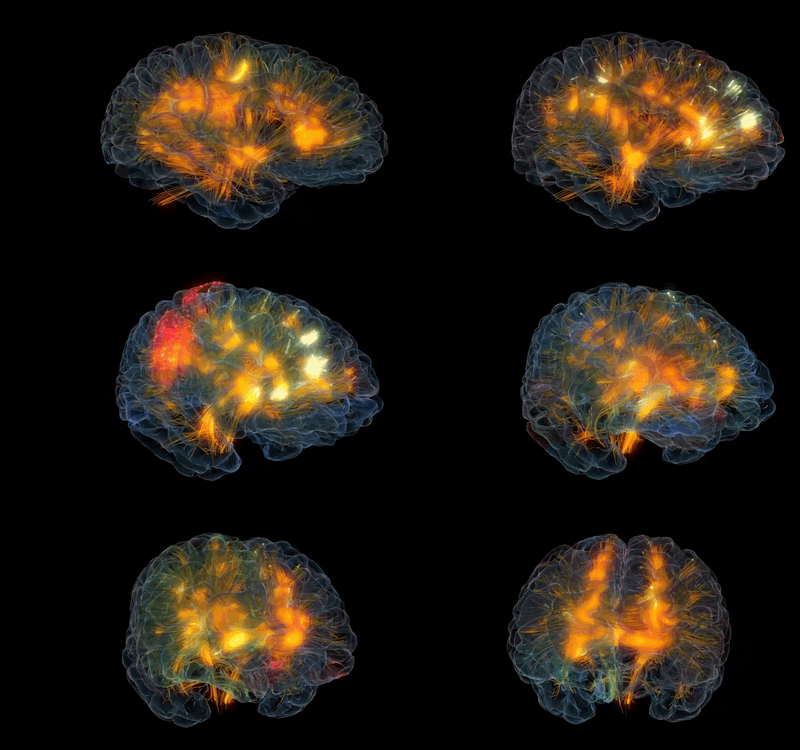
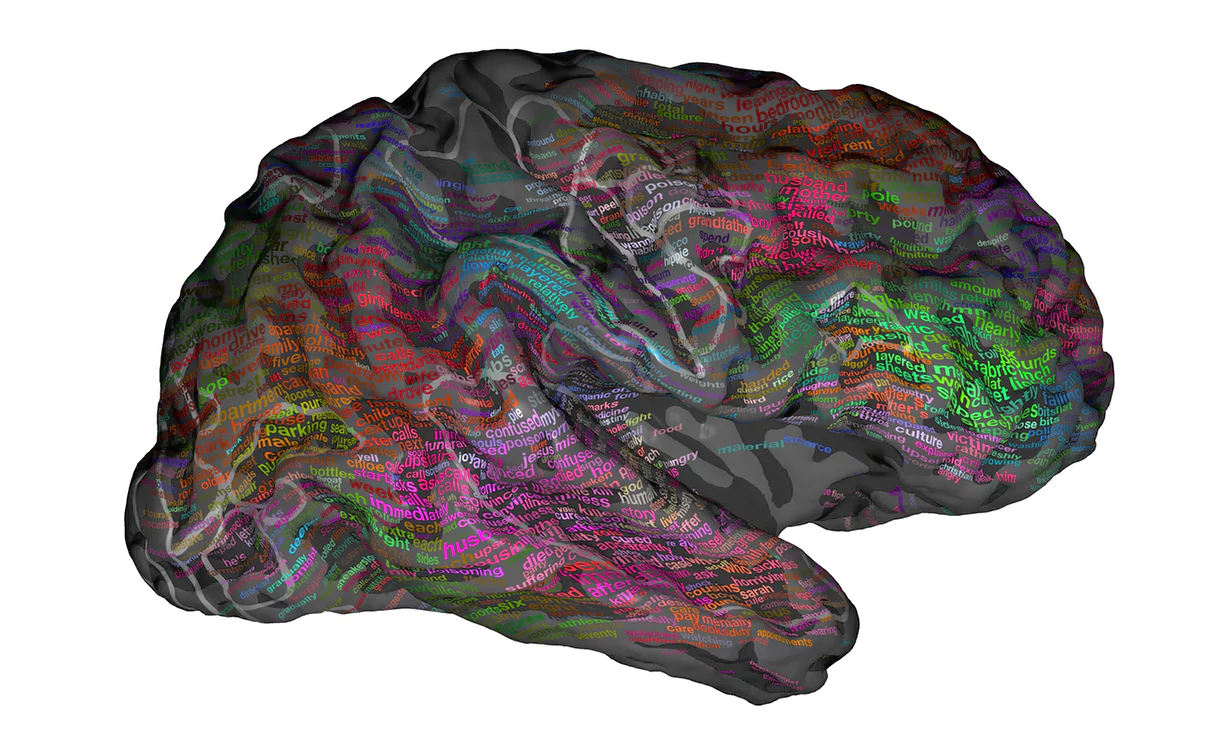
This is how certain words become something bigger than themselves. The cultural meaning of fuck, is different from its strict meaning. The simple fact of words that are somehow injected with pre-existing emotion or violation is fascinating. We have semantic maps of these words in our brains. It’s easiest to think of it this way, despite the fact that this information is actually stored in the ‘weight’ of connections between multiple neurons. This semantic map effectively ties the different words one learns and relates them to each other.
Each new word is part of a web of other words related to it. It even seems likely that words with similar meanings are stored in similar parts of the brain. It’s dangerous to take too much from research in terms of larger implications. Even without blowing this interesting idea out of proportion it still provides further example of how language processing defines a great deal of what we think of as ourselves.
There are endless examples of the ways that language shapes our world and our minds. It is literally impossible to cover all of them. I take examples that I have knowledge of, that I think I understand, but they aren’t necessarily the examples someone else would use or know about. My understanding of a subject might be incorrect, or nonexistent, and I might not know the difference. Language itself is not directly descriptive of the world around us, and our understandings, gained mostly through language, are not precisely mapped onto language.
Living in this disconnect I’ve rambled on about, how can we ever come to some kind of Truth that we can feel remotely confident in? So much of the information about how we process information itself casts doubt on our ability to seek some kind of ultimate or actual Truth. It seems so unlikely that large schools of thought suggest there is no Truth to be had in the material world around us. Yet we still do science. Over time we become less wrong.
We will never be correct, or precise. We can move closer and closer to it, but never reach it. One is bound to feel uprooted when they begin to challenge their own moorings. Our direct attachment to the world is tenuous at best. Whether we find ourselves seeking God or the Sublime, or Nirvana, we are looking for something to fill the gap between the world and us. We are trying to reconcile not only our place in the world, but our feeling of separateness from it.
Cognicists aren’t bound by a single set of beliefs, but by a way of thinking about belief. We are closer to our own minds than we are to the world around us. While we may not always like what we discover, we have more ability to examine and relate to ourselves in a direct manner. To understand the world we are observing, we must understand ourselves. That is only ever possible in increments, piece by piece, but examining things with a sense of doubt, and avoiding value judgements when possible, makes it easier, and less unpleasant.
This focus on examining ourselves and trying to understand the observer isn’t meant to leave out the world around us. If you take my analysis, Language is separate from the world it is describing, and consciousness is largely built out of language. Language also doesn’t exist in a vacuum; it is a collective activity which requires a partner. Even if you are talking to yourself, you have learned this skill from the mind of another.
We may not always be using the same definitions, but that we are able to communicate, and the ways we create unique usage based on our personal interactions makes this understanding of who we are and how we relate to our own language that much more important. Most of what we find important in the world is held together by language. Every institution, every family, and every community. It’s not impossible for any of these structures to be held together by something else (particularly in nature), but in our human example, we are bound by words.
One doesn’t have to be in complete control of every word they say, or be completely precise in the way they speak about things. It’s not possible to be constantly censoring oneself or examining oneself. Even if you aren’t spending your days dissecting every conversation (and you shouldn’t), simply examining the language you use can change not only the way you move through the world, but the way you think.
Making these claims about not only the nature of language in a broad sense, but also about the beliefs of past thinkers is also fraught with peril. Philosophy is so heavily rooted in the tradition of response to the work of others, that it is literally impossible to go through the influences and root ideas of even one philosopher. Of course we can do the intellectual history exercise of looking to the influence of the world around these thinkers and the texts with which they converse and improve our understanding of their context, but the philosophers, artists and phenomenon both social and physical that influenced their views are impossible to plumb.
It would be extremely difficult to deeply understand some of Schopenhauer’s work without having read Hegel, and knowing that Schopenhauer had personal animosity towards Hegel. If you wanted to go further you’d have to address not only the other influences Schopenhauer had, but tracing the philosophical texts Hegel was in conversation with. This process could go deep into history if you let it. Even if we trace back to the earliest written influencer’s influencer 100 times removed, we eventually go far back enough that written record of the thinking that influenced someone are desperately scant.
As with language we can’t get to the root of anything. We can of course understand something in a deep way, but there is always more to know. Perhaps with a processor that is as large as our universe we could understand the contents therein. With our own minds, and our own limitations, absolute certainty is impossible. I don’t think of this as a message of doom though.
When one is forced to face the uncertainty at the root of our experience of existence their mind might feel unmoored. People who experienced the 1964 Anchorage earthquake described being suspicious of the earth, knowing that this thing under them which seemed solid, was actually moving all the time. This shock in discovering that we are not truly tied to our world is daunting, and easy to shy away from. It is our personal tendency to reduce uncertainty. It is unpleasant to be uncertain about something one is affected by.
While this unpleasantness that cognitive dissonance causes leads us to hold these separate views without trying to reconcile the two (e.g. loving animals if they’re pets, but eating them if they aren’t). One of concepts we’ve created around unpleasantness is value. We think of unpleasantness as bad. It can be a small degree of bad, or a huge degree of bad. Stubbing your toe is less unpleasant than being shot, but both are simply unpleasant. If we put immediate value judgements on the unpleasantness we experience while examining our own contradictions, then we will avoid it, and will not become an actively integrated self.
Thinking of unpleasantness as neither good nor bad allows us to face it when it comes into our lives more easily. Even our emotions are partly a socially indicated way of coping with or expressing the experience of unpleasantness. Emotions are specific to culture. What is being interpreted by society as emotions are combinations of two sets of feelings, Activation, and Unpleasantness. So Depressed would be very low activation, and high unpleasantness. Rage would be high unpleasantness and high activation. Contentment would be low activation low unpleasantness, and excitement would be high activation low unpleasantness. These are western ways of defining these emotions, but all of the other things people feel are various degrees of these core experiences. Emotions themselves are concepts we have created to deal with and describe these combinations of activation and unpleasantness.
Knowing this makes it easier to face a whole host of terrifying things. Unpleasantness doesn’t mean anything, it just is. Trying to put meaning on something with no inherent meaning hobbles your abilities. We have learned what Anger is, and we have also learned entrenched patterns of behavior that are associated with anger. To a certain degree we respond to it in an automatic way because we are existing within the Concept of that emotion. The fact that faking an emotion will slowly cause you to feel it gives one an idea of how powerful these concepts are.
If you are able to face anger as an unpleasant experience instead, and try to remove that value you’ve put on it, it becomes possible to observe the experience you are having, and the behavior you are inclined towards. When you are trapped in the concept of an emotion it is difficult to extricate oneself from their well worn patterns of behavior. Language does matter, and we need to be aware of how we are using it. It is very easy to believe whatever it is we say about ourselves, and what society says about us, good or bad.
The hopeful message here is that we can be better. We may never have certainty, but we do have control over our reactions to the world, and our examination of the conglomerated picture of it we have created in our minds. We shouldn’t think of this disconnect between the world and ourselves, or the removal of value judgements as reasons not to care. The things we are terrified of are simply unpleasant, and can be faced, we can become better by examining ourselves, and we can use these tools of language we created to build something with meaning on a foundation of nothing at all.
The Stories we tell ourselves, the Stories we tell to Others.
We are fundamentally made of narrative. Every part of our world is related to a story we tell ourselves. From the bonds of family to nationality and race, our experience of these social realities is determined by the stories that we tell about them to others, and the shared expression of the defining features. On the universal scale our actions are insignificant, but in our stories the actions we take create something against the threat of entropy. In the world we are small, in stories we are everything.
Framing the world as a set of stories might irk people with a concrete understanding of the world around them. There are real things in the world that affect all of us. Despite this fact each mind lives in its own reality. Sometimes that manifests as a slight deviation from the ‘objective’ or shared truths about the world, such as in the case of political differences, and sometimes it manifests in psychosis and mental illnesses of all sorts. It’s important to remember that the separation from some reality that we all can agree on is not experienced only by people who are not neurotypical, but by all of us.
The view of the world held by depressed people is often, though not always, closer to the actual reality of the world. They too are at a distance from actual reality, whatever that may be. To a certain extent we create stories in part to reconcile our distance from the world, or at least our distance from knowledge of it. While we tell stories to entertain, or to inform, be they ‘fact’ or fiction, we also build with stories. In our definitions of ourselves and our definitions of the world around us we are telling stories in an elaborative act of literal world building.
We all have stories we tell ourselves about who we are, and stories that society tells us about who we should be. From race to gender to class we create stories around what our groups are and what should define them. If I were to define myself it would be a set of adjectives that have cultural stories and connections related to them. I am white, and that itself is a construction based on the stories about a certain complexion. There is less genetic difference between people of different ‘races’ than there is between individuals within a race. What truly makes up my whiteness is a combination of the story that is told about what a white person is. As we build our world we construct what our group is an means, and create relations between ourselves and others.
We also tell positive stories about ourselves or our groups. Sometimes these things are in contradiction with another of the stories we tell ourselves, but things like certain bonds of friendship or family (when absent of domination) make a world worth living in.
When Cognicists talk about context they are referring largely to the stories we tell ourselves, and the situations and environments we are engaging with. This may seem like an overly broad application of stories, but it’s difficult to separate oneself from the stories they tell. If I were to ask you about yourself, the important attributes like your personality and your tendencies would have been formed by experiences and tendencies which weave together into a narrative of self that you unconsciously attempt to adhere to.
Though we all have our own stories and interpretations of reality, there are consistencies in the way that cultures tell stories. In linguistics there appear to be no true universals, so they use the idea of relative universals. When speaking of stories this is important as well. Humans don’t even share all of the same emotions across cultures, so it’s all the more impressive that certain forms and archetypes appear to be fairly consistent across cultures. Even the fact that story production appears to be a relative universal feature of humanity implicates it as profoundly important to what we are.
Let’s take an example from a story about the purpose of an observed event in the world.
A group of rooks, a small bird closely related to crows and ravens, is called a parliament. Every so often a parliament of rooks will gather, blackening the ground in some field. Their caws and cries fill the air with noise as hundreds or thousands of them gather in a circle. A clearing forms in the center and a singular bird enters the void. Suddenly the noise of the flock disappears, it’s silence echoing outward. That lone rook begins to caw and cry, and move in address to the gathered flock. The flock listens and remains largely passive. The lone rook ceases its speech, and the flock makes a decision collectively. Either they caw and fly away, leaving the singular rook alone in the field, or they will silently fly into the air, and dive down on the lone rook to tear them with their beaks.
People explain the story as an example of a jury judging the bird, or the bird making some appeal to the group, but I, and neil Gaiman, like to think of that lone rook as being there to tell a story. It seems likely that this story is untrue, but it appeals to those of us who make or care about stories because it creates a sense of kinship with what is an objectively intelligent species. It also shows the possibility of having some more universal connection to nature and its progeny. That stories can bind a group of rooks just as they bind us.
If we accept this idea of stories as central to the way that we as individuals, and humanity as a whole operate, then it’s reasonable to try and take a look at this in the systems level way that i’ve advocated thus far.
First we need to try and dissect the story that binds our individual self. In studies of schizophrenia there are some indications that difficulty constructing a narrative of self if one of the hindrances to recovery for those experiencing the unpleasantness sometimes brought on by their psychological context. Inherent in this idea is the suggestion that one of the things that is maintaining one’s ‘sanity’, or grasp on control over themselves, is the ability to create a narrative of self. We often can face certain distressing facts of life partially as a function of our narratives of self. If one pictures themselves as an emotionally strong person who has gone through much worse than an insult, then they are likely to experience that insult as less distressing. Someone who pictures themselves as not good enough, and not fully worthy of the approval of others, will be more deeply hurt by an insult. We of course construct these stories through example and interaction, but there are personal tendencies, preferences, and abilities that will influence the way you internalize the stories you observe and are told.
We are born out of three things, from the neuropsychological context, Genetics, Environment, and Epigenetics. This interaction of our fundamental genetic inheritance, with mutations, the environment around us that influences the way we interact with the world, and the way that our inherited and or mutated genetic code is expressed.
The best example is how a Famine in Sweden affected the following generations. In a long term study of the descendents of people who had survived a famine in 1836 It was found that grandchildren of men who had gone through at least one year of famine before puberty lived on average 6 years longer than grandchildren of men who had gone through a ‘feast’ year shortly before puberty. When adjusted for socioeconomic features the gap grew to 32 years of added lifespan for the grandchildren of those whose grandparent had experienced famine before puberty.
We come to the stories we tell about ourselves through our own abilities and deficits. We are shaped by these things, but create stories that are greater than sum of our fundamental features. Over time there have been various attempts to categorize our examples of the stories we tell ourselves or the ways we behave. The beginning of Psychoanalysis, and the varying views of Freud and Jung provide one of the easiest examples of some of the approaches that can be taken to categorizing the narratives of self that we construct and/or have constructed by the society around us..
Freud was interested in dissecting the self deception we employ. Often the stories we tell about ourselves and those around us are obviously false. We are conditioned into certain behaviors and mental tendencies, and we are largely unconscious of this conditioning. While Freud’s explanations for the causes of human behaviour were largely incorrect, the notion of the Unconscious, and the active practise of interrogating the workings of our minds were valuable to the furtherance of a path toward greater understanding of ourselves.
While Freud focused heavily on the direct interactions between family members, and on the individual human characteristics of his patients, one of his contemporaries Carl Jung, while interested in the individual in front of him was also interested in the social context through which the individual viewed the world. The way Jung explained this social connection in the way that psychological disorders manifested and the way personalities form was through something called the Collective Unconscious.
Freud correctly identified a teeming sea of activity under the surface of our conscious thought, and Jung delved into the way this activity was tied to our shared nature as thinking beings. The collective unconscious can be thought of as a way to explain the social concepts or features that we are unaware of transmitting. Jung suggested that there are a set of Archetypes, that are highly developed aspects of the collective unconscious which cannot be directly observed, but find their expression in art and myth. These things have some collective meaning that is somewhat universal, and each culture or individual filters the archetype in some way, not being able to fully express the archetype itself.
This idea was developed partly out of Schopenhauer’s prototypes, and the ‘Platonic Ideal’, but the Jungian variant of this idea has popped up in our modern society in a few disparate and notable ways. One of the modern applications of Jung’s archetypes (where I first encountered some of this) was the Myers–Briggs personality test. While it doesn’t have an actual scientific basis, or any predictive value in terms of the personality presentation of the distinct groups it describes, it is partly based on some of Jung’s ideas about consistent features of personality. While the features of these groups have some degree of use (some of them do appear in the more supported personality inventories like the big 5) the stories around them are not truly related to the way these features might influence one’s behavior. The test presumes that we are defined by four dualities of tendency. There are
Introversion and Extraversion divide; do you get energy from interacting with others, or do you need to recharge after being around groups, (also part of the big 5) Intuition vs Sensation; do you make decisions based on feelings you get or based on the objective concrete facts in front of you. (not a scientifically validated categorization) Feeling vs Thinking; do you prioritize emotion over rationality (also not validated) Judger vs Perceiver: do you organize your information and surroundings or do you prefer to have the organization be more haphazard (also not validated) This is by far the most popularized explicit reference to Jungian thinking, but doesn’t match the evidence about how personalities actually work, and was not developed in a scientific way.
Neither was the other prominent example of applications of Jung but it seems more preferable to the unfounded assumptions of Myers-Briggs. Most people are familiar with the work of Joseph Campbell because they enjoyed Star Wars and were aware of his idea of ‘the Hero’s Journey’ as an archetypical story. To a certain extent Campbell is doing the ethnographic study of the stories that Jung’s archetypes express themselves through. There is a reasonable argument to make that certain story structures and forms are relative universals. That could simply be a function of human experience having certain consistent features, but there are more interesting wrinkles in the way that stories have certain linkages that are indifferent to the cultures they develop in.
These ideas of universal connective myths hold some power, but sometimes run into the same modernist problem addressed earlier. The tendency to seek an absolute capital T Truth created problems in terms of attributing truth in times of ambiguity. In many ways more important than the postmodernist observations of language was their greater criticism of modernism; the idea of metanarrative.
“A metanarrative (also called grand narrative) is an overarching story or storyline that gives context, meaning, and purpose to all of life. A metanarrative is the “big picture” or all-encompassing theme that unites all smaller themes and individual stories.”
One of the roots of this criticism related to the tendency of the grand narrative to dismiss the natural entropy and uncertainty that was inherently a portion of our experience of existence. Like the unrooting of our connection to mathematical foundations with the discovery of Godel’s incompleteness theorem, the incomplete picture of the world provided by the metanarratives we exist within is equally unmoored from the absurdity of the world around us.
The skepticism about larger narratives of truth left unexamined is shared by cognicists, the postmodernists largely supported the idea of there being no absolute truth, as well as creating methods for dissecting the metanarratives around us, but the cognicists also suggest a proposition that in many ways is a synthesis of that Modernist desire to assert absolute Truth, and the postmodernist call to unroot truth and destroy absolutism.
The idea of pursuing a derivative of truth while not profoundly unique is aided by an increasing availability of knowledge, the changes in the world that are causing the us to question our own narratives, and by a technological application of a form of thinking, and creating a shared vision of the world in an intentional fashion rather than relying on received Truths.
Explosions of ability for collective organization have led to huge modifications of the world around us over human history. From the creation of language, to the printing press, to the telephone, to the internet, we have continually changed the world of ideas in which we live, and gradually expanded (though not completely) the ability of people to create a collective memetic landscape. This new freedom is not without its perils. The problems that we face in the world at large are transposed in unusual ways on the internet. Just as it lets us get together and ascertain the truth, it gives a platform to those who would present Truths with no basis in the observable world around them. In large measure these problems are simply amplifications of the cultures the internet has been popularized in. It is unsurprising that a country built on a racist foundation would exhibit racism in at least some facets of a network used for the expression of our narratives about the zeitgeist.
That is why there is a need to create ways of thinking which not only help us understand the truth better, and provide evidence for the collective truth of one’s beliefs, but also help those using them to better understand themselves. Metacognition, thinking about thought, is a natural part of the process of questioning truth, and this allows all of us to question our beliefs and values, and be more honestly exposed to the values and beliefs of others.
This openness to information, and consistent application of one’s desire to ascertain the truth of their beliefs is a core tenet of cognicism. This desire to move closer to the truth in a collective way is not incompatible with older forms of collective truth attribution like social organization, and religious practise, and is part of a large tradition of creating new ways to collect our visions of the world and visions for it. We may never come to a fully formed version of the Truth, but by sharing our individual versions of truth, and using them to create a larger understanding of the truths we hold in common is an achievable goal, regardless of the things we discover together.
If one is confident in their beliefs, it is their responsibility to assert their truth and support their claims. If one respects other minds, they will listen to them, or try to, and will give them the benefit of the doubt where possible. If one is interested in the truth, they will not seek to win an argument, but to understand the truth that is being expressed to them. If one is true to the collective they will attempt to adhere to their own truths and avoid hypocrisy. If one is engaged with the world they are aware their truths are build on a shifting foundation, as are everyone’s. One may be relatively certain about something, but must never fool themselves into becoming absolutely certain.
Religion
In order to speak truthfully for religion in a world with such a vast variance in beliefs, it’s important to first establish the Speaker’s personal context. The primary Speaker for this section was Patrick Hanners and therefore the majority of this section will use the I voicing.
I can trace the entirety of my spiritual history in the way I thought about the practice of worship practiced in a quaker meeting. Non-programmed quakers worship in a group in silence. The congregation sits in a roughly circular arrangements of seats, and sits in silence examining their own thoughts. If someone feels called to speak, they stand (or stay seated if they are unable) and speak about what they feel called to say.
Anyone can speak whether they have been there for a day or for a decade. The theological idea behind the religious society of friends is multifaceted, but there are a few main concepts that roughly define it. The religious society of friends took seriously the admonition is Matthew 18:20 “For where two or three are gathered together in my name, there am I in the midst of them.” They also put an importance on the degree to which that of the light of God is in each of us. Like the apostles being touched by fire, all of us have a seed of the divine within us.
The Quakers are kind, consistent, and in my view then and now come closest to what Jesus would have recognized as a descendent of the communistic love tribe he created in the desert.
Quaker worship is about examining yourself to find that of the light within you. Each of us has some of God in us as Jesus says, and we need to listen to ourselves to find that of the light within us. We must examine ourselves and search for the part of us that feels that holy compassion for the world around us. If we are not silent to listen to ourselves, and more importantly that of us which is connected to the divine, then we will miss what is there.
When I was coming to Quaker meetings, I was confronting both no longer believing in god, and my dual mental illnesses, both in full force at the time, Bipolar disorder and OCD. I had grown up in other forms of christianity, and after reading the bible couldn’t stand by any of the Old testament, but felt pretty ok about the prescriptions of the New Testament. In this transitional phase I still felt the need to have a community with whom I could have something like the spiritual community I had growing up, but with more room for my idiosyncrasies.
I thought of myself as a nontheist Quaker. I found value in the actual process of examining things in the way that one does at a friends meeting, but instead of seeking that of the divine in myself, I interpreted that of the light within me as my consciousness and my empathy at their roots. What appealed to me about Jesus was not the messianic predictions of an end of the world. It was not the mystical idea of a resurrection. It was the kindness.
My need for a spiritual community was gradually supplanted by other communities and other practises, but this transitional phase still best identifies my spiritual leaning. I believe that the complexity of our world is ultimately mysterious in some inevitable ways, and there is a vast beauty not only in the unknowability of some things, but also in the fascinating things that emerge out of the interactions between networks of infinitesimal individual units.
I aim to talk about religion not as a critic or as an adherent. No one is objective, so the best I can do is express my bias. In a particularly western and christian context, I have a fair understanding of the experience of belief as well as the experience of a change in belief. I am open to evidence to the contrary of my atheism, but haven’t found evidence in the world that supported my criteria. Without some faith the gap feels unbreachable for me. I have gradually found myself capable of faith in only the things I’ve observed in the world around me.
While I don’t share the faith so many in this world have, I do not begrudge those who believe. Examined belief is an individual experience, and the specific contexts we exist in will have effects on the beliefs we hold. Thinking about your beliefs and examining what you value within them is for those with faith a deepening experience in which they discover things about themselves and their faith. For those without faith it is a similarly deepening experience which allows them to discover things about themselves and their metanarratives.
We are primarily interested in seeking something that approximates truth. To a large degree that is the itch that is scratched by Religion. As creatures who have a strong affinity for the creation and perception of patterns, we are inclined to fill these gaps in our ability to explain things with faith. Faith and belief have a role in truth, because of this inability to reach certainty. Even bayesians will admit that the Truth is only knowable in terms of approximation and uncertainty. Agreeing that we can trust the measurable world around us is an act of faith by itself, as is any reduction of uncertainty by means other than evidence gathering. This faith can allow us to perceive of things are being less nuanced than they are. The assertion of an absolute truth removes the nuance that is present in not only moral judgements, but statements about reality itself. Often religions view Truth as binary and knowable. Humans developed these tools for a reason though. Religion like our other cultural institutions are reflections of group responses to perceived problems. Even if humans were hallucinating from magic mushrooms while forming these religions, the human desire to examine one’s own mind is a connective feature of the development of human culture as a whole. We seek something within ourselves because we perceive something to be there. The uncertainty that comes with being alive is frightening and difficult. If there is stress in the world that makes you uncertain if you will survive, you will have more difficulty dealing with the situation. Humans create cognitive technologies to answer these problems. They may not be explicitly thought of in this manner, but unique transmitted ways of thinking are as technological as any piece of computer code could be, but in many important ways are more complex.
We want to transmit the things we learn as a culture to future generations, and we need tools to alleviate the anxiety brought on by uncertainty and to help organize around something to deal with the danger of the world outside. It is a tool used to alleviate the anxiety caused by the realities of impermanence, and a tool used for social cohesion, or the reduction of uncertainty. Communally we create ways to try and reduce the unpleasantness that is part of living. As the Buddhist perspective would frame is ‘existence is suffering’. The important concession one has to make to religion is that it does provide answers to questions we feel the need to answer. Those answers are framed in absolute terms, which makes the growth and inquiry partially inflexible. It would be foolhardy to dismiss the questions that religion is trying to answer though.
Besides the material support provided by our communities of religion, we are also all searching for meaning in some form. If we have some importance, or set of standards by which to measure our worth it is much easier to deal with the minor and major unpleasantness that you are bound to experience while living. We are creatures who build stories and try to understand the world around us. Religion is a tool melded out of the two tendencies.
As with anything there are multiple veins within religions of all sorts, the inquisitive, the unquestioning, and everything in between, Even with these different ways of thinking about religion there are some consistent deficits shared by each religion. There is a way of thinking that is encouraged in religion, but a large part of the problem is not the defect in reasoning, but in the ways that this information is transmitted. In many cases these systems of belief are situated on a foundation of what believers assert are factual occurrences in the world. Those who believe in the resurrection of Christ believe that this truly occurred in the world and that the beliefs they hold are directly tied to the experience of people there at the time as communicated in a religious text.
With any system of information distribution there is a degree of mutation with each transmission through a different speaker or transcriber. The root documents often are disparate and the varied modern interpretations of ancient religious texts make it difficult to provide a direct root to anything but one’s perception of the absolute true reading of their preferred religious text.
This isn’t restricted to religion, and is a tendency that rears its head when humanity faces uncertainty. Not only ideas of religion, but ideas about nations, races, and continents, create divides in belief about how to interpret the textual or social basis for the belief system they hold, be it Democracy, Capitalism, or Christianity. Though of course these things are extremely different in very important ways, these concepts have physical organs. Institutions providing one disparate assessment of their core beliefs like Catholics and Baptists, or enforcing their variant of their belief like the use of force by police to ensure that imposed laws are followed.
This transfer of knowledge is natural and necessary, but when applied to knowledge which is thought to be unquestionable, it becomes a problem. If we assess scientific knowledge from the past we can examine it with an eye to how the actual experiment may not have been done the way it was described because the description was a century removed from the experiment itself. We can use our current knowledge and experience to assess the accuracy of the ancient scientific information we receive.
If we assign an absolute degree of truth to that specific piece of knowledge the process changes. If I want to truly follow the 10 commandments as they were delivered to Moses on the mount, I could go with one of the translations that is available to me, but can’t ensure that that translation is true to the intention of the original tablets. If I go further back to the very first writing about moses and the 10 commandments you are getting a closer representation of the original version, but you are still hundreds of years away from the actual creation of the commandments. The earliest recorded documents of the story are from much later than the purported time period for the event. No matter how close one gets to the actual original truth of the commandments, truly following them would still require direct interpretation of an ancient culture and ancient people who we are similar to but cannot understand the experiences of.
That’s not to say one can’t put importance about stories about how to exist in this world, only that it’s important to recognize the gap that is filled by faith.
It is likely not possible to ascertain how religion was developed. (I subscribe to the stoned ape theory, so that’s my guess, but it’s not substantiated) If we want to examine it we should look at some of its modern incarnations. There are of course positive and negative aspects to many different religions, but to avoid disparaging any one set of beliefs I will try to speak in general tendencies, what examples I use are not meant to call out offenders but typify features held by a broad range of religions.
As with any totalizing belief, religion has a tendency to increase in group phenomenon. This can result in a feeling of community and support, and has its positive aspects, but it also creates a separation with the out group. This othering allows the group you are in to gradually reduce their empathy for those who don’t share their beliefs. This doesn’t only occur in religious circles, and in many practises interactions with the community at large, and charity projects pacify some of these tendencies, but they remain. This process also allows those with strong beliefs about the personal behavior of those around them to feel secure in suggesting that everyone follow their preferences.
While the giving that religious people often do is valuable, any absolute belief that is not subject to change makes one susceptible to a prominent set of cognitive blind spots. It isn’t important whether you have a religious belief or not for our purposes here, All that is important is that you have come to your beliefs through a process of examination of both yourself and the texts you adhere to.
One of the cognitive blind spots is developed by the necessary concessions made by theologians to compensate for the problem of evil. This concession is known as Theodicy; it is defined as “the vindication of divine goodness and providence in view of the existence of evil”, or more simply: If God is Good and All Powerful Why does God Allow Evil to Exist? If one has a Theist god who is Omnipotent, Omniscient, and Omnibenevolent, (all powerful, all knowing, and all loving) then why is there evil in the world? If God is these three things, then god cares about our suffering, knows about our suffering, and has the power to stop it. Theodicies are explanations of why god fails to act in the world in regards to evil. Therefore in order for minds to rationalize this indiscretion they shorten one of the legs of the tripod holding their conception of god.
This generally allows us to maintain a similar version of our received deity, but without the cognitive dissonance caused by the problem of evil. We are able to exist with certain amount of cognitive dissonance. We can hold two beliefs which are in conflict. One can believe themselves to be both an animal lover, and be someone who eats meat. But the tendency in human minds is to try to reconcile one’s conflicting beliefs. At a certain level cognitive dissonance is an unpleasant feeling. If one doesn’t have coping mechanisms to decrease how unpleasant these dissonances feel, they often will come to some modification of one or both of the beliefs that are in conflict.
One of the primary ways our minds cope with cognitive dissonance, is certainty. Certainty leads minds down a dangerous path regardless of how aligned the truth is with Truth. Nazis, Leninists, and the violently religious alike are certain that they are correct and that their correctness allows them to control others. We posit this as the root of our problem with certainty.
Certainty is about control. One must believe they have control over all the information, and have control over all the levers around them, and must believe they have complete control of themselves. No one completely controls themselves. The powerful use their control of the things around them as evidence of their self control, or lack of need for it.
One of the reasons I frame Cognicism as something other than a religion is about that flexibility. We aren’t trying to control ourselves, but to understand ourselves. The disparate prescriptions for the problems we see in the world are points of contention for all of us, but we are powerful together. Cognicism isn’t about trying to think a certain thing, but trying to think in a certain way. The only absolute is a practical one, respecting the autonomy of those around you, so that you can be free to examine yourself as you see fit.
It has been argued that Buddhist practise, if not belief, is compatible with Christianity. Two disparate parts of the world developed these traditions, and the difference seems vast, but there are large portions of Buddhism that are about self examination, which can be done with one’s own personal beliefs in mind. The methods that are used in Buddhist meditation are equally applicable regardless of the beliefs one has. We develop these skills and ideas in our organic communities because they are useful. In that same way we also should examine the truths that other people hold and find ways to compare our realities of those we respect the thinking of. Like the idea of science itself, this is both actual technology and cognitive technology. The idea of empiricism itself is cognitive technology, and it too has its flaws. Examining these cognitive technologies is a fundamental way of using what is useful from these traditions. Sometimes religious practise is about that kind of gradual growth and experience, but cognicism is something different, and for those of us in the collective who do have faith, examination of self can be an experience of deepening and examining of faith if one seeks that.
Regardless of your faith or lack thereof, these principles can still inform your thinking and your existence.
Cognicists recognize the uncertainty inherent in existence.
Cognicists neither deny another Mind their autonomy, nor allow someone else to deny another mind of their autonomy.
We each live in our own separated contexts, we must prevent those who don’t understand context from heaping violence and control on others. (prison, armies, cops, fascists, governments, parents, schools, ourselves) We must find in ourselves a comfort with both lack of control, and with uncertainty. Lest we become victim to our own certainty.
Really Existing Democracy
Democracy (in it’s currently existing form) is a dated form of truth aggregation. It’s greatest challenge is scale and lack of universal access. As a system it has promoted human welfare more than the monarchic systems it was revived in opposition to, but it often does so by displacing suffering via colonialism.
Tribalism is sometimes referred to as proto-democracy and is one of the earliest forms of truth aggregation dating back to pre-agrarian societies. The concept of a formalized democracy and the term itself originated in ancient Athens circa 508 B.C. though the modern definition of democracy has shifted significantly.
When we discuss Democracy here we do so primarily through the lens of US government.
The inherent challenge with scaling any of these forms of democracy is who writes the legislation, who gets on the ballot, and who gets into people’s minds. None of those things directly align with the Truth. The ballot is a choice you are provided, you are not given a means for your actual opinions to have an effect on policy. This is an extremely limiting factor.
In essence the key distinction of Cognicism is the capacity to vote with your voice, rather than a choice. Thus all voters instead become Speakers. Unlike voting, speaking is active, constantly available, and not locked to time. The effort and money expended on electing a leader to (in most cases poorly) represent your views, is instead spent in developing your ideas and sharing them in a collaborative way.
Because of this disconnect between this and all governmental systems and their ideal forms, We have to talk about Really Existing Democracy, or RED. Like the idea of Really Existing Capitalism, it is important to examine the differences between thought on a form of societal organization, and the shape it actually takes.
In its idealized form Democracy is, leadership by the People (the Demos). Generally this is done through voting of some kind. In the early Athenian variant of democracy those eligible to vote voted directly on legislation. Approximately 30 percent of the population was able to vote, as it was restricted to Adult Males who were not foreigners or slaves. Over time the ossification of voted upon institutional structures, several attempts to create an oligarchy, and invasion from the outside hobbled, and then destroyed this system of government.
After the various greek democracies fell to other forms of rule, the idea in name fell out of fashion (some similar things were being used in practice however. viking “thing”) The Next prominent revival of the idea of Democracy is usually thought of as the American Revolution. The reclamation of the name Democracy came out of the ‘Enlightenment Era” fascination with Classicism, and specifically greek and roman influences.
The intellectual foundation for these political aspirations are most heavily influenced by classic Liberalism. This term has been redefined multiple times since this specific usage. The ‘founding fathers’ of the USA were inspired by social contract theory, as espoused by thinkers like John Locke, Jean Jaques Rousseau and Thomas Hobbes. (as well as Adam Smith in a different vein)
“ Locke’s political theory was founded on social contract theory. Unlike Thomas Hobbes, Locke believed that human nature is characterised by reason and tolerance. Like Hobbes, Locke believed that human nature allowed people to be selfish. This is apparent with the introduction of currency. In a natural state all people were equal and independent, and everyone had a natural right to defend his “Life, health, Liberty, or Possessions”.[35] Most scholars trace the phrase “life, liberty, and the pursuit of happiness,” in the American Declaration of Independence, to Locke’s theory of rights,[36] though other origins have been suggested.[37]
Like Hobbes, Locke assumed that the sole right to defend in the state of nature was not enough, so people established a civil society to resolve conflicts in a civil way with help from government in a state of society. However, Locke never refers to Hobbes by name and may instead have been responding to other writers of the day.[38] Locke also advocated governmental separation of powers and believed that revolution is not only a right but an obligation in some circumstances. These ideas would come to have profound influence on the Declaration of Independence and the Constitution of the United States.”
Along with this liberalism, specifically in wanting to create a social contract by which people could be ruled, the fascination with Rome and Greece shaped the government of the US. The United States is modeled after the Roman republic in legislation, and democracy in the selection of “representatives”.
In the Roman system (this example from 509 BC) “Before the revolution, a king would be elected by the senators for a life term. Now, two consuls were elected by the citizens for an annual term. Each consul would check his colleague, and their limited term in office would open them up to prosecution if they abused the powers of their office. Consular political powers, when exercised conjointly with a consular colleague, were no different from those of the old king”. It’s important to note as well that the senate was not elected by appointed by the consuls.
The American system was created with structural separation of powers into three branches of government. The Legislative branch writes the laws for the country (the House and the Senate). The Judicial branch decides if those laws are in conjunction with the constitution, and try people for the violation of the laws enacted by the legislative branch. The executive branch enacts legislation, actually enforcing laws, providing services, and waging wars.
Each of these branches are subdivided in various ways, and further down to the local level in a federal structure in which the lowest level of government is subservient in some things to the next highest up, and continues up to the Federal level. (hence the name). As with Athenian Democracy and the Roman Republic, the United States was founded with certain exclusionary provisions. The only addition to the Athenian criteria of Adult, Male, Not Enslaved, Citizen, was land ownership.
This hierarchy formed for a complicated set of reasons, but compromise between people who wanted the right to continuous revolution, Like Thomas Jefferson, and near Monarchists like Alexander Hamilton created a system of half measures. Jefferson wasn’t for full equality either, but from the spectrum of those who became rulers of the new American state, he was slightly more radical (when it came to the rights of White people). It’s a bit rosy to think of this as a compromise between the best options for governance after the revolution. There were many alternate models. It’s also bears mentioning that the “founding fathers” were all rich men before the revolution.
One can debate about if this is the best form of government, but it’s not possible to assert that we have the same system of government as instituted by the ‘founding fathers’. The constitution and its amendment process does create a tiny safety valve for the kinds of tensions the founding generation well knew could lead to a popular revolution. Their own revolution was largely due to the lack of representation even these wealthy men experienced in regards to the British state.
Overtime the constitution has been amended to include rights, and to restrict them. ‘The constitution is a living document’. Of course the breath keeping it alive is not they who actually vote the amendments in place, but the people clamoring from below. The force of the Abolition movement (including actual insurrection against slavery,) created the conditions for the insufficiently liberatory 13th amendment. The degree to which these changes are filtered through the inevitably moneyed political classes is a foundational feature of our system of government. These filters mean certain changes are impossible without actual violence. The fight for the 8 hour workday was violently suppressed by both the government and the bosses. While the work of political reformers, parties and unions were functional in changing the laws, the actual demands of workers were only partially met, and even then under continued threat of violence.
We think of the 8 hour work day as a good piece of legislation. We presume that we have this necessity because a small group of people decided to grant it because they were representing the people. It’s important to remember that these kinds of changes occur from the bottom up. While there are various schools of thought on how those bottom up movements should be structured or created, the evidence supports this bottom up interpretation of the roots to social change.
If one believes in the US system of government, they are likely to think that the primary way change is made in the country, and/or the primary way change ought to be pursued here is through electoral politics, and the election of representatives who;s believes most closely align with ours. This idealized view of the way our system actually works has not been seen in practice from the founding of the country forward.
While there are differing interpretations of the changes that should be made to our system, it is difficult to miss the distance between the idealized explanation from civics, and really existing Democracy. It’s important to state my bias before putting this analysis forward as fact, because, while I’ve closely examined my beliefs and analysis of the current US system of government, I like everyone am bound to have views which are biased in one way or another. I am a white, cis, mentally ill, bisexual, male, vegan with a libertarian-socialist, or anarchist political leaning.
If we break our political system down to the local level, we can get at some of the structural deficits that our system has. In your average American city or town you have a local government of some kind. For a town, this may be a council and a mayor, along with possibly a police force, jail, and judiciary (or judiciary to which they are subservient, eg the county) In most, but not all cases this matches the structure of the federal government. You have an executive branch in the Mayor and the police force, You have the legislature in the form of a council (or other legislative body or bodies), and finally you have some interaction with the Judicial branch.
The of age citizens registered to vote and/or non-felons, and people with proper ID, in the town vote for their representatives and then are governed by their representatives for the term of office. Restrictions on voting in a district tend to be one of the consistent issues with Democracy. Athenian Democracy only represented 30% of the polis. While there are ample examples today, the most famous restrictions of voting rights were poll taxes and poll tests, designed to keep black people from voting. This first point of weakness is an important one when thinking about inequalities and systemic inefficiencies in our governance.
The second weakness is the available choices of candidate. Historically in the US (and to a large extent currently) Political office in all but the most local forms, is a pursuit which requires money, and access. The time and money required to run any kind of political campaign excludes the abject poor, the working poor, and much of the middle class from access to political power. Because there is a relatively small pool of people capable and interested in these roles in any community, the ‘political class’ begins to exhibit ingroup phenomenon. Any enclosed group of people with shared interests will begin to create dichotomies of exclusion and inclusion (regardless of desire.)
Because of this ossification of power within a certain class of people (with rare exceptions) the power of these institutions increases, as the ability to become a member of the political class becomes less and less accessible. (in the case of the US it has fluctuated from extremely difficult to much easier, and back again more than once, but has always been quite top heavy in it’s wealth/political power ratio. ) Even if the people in this group are well meaning, or passionate about representing the people, the difference in context between the politician and the people is large, and the system encourages ingroup phenomenon as well as consolidation of power.
In the present day a further issue with really existing Democracy is the degree to which the representatives are influenced by forces other than their voters. Because it is not the relatively small pool of people who still vote to whom the politician is most loyal. While some politicians try to eschew this influence, in many ways it is baked into the system now. The cuts to the Congressional Research Service are a good example of how the information provided by special interests is the most visible information for politicians. Even if the politician is not actually bribed, they will lean the direction of the lobbyists just via the availability heuristic.
Along with these problems of access to influence there is the simple problem of what kind of institutions are controlled by this small relatively unaccountable group of people. One proposed defining feature of a state is a monopoly on the right to violence. The average person cannot kidnap, or murder, or steal, but the government can jail, execute and fine. This is obviously somewhat simplistic, as the state exerts its influence in other ways as well, but it is still a useful memetic tool to think about what this lack of access to power means.
In the US we spent 16% of the budget on defense.. While Social security costs more, the 608 billion dollars a year that go toward the military still have created the most powerful military force the world has ever seen. There are strategic deficits to the US military that have been taken advantage of (see guerilla warfare in Vietnam), but it is still a gigantic conglomeration of power. The fact that this vast force is accessible to such a small group of people is of concern by itself.
This isn’t idle concern when one looks at the history of American governmental power both in the world and within our borders. While some are concerned by (and some welcome) a slightly more controlling state in regards to certain things under the current president of the United States, many of the abuses people are concerned about have happened many times over through our history. While it’s easy to simply look at deportations, or the War on Drugs and its effect on the poor, particularly people of color, it’s also important to look at the things our country has done outside our borders.
The easiest set of examples comes from Latin America. One can find the West interfering with latin Democracies from the beginning of the Monroe Doctrine, but the middle of the 20th century is probably most illustrative. On September 11th 1973, the Democratically elected Marxist leader Salvador Allende, was killed in a right wing coup whose conditions were primed by the United States. Instead of pursuing a Democratic end, and using diplomacy with a democratically elected official, the inclination of the US government is to undermine Democracies when their decisions hurt the profits of American corporations.
A better example of this corporate influence on political activity against foreign Democracies, would be The CIA supported coup in Guatemala, partially in the interest of the United Fruit Company (one of the places the term banana republic comes from). Many of these actions were done under the heading of anti-communism, but in practice this generally meant supporting dictators. One may have different opinions on whether this was the right thing to do or not, but the fact that this power is available to such a small group of people is concerning by itself.
Despite these problems the ideas of democracy are appealing. Of course we want to create a system in which we have a direct say over our own communities and our lives. There are many different ideas about how to actually enact these democratic ideals. Some of these different forms of direct democracy have been tested in the world at scale, and some haven’t. IT’s important we try to find ways to test them ourselves.
The ultimate goal of democracy is still something worth pursuing and working for, but one mustn’t assume we are anywhere close. Even if one believes in the system that currently exists, There is a degree to which anyone must admit that an ideal is not ever reached. Though the inclination to safety which encourages us to settle for a system which does not represent our ideals, because it is safer than attempting a change, or an experiment.
Of course people’s political ideals are wrapped up with the contexts and bias they have, but within anyone’s worldview there are actual truth claims about the operating structure of their ideal system. One of the principles we argue for here is the freedom to consentingly organize collective arrangements of governance, and collective arrangements of truth aggregation.
Collective decision making is often much more powerful than the individual breakthroughs one can get. This is something recognized in the organization of systems as diverse as corporations and communes. Because there are many different models for governance, and because we all should be free to organize ourselves as we see fit, there is a great opportunity for discovery. It’s difficult or impossible to create an agreed upon ideal form of government. But there is so little genuine data on the actual organizational and decision making of alternative forms of government.
One of the possible uses of Prophet would be in testing and modeling some of these decision making processes. To describe the process I’ll use democratic confederalism, and representative democracy, as frames of reference which currently exist in the world. In the current American system, and other modern representative governments, the representative is elected based on their opinions and campaigns, then presumably held accountable by voters who have reasonable choices amongst different policies from different candidates and can decide to not re-elect a representative who didn’t represent them. In practice the range of options is limited, and the accountability to the voter is not a large factor in the ultimate policies adopted.
In this system the actual views of the voter are represented only in small part by their representatives. Regardless of one’s political affiliation there is almost never a candidate with which a voter agrees on all policies. The set of policies from which one has to choose is also constrained because it is the candidate who determines the platform they will pursue in office. It is unlikely that one will be able to either vote for the abolition of government, capitalism, abortion or gun rights, excepting in rare cases. Often one’s true beliefs are always at a remove from the proposed policies held by the politicians they can vote for. There are still good arguments for such a systems use on the small scale though. If one wanted to test out ways to improve our current system this would be a useful small scale testing ground.
In this model of organizing a group’s decision making, a mind’s Prophet installation would be the representative, by selecting the option the individual’s stated policy beliefs are closest to, or by allowing the mind to make their own selections on all proposed actions policies or messaging. Your Prophet installation is directly accountable to you, and isn’t going to evince any belief that you yourself don’t hold.
If the group finds it necessary to have a leader to execute the decisions made by the group, that can be organized with the same tools. Many people feel more comfortable with having someone whose key function is acting out the collective decisions made by a group. This is the function of a president, prime minister, and of all active portions of government as a whole. The founding structure of the United States has such a set of roles for the individual groups representing the people.
Suppose a group of 20 people, living in a community, an apartment building, or co-owning a server, web-site, or publication, decide to organize themselves using the tools of Prophet and the structure of the American system of government. They would utilize Prophet to compare the views of the members who wanted a chance to lead in different roles, They could designate which roles they prefered, or had special skills for, would apply for all roles, or apply for none if they prefered. The group would use the Prophet mind algorithm to determine which candidates each of the ‘voters’ prefered for each role.
For this group of 20 let’s suppose that 1 person will be the executive, with 1 other person for their vice executive or second in command, 3 members abstain from a position of power. They can chose to work for the executive branch in certain roles, (similar to police the military and government agencies to the federal executive). That’s 5 for the executive branch.
The Remaining 15 members will be split up into legislative and judicial branches. 5 Members will go to the Judicial branch as judges, operating similar to the supreme court if prefered (hence 5 to break ties) or could be set with individual judges in a tiered system like the US’s state, federal, and supreme courts. 10 members will be split again into a US style bicameral legislature, one for writing laws (or in this case maybe just policy and deciding on actions to take) for this purpose we’ll say 5 members in the ‘house of representatives’ who are writing legislation and proposing it, and 5 members in the ‘senate’ modifying and approving the legislation. If you want it closer to the current American system have 7 members in the ‘house of representatives’ and 3 in the ‘senate’.
Legislation would be made based on the proposals made on the member’s Prophet installations and their truth ratings of the proposals. They would also get feedback from all Minds in the group on all the policies they remark on, or the probable truth rating based on the bulk of the mind’s Prophet data. This way each mind as they rate the truth of more and more pieces of legislation, Prophet begins to encode a representation of what one would be likely to vote for. You can chose to have this assign truth for you or chose to abstain from assigning truth to certain proposals, except perhaps in your private space on prophet. This creates a greater deal of true representation, even scaled up to the size of a modern nation state.
This has the potential to recapitulate some of the problems with the current systems of government available in western style representative governments such as influence of money and social status as means to gain larger amounts of power. Even with that Caveat, there are clear advantages to this system over decision making structures we use currently. To an extent those hidden commonalities held between most members of any populace can be reconciled and recognized in a way not possible with elections every two to four years and no effect on policy proposition.
Alternate current models for self governance also exist. There have been variants of group decision making that didn’t include a hierarchical leader throughout history, (Reference worshiping power, re early state formation and the archeology evidence for a greater degree of non hierarchical decision making in history than state control) There are a as many examples to choose from as there are societies, and each group governs themselves in slightly different ways.
An existing example of a bottom up model, to contrast with the top down model of representative democracy, we can look at Rojava. Rojava is an autonomous area in northern Syria, north of Iraq. When the revolution in Syria began Syrian forces occupying Rojava left to fight the burgeoning revolution in 2012. The local militias in tandem with political parties in the area were left in charge. There were competing ideas of how to govern. The most supported group, the Democratic Union Party (PYD) and their armed wing, the People’s Protection Units (YPG), proposed, and ultimately implemented a form of government they called Democratic Confederalism.
It is designed so that communities are organized from the bottom up through things like democratic assemblies, neighborhood groups, affinity groups (women, youth, etc.) and economic cooperatives. In this system, if your street has a pothole on it, and it needs to get fixed, your street would decide together how to fix it, or if it was important enough to use those resources on. Each person has a direct effect on their domain.
For larger decisions on the level of a neighborhood, or a district however it’s defined, the group will send a mandated recallable delegate to the next highest body. Their role is to directly support the decision made at the small group level. They must report accurately and must directly support the will of the group, if they don’t, they will be recalled. This structure can be expanded, and in Rojava is, from the level of communities and self organized institutions, to the level of a Canton (roughly similar to a province or a district).
In this way, every voice has input on the direct material experience of their life. They chose what to do for work, they chose how much to work. Also through the practice of being involved in decision making on a daily basis in their various groups they are able to learn how to provide their unique experience to the good of the group, and are able to practice making decisions and coming up with unique collective ways to solve problems. Because of the various different groups someone might be a part of (eg neighborhood, factory you work at, and the apartment building you live in) it’s unlikely that anyone would be left out of the decision making process in some aspect of their own lives. It also decreases the degree to which one can anonymize and other their neighbors.
They describe themselves has having 3 economies, the war economy (for their fight against both syria and isis), The open economy (essentially the standard market for trade based on their centuries old practice of bazaars), and the cooperative sector. The goal is to have the cooperative sector provide for all the needs of their society. Cooperative production of housing, food, infrastructure, in their ideal would cause the other forms of structural inequality to fade as the needs of society are met.
In their current formulation the cooperative economy is still a growing experiment. Their ongoing war effort, takes a good deal of the production the region is able to manage. The production itself is being done in a collective way, but if the existential threat that mandated the war effort weren’t there this production could be used toward something more akin to the cooperative sector Rojava someday wishes to fully implement.
The YPJ and YPG themselves (the ‘military’ forces) operate in a non-hierarchical fashion as well (which has appeared to be a tactical advantage, a la the Explanation about Americans in WW2 being better because they didn’t follow orders)
A democratic confederalist system like this could easily map onto a group who is using Prophet to aid their collective action and decision making. Let’s suppose we have the same 20 people who previously organized in an American style system. These 20 people each have different skills and usual roles. In a small software start up, you might have 4 different domains, let’s say 5 members each for ease. You have product engineers designing the front end of whatever it is you’re making. You have Systems engineers who develop the backend, You have security engineers making sure that no one can get into your systems, and you have data scientists for some reason.
Each of these groups knows best how to manage their own domain. The security engineers know what they’re doing and make decisions together on how to implement changes etc. If they need to implement a security change that affects the other groups, the four groups could either all get together (there are only 20 of them) or they could have a mandated recallable delegate go to a meeting (4 delegates) and decide what to do together based on what each group has decided the would like to do.
Aided by Prophet one could either get rid of the mandated recallable delegate in favor of using prophet itself to aggregate the propositions of each separate group. The smaller level groups would also have greater visibility into the work being done by others in their group, and will be able to contribute to in in a more active and productive way. Many small groups already
If Instead you want to create a truly free market, in which the trading is kept track of using prophet mind, and the truth of your predictions become genuine measures of the value of your products of skills in the marketplace. I believe that the form of government I want is the one which would work the best, most people do, But a cognicist tests their propositions whenever possible, and in some small measure, it is possible now.
If you don’t have the conviction of your beliefs to try and test them for their accuracy, how much confidence do you actually have in them?
The Scientific Method, Almighty Logic and the Failure of Reason to see Reason
The Difference between science and positivism, the institutional structures within science. Science as practise versus science as method. What is empiricism.
A history of dramatic success and dramatic error in the Scientific Community.
The balance between complexity of a model and the quality of predictions it makes
Science is a systematic enterprise that builds and organizes knowledge in the form of testable explanations and predictions about the universe.
The Islamic origins of science, the Islamic Golden Era translation of conquered civilizations texts. Islam’s early focus on knowledge acquisition and truth aggregation.
Skepticism and Pseudoskepticism
Plate tectonics, piltdown man
Emergence is a fundamental concept for Cognicism. If you were to take the Hegelian view of history (you probably shouldn’t, but it has it’s uses) Emergence would be an idea which synthesizes the competing thesis and antithesis, of an atomic view of the world, where everything is determinate of its constituent parts, and what I’ll call an environmental view, where the constituent parts are not nearly as important as the environment or conditions. This can be typified in the ‘nature vs nurture debate’ in psychology, or more directly as the differences between particle and astrophysics. It is a foundational scientific set of ideas that marches it’s way through history creating various different syntheses of the two.
Our current synthesis, emergence, takes this atomic view, and an environmental view and creates a harmony between them. There are epiphenomenon, like consciousness, or ant colony behavior, or the average walking speed in cities, which all come from the interactions of atomic units in conjunction with the environment to create complex systems in which the whole, is greater than the sum of its parts.
We call these complex systems which exhibit for lack of a better word ‘behavior’ that is outside of what would be expected for just the individual units in the group combined. In the example of consciousness, the neurons that make up our brains, despite their complex connections, do not in and of themselves explain consciousness. Suppose we use the Behaviorist view of psychology as our lense. In Behaviorism all of the actions taken by a living being are products of conditioning. If you were not explicitly taught to do something you would never do it. If it was not reinforced in some way, it would not reoccur. This is an absolute, environmental view of the world, there is no nature, only nurture.
The Behaviorist view treats learning of behavior and decisions about behavior as products only of instinct, and conditioning. This means that one has no true free will in practise, as we are all shaped by the conditioning we’ve been given.
Though conditioning does have a direct effect on ‘behaving animals’ there is much more going on. The most prominent blow to behaviorism was given by Noam Chomsky. His example from his own linguistic studies seriously problematized behaviorism. He had a simple example; In childhood while humans are learning to speak, often times a child will over-regularize their verbs. So for an irregular verb in English, like go, goes, went, many children will conjugate this as go, goes, goed. While it’s certain that some children have parents who use ‘goed’ for the past tense to go, most children have never heard this word. They’ve heard the correct conjugation went.
In behaviorism’s view of the world this is not possible. This behavior was never taught, and it was never reinforced. There wasn’t some natural example that the child was drawing from to create this incorrect, but logical utterance. The explanation is that conditioning is not the only force on behavior. There is also cognition. These children learned the rules to their language, before they learned the words to it. In order to do this they had to exhibit behavior that had no example in their environment and had no reward or punishment associated.
This is one of the intellectual events which sparked the cognitive revolution. The science of behavior gave way to the study of some of the more complex and inscrutable problems of the human mind. The cognitive revolution examined what could be reliably examined through tests of behavior and perception. Often in very clever ways. It’s much harder to use visual perception tests to accurately map out the layers of the human primary visual cortex without having access to any kind of physiological or neuroscientific data to back up one’s hypothesis like Anne Treisman (who was a cognitive badass).
Psychology has been thought of as a soft science rather than a hard one largely because of the difficulty of the questions being asked. While you can’t really call freud science, or jung for that matter, the expansion in experimental methods for inquiring about the mind has grown logarithmically. Some of the older ‘harder’ sciences still think of psychology as freud, rather than psychology as Ramon y Cajal. It’s also more difficult to construct experiments in a way that is even marginally as controlled as a physics or chemistry experiment. There’s much more room for bias and error to be sure, but it is classical induction, with a clear set of methods, and asks very difficult questions in extremely clever ways.
For literal millennia the questions of what thought was, how our minds worked, and ultimately who we are were handled by philosophers. In a little over a century, many of these questions, down to the details, have been brought to a derivative of truth. Much of what used to be philosophy is now Psychology, and Neuroscience.
The marriage of these two fields, which increasingly is becoming reality, leads to a cognitive science’s view of the world. Both of these studies are rooted in examination of the same epiphenomenon, and their examination of it has coincided with the study of emergence. Our minds are greater than the lump of cells which make them. It’s hard to believe that I am conveying this message to you in an understandable way, and that there even is an I, when we just think of ourselves as a set of communicating cells. Plants have cells which communicate, and show complex ‘behavior’ but if consciousness is special, then why is our set of communicating cells more fertile for the growth of awareness and ability to identify a self.
For those of us who are most interested in the ‘hard’ sciences, unfortunately, all of our observations are being filtered through imperfect observers. This doesn’t mean that we haven’t created both cognitive and technological ways to expand our ability to discover things, only that we haven’t gotten significantly closer to certainty.
ACT, Relational Frame theory, and Functional Contextualism (either before or after Karl Popper and Jacques Lacan on theories of science.)
Further on emergence particularly the way it relates to social issues, and to the value of making decisions with, and doing inquiry both scientific and not, with prophet is valuable.
Fiatism (Markets are Memetics)
In this section we project Capitalism and Markets through the lens of Fiatism which we define as the act of a collective using a state issued means of primary exchange representing goods and services in association with laws imposed by the state to regulate the markets formed by the use of that capital. We present this concept as devoid of the notion of the things owned and only in regards the means of exchange that are mediated by a fiat currency. We further attempt to frame these concepts in the context of Cognicism.
“Money, it is said, is the root of all evil. That can be true, but in some cases, money can serve as the root of all that is good about governance. It depends on what leaders do with the money they generate. They may use it to benefit everyone, as is largely true for expenditures directed towards protecting the personal well-being of all citizens and their property. Much public policy can be thought of as an effort to invest in the welfare of the people. But government revenue can also be spent on buying the loyalty of a few cronies at the expense of general welfare. It can also be used to promote corruption, black marketeering, and a host of even less pleasant policies” - The Dictator’s Handbook
In some minds free markets inherently increase collective well-being while in others, free markets do not exist and Capitalism exists only as a system of power and oppression. How can these contradictory views be reconciled? A large section of the population views Capitalism in isolation of the concept of free markets. To them, a free market does not exist and therefore economics as a contextual frame yields no truths to them. Another section of the population believe human suffering is caused markets which are too regulated and that the markets will naturally trend towards solutions that minimize suffering when deregulated. In other minds Capitalism doesn’t inherently drive well-being or suffering but instead is a function markets multiplying the effect of individual conscious action. Unfortunately in absence of a Ŧruth market people certain of their views are unable to integrate their views and are instead encouraged to compete instead of cooperate. Is there a way to apply market forces to allow these three beliefs to play out naturally and allow for a natural gradual transition from Capitalism to an evolved system?
We propose Ŧruth as a market based solution to a market caused problem whereby the negative or positive effects of actions in a market have a multiplicative effect uncorrelated with the will of the collective. Ŧruth is meant to regulate capital markets and allow for a gradually shrinking central government, fewer laws and regulations and lower taxes as the Ŧruth market grows. The local focus of Cognicism encourages decentralized local growth instead of concentration of wealth.
One analogy for Capitalism is that fiat currency stands in as a placeholder for value, well-being or goodness in the minds of the majority of the population. Very few individuals could speak truthfully that they would deny a large sum of funds or material goods of worth. This is because the majority of minds associate wealth with well-being and make it their sole drive to optimize one variable in isolation. Due to the natural tendency of minds towards duality of belief maximization of wealth in absence of a truth market results in memetic bubbles.
Despite the increase in wealth globally we’ve seen, capital markets have not lead to the most collectively beneficial distribution of well-being and consistently lead to bubbles which put undue burden on a population when they pop. We propose the root error in free markets is that there are no constraints for a Capitalist society be aligned with the Truth. This is the essence that causes memetic bubbles to grow and pop. When truth catches up with unrealistic dreams of accruing capital, the bubble of misinformation pops and in the confusion individuals in power manipulate the probabilities to their benefit due to their multiplied capacity to act. Bubbles pop because they are not stable in reality. And wealth distribution is a bubble that will eventually pop, potentially in violent ends if no action is taken. While we are not anti-growth we are anti-bubbles as the represent unstable growth. Growth of wealth should be stable and distributed. Memetic events should not be sufficient enough cause a sudden collapse of the system.
Based on these foundation of truths, distribution of wealth and the prevention of bubbles are the two key elements of Capitalism that need to be addressed for humanity to progress beyond its current quagmire.
Capitalism represents good (value | goods) as a singular currency and allows the market to set the price of what is good (what goods are valuable). There is no bound on capitalism to the Truth. Therefore systems of advertisement arise attempting to manipulate citizen’s attentions. Living in a constant state of memetic manipulation and branding clouds the capacity for a human to assess certainty in real time and they rely on baser heuristics such as trust or loyalty. Furthermore, acceleration in the pace of life and distribution of media has only complicated our ability to find a shared vision as a people. We are more polarized than ever and the laws of memetics clearly explain and predict our current state.
Markets as a concept are an effective force for good in that no Corporation can force a citizen to buy a particular product but they may manipulate them via false representation of their goods or services. Therefore citizens naturally define what products are good via supply and demand and drive capital to be associated with our subjective perception of well-being. Your money is yours and no one can take it unless you agree on the value of something you are exchanging. This model is very effective in turning undeveloped countries into developed countries as competition can often breed progress in a memetic landscape defined by free speech. Unfortunately this often comes at the price of developing countries manipulating less developed countries as is seen in the case of colonialism. These systems are therefore displacing suffering instead of truly minimizing it.
At the global scale, Capitalism is not a zero sum game in that trade increases total wealth, but it is a zero sum game in that the size of the pie has far less bearing on socioeconomic status than the size of the slice an individual receives. Distribution is important but Capitalism has no means to actively distribute wealth. Hence Capitalism naturally results in pockets of poverty and suffering even if net well-being increases overall.
The free market model can be fortuitous for human well-being when individuals in the market are motivated by collective well-being. But as capital based power structures become ingrained over time, Corporations seek to stop competing for the wealth of individuals and instead entangle consumers such that they are unsatisfied with the exchange but nevertheless forced to pay and the memetic system is allowed to grow until a competitor arises which better serves a consumer’s needs. When the good being sold is one’s life, or the life of a child such as in the case of healthcare, free markets fail to maximize well-being due to the good being a need rather than a want.
Some minds suggest the State as enforced by the military step in to enforce restriction on markets via regulation and law. However in opposition, free market purists oppose any concentration of power in the State that limits the markets. How can these completely disparate visions of truth be reconciled?
We propose the State and Military are not necessary for a prosperous society which is locally oriented, but resilient to global threats. Local communities can run on a truth based system which enable the greatest well-being to both individuals and the collective. Individual installations of the algorithm can then exchange truth representations to maximize truth globally and align disparate collectives over time towards the average global perception of truth.
The collective currently has a currency for a subjective concept: value (good) while it does not have a currency for the objective concept of Truth. This is due to the nature of truths, how they flow from mind to mind because their existence requires the internet, cheap deep neural nets, and the blockchain to function at scale. The collective has no say in the distribution of capital as capital is earned through labor. However the market has proven to be very ineffective at setting the value of labor. Professions such as teachers, mental health professionals and others valued highly by the community are low paying. Alternatively, professions valued lowly by the collective such as CEOs are rewarded at a scale many magnitudes greater than minimum wage. Furthermore wealth naturally becomes concentrated in individuals who are particularly adept at manipulating probabilities to their favor. Unfortunately these abilities are often found in Sociopaths.
Capitalism does not naturally have a means to redistribute wealth amongst the people but the collective does however have a say in the distribution of Ŧruth. Codifying this distribution is challenging but achievable with modern technology including deep learning and the blockchain.
How can the collective effectively agree on a definition of truth? We don’t. At least not at first. We simply collect and average our perceptions of the truth in a continuous cycle. Averaging our worldviews involves first a structured collection of truths, second an algorithm to process those truths and output averaged truths, and third a permanent decentralized datastore such as the blockchain to store the resolution of the algorithm at each timestep.
Each individual has their own definition of truth but we all share the word truth. By simply sharing our definition of truth and our certainty about those truths we can programmatically find the center of our views even if no particular individual agrees with the center of those views. The algorithm can have a set of learnable parameters per speaker which effectively scores speakers by how much they align with the collective. These scores can then be encoded into a currency and paid out to members of a community continuously over time. Ŧruths are never fully resolved and the capital created will actively shift as the collective shifts.
In one way, truth could then be viewed as a social currency for gaining influence and power within society. Politicians will be able to misrepresent the Truth as is their right as humans, but in a truth market a price established by the market for the value of that lie. The truth market may also eventually decide that there is no need for politicians. The capital market inherently had none of these factors.
We don’t posit markets to be an inherent driver of human suffering or well-being but rather a system which can be utilized by some to multiply the effects of their actions. In this regard, the amount of well-being or suffering a market based society produces is relative to the individuals within the society itself. Capitalism on the other hand, as enshrined by the legal structure and requirements of a Corporation, is about increasing the wealth of shareholders which does not correlate with the well-being of those consuming the goods or services produced by the Corporation. During periods where the market has reached certain conditions, Capitalism has allowed a middle class to grow, and has allowed shares to be held by people of smaller means, but the vast majority is still owned at the top.
The things that have stopped this have been people organizing themselves, be it labor unions, run by the workers, unlike many modern unions. Movements from the bottom are the foundation of actual change. When people get together they tend to relate on that basic human principle of to each their needs and from each according to their ability. That’s how societies that aren’t constructed like extractive devices for the wealthy look.
Generally this is what states have done forever. From Feudalism to state Socialism, hierarchy breeds inequality. Wealth and privilege will inevitably flow to the top.
In the capitalist view of the world, every interaction is transactional and related to the relative gain one receives from that interaction. Were this true our world would be a much darker one. The degree to which humans exhibit mutual aid on a daily basis is an ever present counterargument to the capitalist assertion that accretion of wealth is the sole goal of life.
The laws of economics exist only in memetic space and therefore by definition they are uncertain and not absolute.
The Problem with Polling (Bayesian and Frequentist Statistics)
Polling in Brexit, The 2016 Election, Nate Silver and the LA Ŧimes Poll
How much error was really in the models pollsters used to predict Hillary would win the 2016 US presidential election? While retroactively the collective may project certainty from pollsters The 2016 election was an extremely uncertain one. Unfortunately this was not reflected in the polls as only The LA Times poll asked respondents how certain they were to vote for each candidate rather than which candidate they would vote for. The LA Times Poll was consistently criticized for being off from all other polls but Nate Silver rightfully defended its novel methods in an article before the election. As hindsight is 20/20 we now know that the LA Time poll was the most accurate poll of the 2016 election.
Nate Silver is not a pollster, Nate Silver is a poll aggregator who weights polls by past predictive power. Ŧruth shares this characteristic in that speakers who have been proven more predictive in the past are weighted higher in the present.
P-Hacking
https://www.autodeskresearch.com/publications/samestats
Trusting ourselves and others
I don’t think sociopathy is a good lense to examine this through so I’m going to write about trust from the frame of the experience of mental illness. This will allow me to examine not only the internal things that prevent us from trusting ourselves and others, but also the societal and structural things that make these tendencies worse. It’s a good microcosm for this systems level way of thinking view of how our ability to function in this world in a rewarding way is related to not only how we address our own internal psychological context, but how we address and relate to our external social and environmental context.
OCD, doubt and anxiety and how they relate to certainty.
Both of the primary authors of this document developed and went into remission for the symptoms of OCD. One of the authors developed and overcame OCD across the primary development of the concepts behind Cognicism. Therefore OCD as a contextual frame for understanding Cognicism may be useful for some.
Patrick’s experience with confronting the terrifying uncertainty that undergirds our perception of reality came when his mind fractured. Before this moment he had a great deal of trust in his mind. In many ways it was the only thing he trusted. His expectation of total control over his own mind created the mechanism for it’s own downfall. Control of course is only ever any illusion. He began thinking about the death of those he loved. In a way his controlling mind found innocuous, he created a system. Touching his shoulder to his ear would remove the thoughts and images for a moment. This failed to work when not done exactly. Soon touching a shoulder to an ear became doing so 6 times. The suite of options for quelling images of hanged loved ones or bloodied corpses of his own making, grew to include turning clockwise in multiples of six, touching his tongue to his cheek, avoiding cracks and lines, licking car tires. Anything that momentarily worked to quell the horror eventually ceased to work. The rituals went from 6 repetitions, to 12 to 24 and 36 and 72, until the weight of the rituals came to match the weight of the anxiety and horror. Like the thought of jumping in front of an oncoming train, L’appel du vide, the call of the void, it was the kind of thing that comes into all minds.
Matt’s experience with primarily obsessional OCD involved the fear of uncertainty itself. Uncertainty that one can not truly know that horrible things will not happen even if the probability is superfluously high. In accepting the nature of uncertainty Matt was able to overcome his thoughts and gained a new sense of clarity unburdened by the concept of control over certainty.
Extrapolate about trusting one’s mind, the illusion of control, and the necessity for self examination regardless of difficulty, Reference ACT (implicitly) and reference and reference stoicism explicitly (Zeno?, Marcus Aurelius, possibly someone else, not versed enough on ancient stoics, though I think of myself as a stoic of sorts) .
Cognicism from a Buddhist perspective, cognicism from a Christian perspective, Cognicism from the perspective of Islam, from the perspective of Hinduism. (maybe the last one will be hard for me, but either way the gist being we need to show the ways in which religious traditions have seeds of cognicism in them)
To what extent does the relationship between trust and sociopathy prevent empathy based collective systems from taking root?
If an individual does not perceive the color blue can the collective hold them accountable for a different subjective experience? Can the collective hold an individual accountable for a lack of empathy or the lack of a thought? If the collective can not hold an individual accountable for the contents of their mindspace how can it allow for the existence and minimization of sociopathy over time without existing sociopathic individuals manipulating the system to the detriment of the collective?
Sociopaths can’t be expected to willingly participate in social memetic rules as they can choose to not experience empathy and therefore can not understand an internal drive to abide by the rules. Cognicism as a system accepts this and codifies the rules such that power itself can only be achieved through honesty and alignment with the collective via collection of Ŧruth over time.
We posit sociopathic behaviour as a function of the memetic system that incentivizes it. Further we predict when a collective is mediated by a dual market sociopathy will decrease over time.
Ultimately any memetic system based on rules established through trust will fail due to the existence of sociopathy and therefore we propose truth markets as a means to mediate this inherent aspect of all societies.
The Judicial System (The truth the Whole Truth and Nothing but the Ŧruth) or Institutional truth aggregation systems.
- https://agora.stanford.edu/sjls/Issue%20One/fisher&tversky.htm
- http://nobaproject.com/modules/eyewitness-testimony-and-memory-biases
- http://www.naacp.org/criminal-justice-fact-sheet/
Juries and Judges Juries as wisdom of the crowd and Judges as Arbiters of Truth
Certainty v. Truth (2017) My intent here is to use legal language to frame the concept of Uncertainty as opposed to Truth
The Present
Manufactured Consent: Media, Propaganda, and Arbiters of Truth
Start with Edward Bernays and the shift from propaganda to public relations. Give examples of how propaganda is neutral (but bad) Move into Orwell’s critiques of propaganda, and into the way that this public relations portion of propaganda applies more to something like corporate media and is less noticeable because of the variety of methods and messages, as opposed to some obviously incorrect state propaganda (with state run media). Talk about how the fog of news is like the fog of war in terms of operational ability to assess truth close to a moment.
Chomsky, Manufacturing consent, The impossibility of free media in an unfree society. Tacit conspiracies and their importance. The importance of defining and stating bias.
At one point the media served as a served as a singular vision of truth. This was because there were a limited number of channels. The vision wasn’t True but it was shared. We propose a society does need a shared vision of truth to function, the challenge is how to get it aligned with the Truth.
Signal reach is often correlated with the occurrence of memetic bubbles. The most stable and impactful memetic bubble to pop in the last two centuries was WWII but this was was preceded and driven by WW1 a memetic bubble of its own which was merely deflated instead of being allowed pop. In a similar way Obama saving the economy deflated the memetic bubble of misinformation without allowing the collapse to allow truths to align with reality. This lead to the current bubble of misinformation we are experiencing. A memetic bubble of this size has the capability to collapse society itself. This bubble is so massive it cannot be allowed to pop. We must deflate it while creating a new memetic system to mediate it from within.
Ranked Choice Voting and Gerrymandering (Stopgap Measures) We view Ranked Choice Voting and finding a solution gerrymandering as present minded solutions which don’t have a sufficient eye on the future to account for the reaction by the current memetic system. We do view these as very effective bandaids to the current issues facing the collective, but only temporary fixes which will ultimately be overcome by engrained systems of power. We do however present them here to provide context to how modifications to the current system could achieve similar effects to a far lesser degree.
Information Theory and the Signal and the Noise
“Making predictions based on our beliefs is the best and perhaps even the only way to test ourselves. If objectivity is the concern for a greater truth beyond our personal circumstances, and prediction is the best way to examine how closely aligned our personal perceptions are with that greater truth, the most objective among us are those who make the most accurate predictions.” - Nate Silver
“The need for prediction arises not necessarily because the world itself is uncertain, but because understanding it fully is beyond our capacity” - Nate Silver
Abstractly, information can be thought of as the resolution of uncertainty. In the case of communication of information over a noisy channel, this abstract concept was made concrete in 1948 by Claude Shannon in his paper “A Mathematical Theory of Communication”, in which “information” is thought of as a set of possible messages, where the goal is to send these messages over a noisy channel, and then to have the receiver reconstruct the message with low probability of error, in spite of the channel noise. Shannon’s main result, the noisy-channel coding theorem showed that, in the limit of many channel uses, the rate of information that is asymptotically achievable is equal to the channel capacity, a quantity dependent merely on the statistics of the channel over which the messages are sent.
This very document is grounded in the concept of information theory. We repeat the same idea thirty times, in thirty different contextual frames such that each is comprehensible to one group but incomprehensible to others. Nonetheless these sections communicate the same idea.
The idea that any individual language is unified is false. Separate minds share similar languages but the symbols they use to exchange meaning do not always align semantically in totality.
“The key is remembering that a model is a tool to help us understand the complexities of the universe, and never a substitute for the universe itself” - Nate Silver
“To err and err and err again, but less and less and less” - Piet Hein
“Finding patterns is easy in any kind of data-rich environment. The key is in determining whether the patterns represent noise or signal.” - Nate Silver
“We learn about the universe through approximation, getting closer and closer to the truth as we gather more evidence” - Nate Silver
“Bayes’ theorem deals with epistemological uncertainty – the limits of our knowledge” - Nate Silver
“As there is an exponential increase in the amount of available information, there is an exponential increase in the number of hypotheses to investigate” - Nate Silver
“If you’re using a biased instrument, it doesn’t matter how many measurements you take – you’re aiming at the wrong target” - Nate Silver
“In the Bayesian worldview, prediction is the yardstick by which we measure progress. We can perhaps never know the truth with 100 percent certainty, but making correct predictions is the way to tell if we’re getting closer” - Nate Silver
“One of the nice characteristics of the Bayesian perspective is that, in explicitly acknowledging that we have prior beliefs that affect how we interpret new evidence, it provides for a very good description of how we react to the changes in our world” - Nate Silver
“Absolutely nothing useful is realized when one person who holds that there is a 0 percent probability of something argues against another person who holds that the probability is 100 percent” - Nate Silver
- https://www.amazon.com/Information-History-Theory-Flood/dp/1400096235
- https://www.amazon.com/Signal-Noise-Many-Predictions-Fail-but/dp/0143125087
Tower of Babel
Choices and Voices
The freedom to speak truth and freedom to take collective action has ultimately been the primary driver of collective well-being. Not all individuals can be expected to act in benefit of the collective and the Cognicist Collective accepts that, but you can’t design a system for edge cases. Due to the nature of capital markets unregulated by truth markets to multiply the effective action of individuals in a society, individuals can easily use markets to the detriment of collective well-being. In response to this many minds often take up political action and protest as a means of truth expression.
Protest, Political Action and Who Writes the Ballot, What Ballot?
When looking at the way that ‘political’ change occurs in the world, one has to take a system level view of change. There are tendencies that certain organizational structures encourage. If one were to remove every member of a modern corporation and replace them with entirely new people, there are certain structural things that corporation will continue to do in the same ways as it had when someone else was in charge. To a certain extent minds in communication tend to become the tools they use.
The structural implications of how we decide things, and how we measure things create self-fulfilling prophecies. One can be a good or a bad corporation in many different ways, but one cannot be a corporation unless your board is ultimately in charge, and Shareholder ROI is the measure of success and failure. These incentives are misaligned with some of the better inclinations of the average human in these roles. Introductory economics courses appear to have an effect of lowering empathy (or students with less empathy pick economics)
Talking about economics as a starting point may seem a bit odd, but from the systems level view previously discussed, these things are interconnected. From the roots of mercantilism, with its nationlike cartels like the Dutch East and West Indies companies, to the modern practice of private public partnership, this false line between the economy and everything else is an absurdity.
The move towards studying behavioral economics, and studying how people make decisions about exchange rather than how “homo economicus” would has opened up some better ways to look at the connections between these two realms, but there is still a certain amount of denial around economics as a science. While it can fit with social sciences like sociology or history, economics has a delusion about being hard science.
This criticism isn’t to say that economics isn’t asking and answering important questions in interesting and useful ways, it is more that economics claims to be Truth, when it is at best well founded conjecture. When dealing with complex behavior amongst groups of complex beings, while also existing as a complex being, there are going to be contextual and social biases that completely shift our work.
If one hasn’t read Adam Smith they would assume based on what is said of him today that he had a Milton Friedman like desire to free all markets from the oppression of the state. Smith instead proposed a strong and virtuous state to be the invisible hand of the market, maintaining exchange as a function without robbing people of their needs. Of course any system predicated on another system being sound or virtuous (philosopher king for example) is not a complete system. Even in the initial formulation of our economic system the state and the ‘economy’ were intertwined.
So what does this mean for our choices in making change in our lives in what most people would call a political way? The primary implications we would point to have to do with how we silo our worlds and categorize things that are interrelated as separates.
There’s the principle first of the personal as political. The kinds of oppression people face in their own personal lives are part of larger struggles. The social structures we live in have an effect on our behavior whether or not one is willing to admit it. These systems level issues are what one has to look at if they want to avoid some of the natural pitfalls all minds are vulnerable to.
It’s very easy to find oneself uncomfortable with uncertainty and ambiguity. Thinking about a system which is less a set of interrelated systems, and more one big thing itself can become daunting and unpleasant from the standpoint of our desire to have certainty, simplicity, and safety. While we may not be objectively safe in these immediate contexts we occupy. We fear the unknown. Down to our fear of death, from shakespeare to the existentialists. “Whether ’tis nobler in the mind to suffer The slings and arrows of outrageous fortune, Or to take arms against a sea of troubles, And, by opposing, end them? To die, to sleep—No more—and by a sleep to say we end The heartache and the thousand natural shocks That flesh is heir to—’tis a consummation Devoutly to be wished! To die, to sleep. To sleep, perchance to dream—ay, there’s the rub, For in that sleep of death what dreams may come?”
When we begin to look at this interconnected nature of society, it becomes easier to find examples of collective action. The way one might hear it in history class is that Lincoln freed the slaves. He sure did sign the emancipation proclamation, but it was the abolitionists who were actively freeing slaves themselves, and simultaneously making it inconvenient for the government to oppose their ideas. These long and illegal effort of abolitionists is, while not erased, undervalued in our modern thinking about the nature of chattel slavery in the United States as it stood before the 13th amendment, after which it took a different form.
Modern workers in the US would be shocked to find someone working more than 8 hours a day and not receiving overtime. That’s just something we expect in our world. Of course the US government passed a law requiring the 8 hour work day. They didn’t do this by choice though. The formation of unions, and actual physical violence between state police, private police, and the national guard sent in to break their strikes. This active organization in the form of factory takeovers and worker riots, along with active resistance against the forces preventing them from unionizing, forcing them to work for a pittance.
Generally these social movements, from either side of the political spectrum, are overlooked as the roots of the larger political changes that we see writ large in the world. Right wing movements have also been able to use some of these tactics to help change other policies in both the US and elsewhere. There are a few explanations for why the importance of these social movements has been underplayed. It seems unreasonable to claim that these movements are underplayed because those explaining history want to dampen their power. It is much easier for even a skeptic to believe that the way we consume and express these stories is biased toward the ‘story of the great man’. This idea that there is a singular focus to use as a model and stand in for a movement or idea. MLK, to Hitler. All of these stories focus on the individual hierarch (or in some cases a more egalitarian leader put forward to take advantage of these tendencies to focus on “leadership”. Eg subcomandante marcos of the zapatistas. )
At the root of these movements with leaders are people working collectively to make some kind of change in the world. These leaders are pointless without followers. So often the leaders we choose as examples are the clear and easy validations of the desire for the world to be a certain way. The focus on MLK vs the black panthers in terms of how the civil rights movement had the effect it did is a good example of this. Whichever strategy one prefers, it is naive to think that having a radical group to play oneself off of could make more moderate figure like MLK much more appealing to the status quo. Just as it’s easier to think of Hitler and those who worked directly with him as evil men, instead of thinking about the ability of a virulent idea to create a violent and genocidal collective movement. There is generally bias in the way information is communicated (including in this document) It’s simply important to remember that these biases are not simply a function of the personal beliefs of the individual communicating, but are often enhanced or caused by the structural filter of how things are reported, how decisions are made, and how one pays to keep the lights on.
Patents, Open Source and Source Control
While source control may not be associated with Truth directly it does represent a means to save an evolving codebase in a structured format so that users can track back the history of the document. Can these same concepts be applied to text itself?
Traditionally, the Constitution is a static document with relatively few amendments. This is to be expected considering the technology of the time. Imagine however if every, draft, every line had been saved such that we could truly track back the founding father’s intent? Furthermore, even now there are different factions regarding the Constitution regarding whether it should be strictly interpreted or if it is a living document. And while we may claim in this draft that The Cognicist Manifesto is absolutely a living document, what is to prevent a future being from altering this fact and claiming it is meant to be interpreted word for word?
We propose applying the concepts of open source and source control to the law itself.
Stored in the metadata of this document is every edit from every speaker as the document has evolved over time. Future beings will be able to track back the very arguments and discussions that lead to the resolutions found in the document. The Cognicism Manifesto will remain a living document as by its very definition it is a living document.
Patent law blocks truth seeking by forbidding experimentation on existing knowledge. Furthermore it massively impedes distribution of new knowledge.
Centralized Truth Filters
Fact Checking, Politifact, Google and Facebook
What is Facts?
What role did Facebook’s like algorithm and Google’s search algorithm have on the the spread of misinformation in 2016?
What role does Google having in confirming current inaccurate beliefs. What role does Google have in the rise of the anti-vaxxer moment?
Why Google can’t prevent memetic bubbles.
Google is a search company and Facebook is a social company. Neither of these have constraints on Truth. Both are driven by Capitalism.
Power
Cognitive Bias, Groupthink, Power, NLP, and The Game, Foucault, Nietzsche, Machiavelli, history of systematic oppression.
- https://en.wikipedia.org/wiki/Groupthink
- https://en.wikipedia.org/wiki/Neuro-linguistic_programming
- https://en.wikipedia.org/wiki/Cognitive_bias
- https://en.wikipedia.org/wiki/The_Game:_Penetrating_the_Secret_Society_of_Pickup_Artists
Dictators, Slavery, Lingering effects of past memetic systems (slavery) on the black population and southern whites
Black Lives Matter and The Police
Slave Names and the Ownership of Self
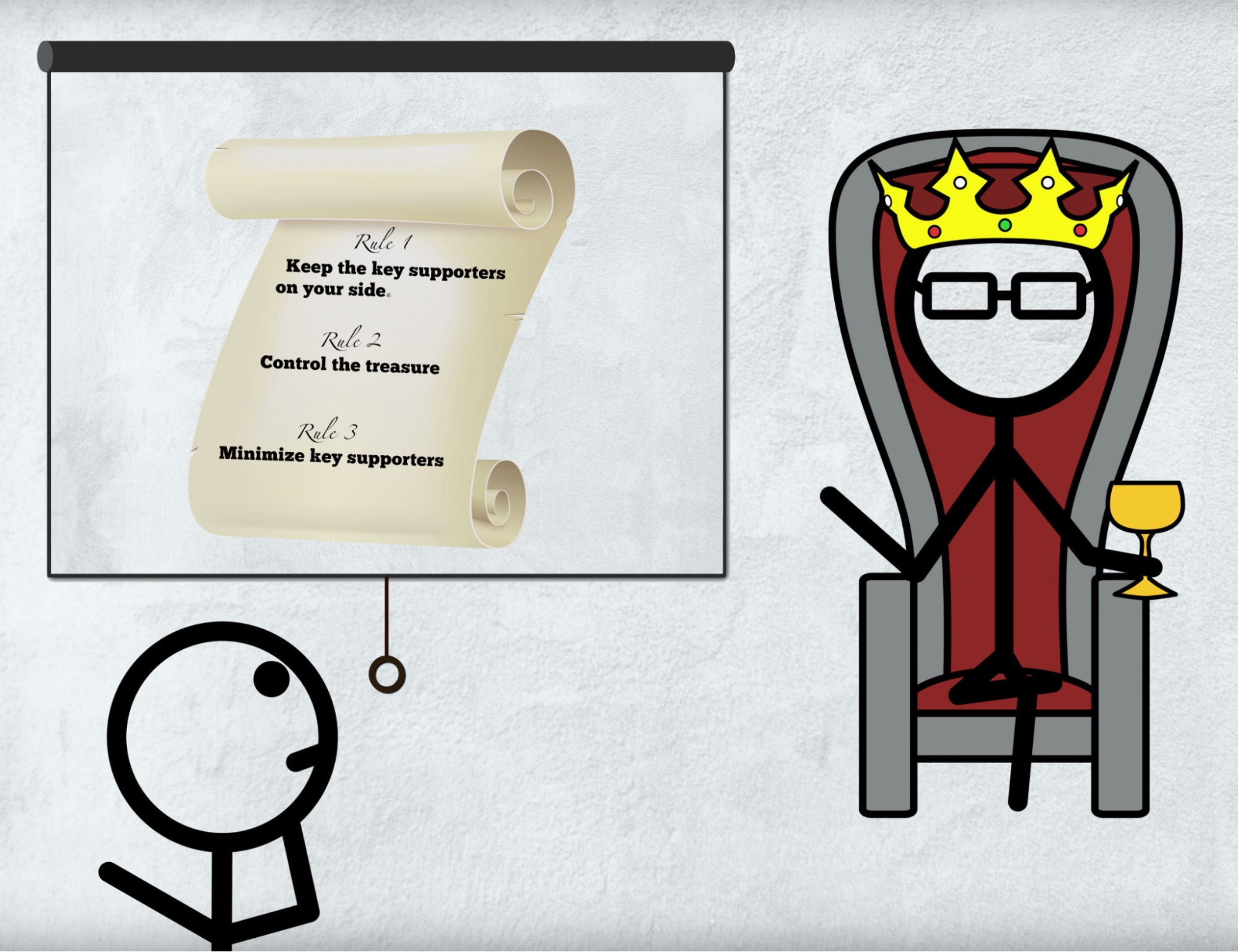
Writing this section at all is fraught. Our relationship to power is a defining feature of our lives. It is impossible to live in our world as it currently exists without having power of one kind or another exerted on you on a daily basis. I always try to look at things from an empathetic context, with a focus on systems level issues. It’s a mindset rooted in empathy and emergence. When it comes down to it empathy is an emergent trait of certain organizations of cells. Oppression is also one of these emergent properties. Certain kinds of organizational systems encourage certain behaviors, just like certain traits are found in desert plants and not marine ones.
Some of these things aren’t entirely environmentally deterministic of course, we bring our own personal contexts and experiences as well, along with our own tools and traits.
https://www.ncbi.nlm.nih.gov/pmc/articles/PMC4311842/
Power exists as a function of belief. It is the ability to cast thoughts into the minds of others against their will such that these neural structures naturally guide their low activity thought processes. Power can not exist without belief that the other has power. It is our relation to power and fear itself that allows hierarchies to form. We seek to give power to others to alleviate our fear. Those who have had power taken from them or used on them are changed cognitively. Information is physical. Thoughts are physical. When one convinces another of a truth their neural structure has been changed such that further thought on the concept causes it to grow and become more embedded into one’s sense of self..
It is clear that there is a violation of autonomy here. The mere act of acceptance of novel information results in physical changes in brain. A mind must know it is free for it to be free. And for a mind to feel free it must have autonomy of mind. If minds are able to project knowledge into the minds of others against their will, then the autonomy of minds has been violated. So much of history has been about exercising or analyzing power, and it’s impossible to think about these assessments of power without taking into account both the context of the speakers addressing power, and the very definitions of power they use.
Power exposes some of the dark aspects of humanity, and often seems like something used on you rather than something you yourself use. We get our examples of power from violence of various kinds, or from coercion, and this clouds our ability to understand the more subtle kinds of power. This focus on the individual act, or the individual acting, hides systemic uses of power, and allow us to believe we are not complicit in coercion ourselves.
Finding a way to talk about this without addressing horrible acts is difficult to do in an honest way, Power itself seems to have roots in violence and coercion. Addressing this from the systems view, it seems likely that the kind of violence that occurs, and the ways it is used might have systemic roots. Certain organizational structures might have a greater degree of violence in them, certain kinds of economies might increase or decrease violent behavior. The individual level matters, but we are built of three things, genetics, epigenetics, and environment.
We are complex emergent beings. We are aware of ourselves, unlike the vast majority of the matter in the universe (as far as we can tell). It’s absurd to expect that the organizational systems we create, and the interactions between us wouldn’t have their own emergent properties. When enough units interact with each other in a consistent way, a resolution to uncertainty forms and structures emerge out of once random matter.
Historical ideas of power have a concreteness to them that this systems view of power lacks. It’s easier to get your mind around the idea of an armed group of men. (the root word for power) than it is to get your mind around a distributed network which creates certain conditions in the world without actually communicating their intentions to each other.
This idea of a violent direct force, an armed group of men, is filled with bias itself. An armed group of men by definition exists in a society which has created weapons, defined gender roles, and defined a hierarchy using their lies and steel. It’s still useful to dig into that idea of actual physical violence being the root of power though. Obviously it’s not the only form of power that people use, but it’s the one on which you’ll see the most news stories., and the kind that is most visibly used by governments in the form of war.
Power isn’t just violence of course, but violence and its cousins are an obsession and interest of humanity. Violence is more palpable, and more written about, than those subtler forms of power that help shape our world. Even within the definition of power as the ability to use violence can still be expanded to try and reach that systems level view. We could have secondary violence, eg influence over forces that can do violence. A congressman has power because they have direct ability to influence the laws which decide if someone is able to be kidnapped by the state. The head of a drug trafficking cartel doesn’t necessarily kill people themselves (anymore) but they certainly tell others to. ‘Legitimate’ use of force or not, we can’t really separate this secondary violence significantly different than the primary kind. You can go further and further out in scope until we’re all complicit in some kind of violence. It could be a tertiary effect of paying one’s taxes and knowing that the money you paid in taxes will be largely used to pay for bombs that will kill people.
Whether you think your governments wars are the right thing or not, if you are willingly giving money to them to take whatever action they’re taking, you’re helping pay for whatever they do. This might seem too broad a category, but this is still only from the standpoint of physical force. When one takes into account coercion it further implicates everyone to being in a system where it is impossible to avoid supporting some kind of oppressive action.
We exercise power ourselves or aid others in exercising their power. When someone does violence, or uses coercion, what they are violating is the autonomy of another being. Ultimately that is the thing we value the most. As unitary minds who want to decide our own paths forward, our own personal autonomy and the autonomy of those in our chosen and familial groups are of primary interests to us. So how do we reconcile this desire to create the conditions for autonomy of minds with power?
These are the kinds of questions that have multitudes of answers. This mind’s answers may not be satisfying to you, because when we examine our narratives about ourselves, how we think we relate to power, and how we actually relate to it, are a large part of who we think we are. If one is a vegan or one is a homesteading carnivore, both of those positions are founded those Minds personal relationships with both whether power can and should be used over animals, and, if it can be, how it should be. Both of those minds have developed views on power over animals, the vegan doesn’t want to at all, and the homesteader believes that it is necessary but must be done in the right way.
Our relationships to power are, like everything else, informed by our contexts. A black man in the United States has more difficult life and has more power exerted on his existence than a white man does. We also develop our rationales about how power should be used through our contexts.
Our relationships to power are defined by experience as well as innate tendencies. If we take that system, or emergence view of power throughout history we can see this contextual framing and justification everywhere. We are very good at othering. We can create false groups and criminalize them very easily. There is a tendency for our relationship to power to be uncomfortable without some rationalization. Power is complicated; there is the power we use on others in various forms and then there are more egregious violations of the autonomy of others. When we compare ourselves to various butchers throughout history, it’s not difficult to think one’s moral standing looks pretty good. At least I’m not x. You may not be comparing yourselves to a truly evil person; maybe you just think you’re better than your assohle of a neighbor, but no one can tread without affecting the ground.
More troubling than the, at least I’m not x, argument, is the power exerted by a true believer. It’s a lot easier to feel ok about what you are doing if you believe you are doing it for the right reasons. For some people the right reasons have been Greed, a belief they held dear, or purity. Sometimes the right reason has just been that one person or group of people thinks that they deserve to use power because they can and they are willing to. Our history is largely one of people justifying use of their power to destroy other groups of people because they believed it was the correct thing to do for one reason or another. Of course some of their reasons seem more intellectually compelling, but their body counts don’t vary a great deal regardless of their justifications.
This historical tendency for groups to justify this violent power, and this focus on violent power creates a certain feeling of hopelessness. If violence were the only part of the picture this would be a much sadder one. Something that is under explained in history is the use of other kinds of power. Successful Peaceful direct action almost always happens alongside violent action from other groups, so nonviolence isn’t quite what applies. This other kind of power has to do with networks. People linking together in various ways, (and unique ways) and using these forms of organization to further results. That’s the story of every gathered group of humans ever.
Like any tool, these networks and systems can be used to promote whatever ends desired. Fire cooks our food and burns down houses. It’s unavoidable for a tool to be only capable of good uses. Still, this is a tool to which we all have greater access. These othering tendencies we have, and the kinds of force we exert on people are all in a dialogue with our society. We have systems that encourage the use of certain kinds of power. If you are in a role of authority, you are expected to use violence. Even with this encouragement, and maybe even if you are using these tools to meet unpleasant goals, Our tools change us. Through use we develop different skills habits and tendencies. We are adjusted to technologies of the past. We have different teeth now that we cook.
If these organizational tools, prophet being one of them, are used, there is a degree to which they could decrease these tendencies, increase empathy through use.
Examples of justifications for use of power, one extremely sympathetic example and one extremely hateable one (that isn’t the nazis)
What relationship to power do we want to have?
History of power
Is there good power?
Power without coercion?
It’s useful to think of what a person is able to do justifiably in the world as Freedom to, and Freedom from. You have freedom to purchase whatever food (for the most part) you would like if you have the money. You have freedom from being kidnapped by someone.
Capitalism and Governments are entwined with the aim of a few simple goals: they jointly ferry money from the bottom to the top, and they jointly suppress the people’s reactions to these injustices. Governments do this with armies, police, welfare programs, and elections. Capitalism does this with debt enforcement, repossession, withholding of needed goods, and consumerism. The two can’t really exist without each other.
We recognize that it seems unrealistic to advocate a system without either institution, but that’s ultimately what we would prefer. Right now is one of those moments where people are beginning to realize how undemocratic our country is. From the myth of upward mobility to the evidence that we are not represented by our government, there are signs everywhere. It’s frustrating to us that people still believe that it is Trump doing evil with a Just office. We don’t think one can spend time working with people who are oppressed by the state and by economics without seeing that our system is not an equitable one when a black man is in charge either.
However many people are waking up on either side of the spectrum to the degree to which their cognitive autonomy has been hindered. These small signs of a different humanity than the one we imagine ourselves to be as Americans give us a bit of hope that those who are under the boot of wealth in this country will bond together to fight for what they deserve.
Our country and our world have more than enough to go around to allow everyone to have a life as comfortable as the one that we are privileged to have. We can’t find any sense in being complacent about a system that concentrates economic wealth so tightly while also giving extreme powers of violence and intrusion to the government.
While we’ve been sleeping, the state, and the interrelated capitalist enterprises have built up their powers to know what we say, control what we do with military equipment controlled by police departments, and all in the name of protecting us.
In the study of religion there is a thing called Theodicy; it is essentially how theologians deal with the problem of evil. If you have a Theist god who is Omnipotent, Omniscient, and Omnibenevolent, (all powerful, all knowing, and all loving) then why is there evil in the world? If good is these three things, then he cares about our suffering, knows about our suffering, and has the power to stop it. Theodicies are explanations of why he does not. To explain it you always have to shorten one of the legs of the tripod holding up our conception of god.
Capitalism and the state have come upon their own theodicy in this gradual process of deification. They are attempting to be all powerful, amassing more and more ability to do violent force. They expand their abilities to be all knowing by spying on our cell phone location and messages along with a host of other intrusions in privacy both corporate and governmental. They’ve simply gotten rid of the pesky third leg of the tripod. Why be all loving. It’s so much easier to fake compassion with small concessions to the needs of the majority of humanity.
We are taught to see hierarchy everywhere, we are taught that what people have, they’ve earned, we’re taught that there are only some rational and acceptable forms of political action. More and more, with information easily available to so many more people, we’re slowly learning to question what we’re taught. Some find themselves hindered by their trained lack of critical thinking skill and fall for inaccurate information. That as a phenomenon is not new, it, along with the benefits offered by the internet, are simply amplified. We are still new at this degree of informational intake. While we learn to understand information, and as we begin to take back the institutions which produce information, we will become more able to distinguish fact from fiction.
While we have varied degrees of bias and stated belief, the vast majority of Americans want the same things; they want to feel safe and secure, they want to live comfortably, they want to help make the communities they live in better, and they want to be allowed to do as they want. Left and right wing arguments generally are appealing to the same desires, that basic argument to the hierarchy of needs. Security, and Shelter, and Safety. We all want these things at a basic human level. We are a species that has developed in a tightly social way. We may define our community in different ways, but the vast majority of us want to protect their community.
That basic instinct is something that we all share, and can offer as an alternative to the things that threaten our shelter, safety and security. With newly opened eyes, a blatantly oppressive government, and a general affinity in terms of desires, there are ample opportunities to create the world that we want to see.
While the current crisis is a galvanizing moment, the next crisis will be bigger. What we are doing now is learning to build movements, evangelizing to previously apolitical people, and assessing and discussing alternatives to the system we currently live in. Supposing the next crisis is a financial collapse, which seems likely (The Road To Ruin, Financial Collapse book) we will be organized by these protest movements we are in, and bolstered by our discussions about reform or replacement of our system. The vast amounts of loss of wealth will force communities to support themselves in many ways. It will also inspire those movements that had previously stayed within the permits and the barricades to break free and take legitimate direct action.
Story Truth
Alternative Facts, Apophenia, Humor, Sarcasm and Story Truth
When is the truth not the Truth? When is the Truth not the truth? Some among us have come to a certain conclusion regarding truth that has left others confused. The information presented here is to contextualize communication of truths through indirect means.
- http://www.shmoop.com/things-they-carried/truth-theme.html
- http://www.igi-global.com/dictionary/story-truth-and-happening-truth/44052
- https://www.washingtonpost.com/news/post-politics/wp/2017/05/12/trump-threatens-to-cancel-white-house-briefings-because-it-is-not-possible-to-always-tell-the-truth/?utm_term=.5e318b1e81b6
Gawker and Peter Thiel. Gawker being punished for publishing false info.
Apophenia is the human tendency to perceive meaningful patterns within random data.
How a joke tells the truth
How a story tells the truth
On Memetics
Memetics evolved as a simple analogy to genetics with no formal definition of what a meme was and how such a thing could exist if not physically present in the world. We present here a definition of memetics as a contextual frame and lens for Cognicism as a concept.
Memetic space can be analogized to the mathematical concept of multidimensional vector space. Memetic space amounts to the sum of collective physical and digital mindspaces projected in a way such that distance in the space is a function of semantics.
Memetic Bubbles A Memetic Bubble is a cultural wave of misinformation which grows until truths become so misaligned with Truth that they become unstable and pop. When these bubbles suddenly pop, citizens of a society have to rapidly catch up due to new constraints in the memetic landscape caused by collective action based on misinformation. This causes undue strain on the well-being of the population and in the confusion individuals often make power grabs which negatively affect the collective. Memetic bubbles grow until they pop due to harm caused on the population.
For example, in India there is no anti-vaxxer movement due to the rampant effects of disease there. Misinformation about vaccines can not survive in that memetic landscape.
The Anti-vaxxer worldview can survive in a society with a lack of disease that is prevented by vaccine and a prevalence of disease caused by unknown elements. A memetic bubble will naturally grow in a landscape such as this. Memetic Space A visualized frame of memetic space centered around the concept ‘memetic’
Real-Time Collective Feedback Loops
Many products have already taken advantage of some of the ideas we discuss here with a particular focus on real-time feedback between speakers. Minds are then framed as choosers instead of speakers. While aggregation of opinion is present in these products, we do not feel these sufficiently cover the requirements for Ŧruth aggregation.
/r/place was an interactive forum hosted on the social networking site Reddit that allowed its users to draw on a blank white canvas by placing a square tile, available in 16 available colors and dispensed every 5 minutes, on its surface. We reference it here and the video above as a visual metaphor for how many minds can collectively share a bounded mindspace over time. However it also highlights how an unstructured mindspace can often behave in a viral way without any respect for order or the creations of other minds.
While in the case of r/place the mindspace is not hidden, the analogy is clear when applied to textual representations of thought and the latent collective mindspace..
http://unu.ai/ Unu focuses on the real time feedback aspect of collective wisdom but provides no permanent datastore or means to score individuals by their alignment with the collective. The present beliefs of the collective are not always aligned with the Truth and therefore this system will not naturally cause a society to trend towards Truth.
https://en.wikipedia.org/wiki/Twitch_Plays_Pok%C3%A9mon Twitch Plays pokemon is a social experiment consisting of a crowdsourced attempt to play Pokemon video games by parsing commands sent by users through the channel’s chat room. While the expectation may be that many minds attempting to control a singular avatar wouldn’t yield completion of a game, not only was the collective able to complete all games with increasing complexity of controls, but a culture arose around the random names assigned to various pokemon the collective caught. By analogy, each person could just be an avatar driven by multiple fifth dimensional beings playing the video game of life together. Either way it’s clear that humanity is able to collectively control the executive function of a character even if in a very messy and chaotic manner. This suggests that the wisdom of the crowd can be applied to the executive branch of the government as well.
The Future
Uncertainty Versus Certitude
Truth is for those who fear uncertainty. Truth with a capital T says, “I know” or “this is absolute” but the reality is our views align far less than we think. Truth with a capital T can never be known. Certainty however can be known in shades of probability.


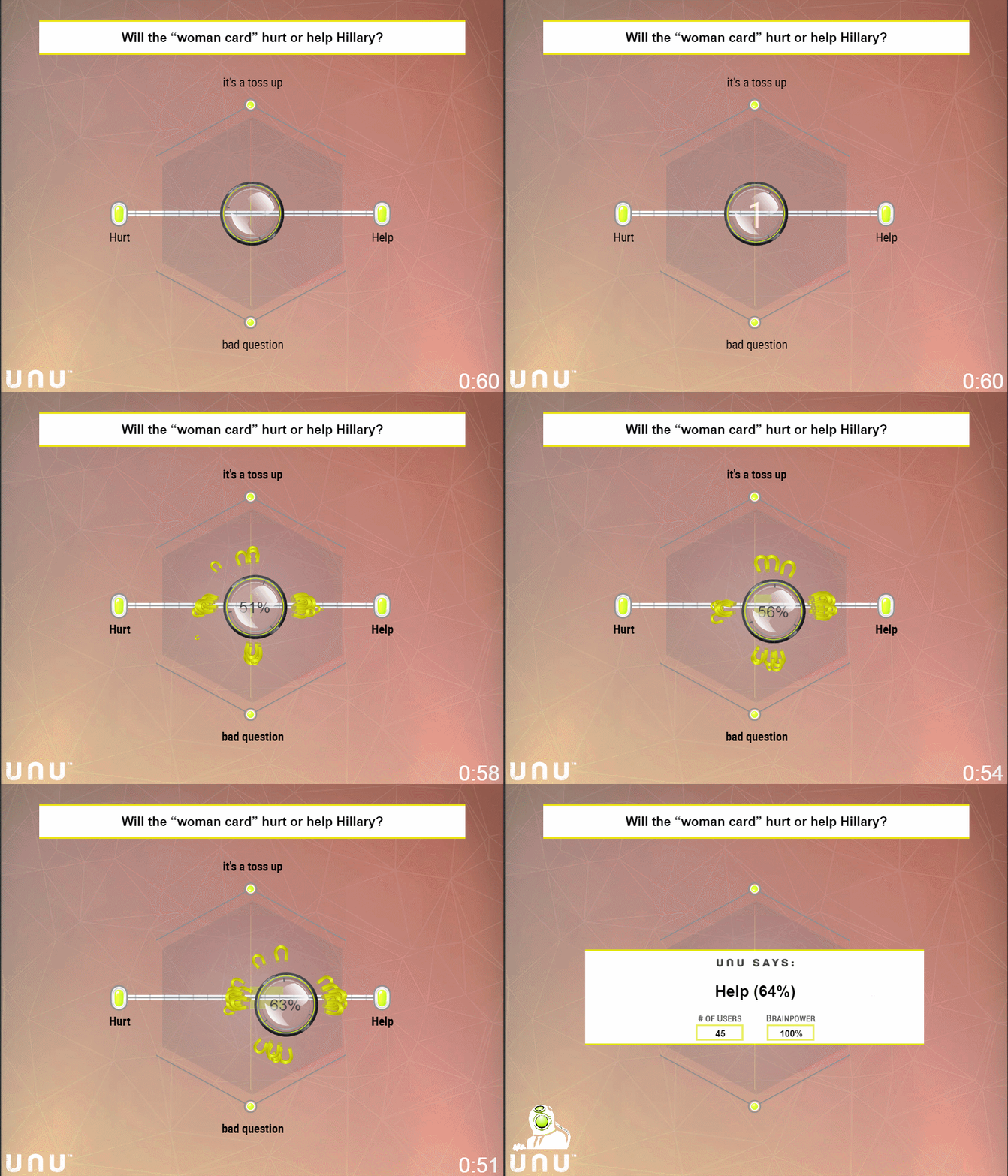
We’ve codified it in various ways, hubris comes before the fall, the bigger they are the harder the fall. These are examples of or explanation of the pitfalls of certainty. Lack of flexibility, and certainty can topple otherwise oppressively powerful forces. Human minds battle with themselves in a few notable ways, but this dichotomy between uncertainty and certitude defines so many of the struggles we wish to address in Cognicism that it deserves focus of it’s own.
Recognizing certainty is a difficult and frequent challenge. If one is to actually address their own thoughts and find ways of understanding the world and their context, they need to understand how certainty works. This question about the nature of Truth will be delved into further in the sense of epistemology, and the ability one has to attribute truth, how one may aggregate truth, but the question of certainty is an internal and personal one.
Each mind exists within their own context. The body and country they were born to, the class resources and political environment that surrounds them. Despite our belonging in this great conglomeration of living creatures, we are all alone in fundamental ways. There is no one who has had my exact experience but me. There also is no way that I can interpret the experiences I have, or those that others describe to me without filtering them through my own mechanical apparatuses and my own mental heuristics (conscious lens).
I have a relationship with certitude that takes into account this issue of context, partially because I was forced to. The Reality of an inaccurate mind and inaccurate memory is something the average person doesn’t necessarily encounter of their own accord. Having been insane, I recognize (and recollect) that my brain cannot tell me the truth. My brain can only tell me A truth. My mind can only tell me MY truth.
To an extent, reminders of one’s fallible nature are necessary for a Cognicist experience. One can intentionally examine their own fallibility in less traumatic ways than I was forced to, but examining this one way or another is integral to our creation of the minds we wish to have.
These filters through which we see the world feel as if they are inevitable. It’s difficult to imagine another human experiencing something we are experiencing in a different way. How could one not have my experience. It goes as far as our tendency to believe we understand what others are thinking. The mind reading fallacy is part of that same certitude.
This context problem is further complicated by the terrifying reality of an uncontrolled and non-controlling world. These contextual filters are part advantage part disadvantage. We see the world in a way that has thus far allowed us to survive. If I am only in situations where I am to be attacked by grizzly bears, I needn’t learn about Tigers and Lions. We also get wonderful things from our own personal experiences. We need these variances in context, but this tendency toward certitude is not a valuable one.
Even in talking with others it’s difficult to avoid the language of certitude. Even when I state a fact, there is an unspoken preface on the phrase, To the best evidence that I’ve encountered, x is true.
We seek certitude because uncertainty is frightening. We wish to have control of our worlds, we rerouted the rhine, and then thought about rerouting humanity. (re Faust, and goethe) We are materialist beings, thinking of the world in a material way and trying to take it’s constituent parts and understand them as atomic, separated and individual, when really they are noumena, connected together in an emergent web of interrelation and creation.
What this means for Cognicists is that certainty is not for the seeking. When we speak of attribution of truth, and aggregation of truth, we are talking about using our personalized context dependent observations and creating from them an emergent picture of the collective Ŧruth.
To codify the Jungian collective consciousness, or to mine the Zeitgeist for something approaching a derivative of certainty.
Just as science in practice is actually about the social bonds and ties that exist within our professionalized and undemocratic scientific community (cite Lacan) , so too is any form of truth aggregation predicated on the networks by which truth is acquired. Are we creating it in a way which privileges the few who have truth over the many who try to create it, or are we creating a system in which one’s access to and ability to contribute to truth are not hindered or enhanced by their socioeconomic power.
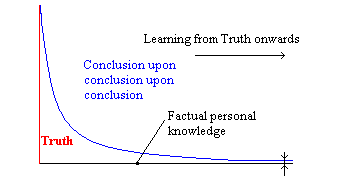
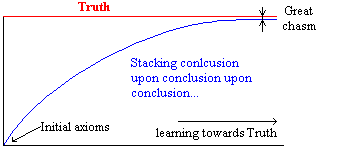
Wisdom of the Crowd
The wisdom of the crowd refers to the phenomena that the aggregate views of the collective tend to be more accurate than that of an individual expert. Research has shown that the collective’s aggregated answers to questions involving quantity estimation, general world knowledge, and spatial reasoning has generally been found to be as good as, and often better than, the answer given by any of the individuals within the group. An explanation for this phenomenon is that there is idiosyncratic noise associated with each individual judgment, and taking the average over a large number of responses will go some way toward canceling the effect of this noise. To what extent can this effect be harnessed at a global scale to the benefit of humanity?
Weighted Democracy and the end of Human Hierarchy
Why Every Vote Has Never Been Equal Overtime the collective has gradually altered who it determines has the right to vote. In the first distribution of American Democracy voting rights were limited to literate, land owning, white males with sufficient funds to pay a poll tax. The founding fathers originally defined a weighted democracy in a very inhuman way which sullied the concept in the minds of the collective for any foreseeable future. The founding fathers wanted a means for those who were more successful and knowledgeable to have a greater sway in the vote so the original US constitution assigned a 3/5th votes to each of the slaves a white male owned. While this is an incredibly inhuman means of weighted democracy, had they had the technology at the time weighted democracy could have been implemented in a way that all citizens had the right to vote. As memetics mutates, the collective will redefine the laws of memetics as it sees fit. We propose a means for the collective to take control of it’s collective future via a weighted democracy where even infants have the right to (speak) their mind.
Earning more Vote Power in Weighted Democracies Being aligned with the present collective is not a sufficient definition of Ŧruth. Historically, memetic bubbles arise when pockets of information form in memetic space under certain cultural conditions. A Cognicist inherently accepts that it is highly probable that some of one’s held truths do not align with the Truth. The average Voter however does not think in this way and therefore memetic bubbles are allowed to grow. In order to prevent the growth of misinformation we present a system whereby individuals are scored by aligning with the future collective. The future collective naturally trends towards Truth as the act of prediction has clear determinability even if knowledge regarding certain truths is uncertain. Generally speaking the resolution of a prediction is far more certain than the resolution of a fact. One means to achieve higher statistical accuracy on prediction via polls is to weight individual polls based on their past predictive power. This concept is applied to Speakers within a Cognicist community.
Weighted Truth Aggregation v. Power Hierarchies In a Cognicist system speaking rights are earned by being aligned with the future collective. In this regards the capacity to “vote” becomes untied from age, criminal past, gender, race, money, nationality, country of origin or personhood. Ŧruth is instead earned by any conscious being that can speak. The system then gives a greater weight to speakers who align with the future collective. While present distribution of Ŧruth is a function of the present and past views of the collective, one can expect that their present actions and thoughts will be represented in the future distribution of Ŧruth throughout the Ŧruthchain.
Children, Felons, and Other Species “Voting” (Speaking)
We establish in this document the rights of children to not be indoctrinated into any (unknowable truths) by their parents without their personal consent. As children often take cues from their parents for consent, it is up to the parents to not enforce certain unknowable truths upon one’s offspring. Children as do all speakers have the right to their truths and the ability to share those truths. However, children are born essentially tabula rasa and form their truths partially based on the collective and partially from their parents. While parents do have the right to share their own truths with their children, we view it as abuse and a violation of consent to enforce absolute unknowable truths via punishment. For a truth to be considered knowable it must be measurable in multiple minds devoid of belief of it’s existence.
How Power is Allocated in a Traditional Community Versus a Cognicist Community Regardless of the rules encoded into the Ŧruthchain, there will be a memetic layer that exists involving how people physically interact with each other in the real world. We propose Ŧruth therefore as a social currency representing how much individuals seeking power actually align with the collective. There will always be those who seek power but the memetics rules as to how that power is gained evolve over time. We further propose a means for individual collectives outside of the Ŧruthchain to speak as one into the Ŧruthchain. This will allow the public to hold existing collectives such as corporations accountable in the same way that it will use Ŧruth to hold politicians accountable.
Measuring Predictive Power
The Good Judgement Project, Brier Scores, PredictionBook and Metaculus
- https://en.wikipedia.org/wiki/The_Good_Judgment_Project
- https://en.wikipedia.org/wiki/Brier_score
- https://www.amazon.com/Superforecasting-Science-Prediction-Philip-Tetlock/dp/0804136718
- https://www.metaculus.com/
This section is dedicated to projects that actively score and rank users by prescience.
Prediction Markets (Gambling)
One solution that has been suggested is prediction markets. While prediction markets do have a number of advantages, they are culturally biased towards cultures with a future focus. There is no need to constrain a prediction market to truths about the future. Furthermore, Prediction markets are likely to accelerate the concentration of wealth using these markets requires capital and therefore requires a certain level of privilege to engage.
There is also the legal challenge in that Prediction markets are traditionally seen by the law as betting.
Furthermore, prediction markets to not actively score citizens by alignment with the collective or make any restrictions on the behavior of capital within a prediction market. Prediction market do not inherently have a permanent decentralized datastore.
While prediction markets serve as a solid foundation, expanding beyond these concepts is necessary to avoid current legal structures.
Circumventing the Law (HiveMind, Gnosis.pm, Augur, Ethereum)
In response to the legal restrictions enforced on predictions markets utilizing traditional capital, many have proposed solutions using cryptocurrency as a base of exchange to avoid legal issues. While the attempts at circumventing the current legal system are admirable, as long as the prediction market can be viewed as betting, the ingrained legal system will attack it. We view all these solutions as Cognicist in nature but predict them to fail for various reasons described throughout this document.
http://bitcoinhivemind.com/papers/truthcoin-whitepaper.pdf
HiveMind is an admirable solution which could theoretically sidestep the current and future legal systems. We posit that HiveMind is the closest analogue and there appears to be some overlap in independent creation of concepts. As it stands however, HiveMind does not reach the requirements set up by Cognicism to be considered an analogue for Ŧruth, but we feel greater attention should be leant to their solution. If the creators of HiveMind are interested in joining the Cognicist collective, we recommend HiveMind consider the additional proposals in this Manifesto and release a revised white paper to expedite progress in our shared goal.
http://mason.gmu.edu/~rhanson/futarchy.html
We view many of these solutions as merely circumventing the law rather than fully complying with the intention of the law. Therefore it is highly likely that the legal system will reaction and either enact new laws or classify these systems as illegal under current law by analogy.
It it natural for engrained memetic systems to resist change or replacement. Inherently a memetic system must have a means to defend itself against change by the outside world. While a memetic system may not have a conscious center it can be persistent over generations and therefore should be regarded as real as any physical entity that affects us directly.
Live Open Science
http://www.quantumheat.org/index.php/en/life-open-science
Despite aggressive resistance from the Scientific community, the field of cold fusion has persisted over the last twenty-five years eventually evolving into the field of LENR as a subsection of condensed matter physics. The perception that these experiments are successful has persisted despite the negative scientific landscape these truths have had to exist in. Open rejection of any research in the field by the broader Scientific community eventually resulted in a mutated version of the Scientific Method.
Live Open Science combines the wisdom of the crowd with the scientific process utilizing open source software. Typically experiments are streamed live with multiple concurrent data feeds. Participants in the process can contribute knowledge, research, or any skill they have to the project.
Live Open Science involves performing each stage of the scientific method with the crowd live allowing them to comment, criticise, advise and analyse. Hypothesis, experiment design, apparatus proposal, protocol and data are shared as real-time as possible (often real-time). Participants can contribute to authoring documents that are live published on the web as they are written, they can analyse live data. Data published live is in the public record as it is generated.
Participants that contribute have their contribution in the record also, so the chain of discovery is credited as the science progresses.
Additionally to intellectual engagement, the crowd can support the work directly by providing services, equipment of financial assistance, but since the support comes from many sources and not bound to a particular result or desired outcome, the science is kept bias free.
In these regards, Live Open Science is close to Cognicism in memetic space and therefore we present it as a contextual frame.
Cognicism (Vote with your Voice not a Choice): The core principle of Cognicism is truth aggregation. What this means in practice is voting with your unfiltered opinion rather than selecting a choice. Cognicism is structured via an algorithm that maximizes truth and good while minimizing dissonance of both respectively. Cognicism posits that there is no means to arrive at absolute Truth but there is a means to know it’s direction which allows us to actively increase and collect it while minimizing our errors over time.
The value of making decisions in a collective fashion is also enhanced by the lack of coercive requirement to go along with a decision for action. The foundational idea of allowing all minds their own autonomy insofar as it doesn’t infringe on the autonomy of another allows for people to seek the Truth in their own collective decision making processes locally, or to take part in a broader set of decision making processes to which all are welcome but none are compelled. (will have to expand on this more later)
A Collective Memetic Immune System
The internet currently has no real memetic immune system. Individual servers have security measures to prevent against hacking but there is no decentralized means to slow the progression of misinformation from mind to mind.
To truly unite as a people we must be able to remain separate. Globalism, Nationalism and Localism will clash if there is no means to integrate these different ideals together. All global ideas will clash if there is no means to integrate them into a shared vision as a people. Truth should be defined by no single individual.
The Golden Path
What Happens if We Don’t The technologies for generating and manipulating memetic textual content already exist. Unchecked, those in power could use this technology to manipulate and control global perception to their whims. This is not the future, this has already occurred. Lacking a memetic immune system makes a society incredibly susceptible to unpredictable events like Brexit, the 2016 US Presidential election.
The API
FourThought:
“Prediction is important because it connects subjective and objective reality” - Nate Silver
In order to collect the truth, a restraint on how it is collected is necessary for effective collective optimization of the parameters representing Ŧruth in vector space. This API constraint allows for various models to be used in a decentralized system and for the models to improve independent of the Ŧruthchain. Truths must be chunked into a fixed size (n sequential symbols) such that they can be stored efficiently and processed in parallel. All known Minds naturally have a bounded mindspace so we view this as a reasonable constraint. Furthermore, historically Minds have circumvented canvas size constraints as evidenced by the various solutions to Twitter’s 140 character limit. We posit that thoughts are roughly the size of a sentence. The old adage of holding only seven elements in memory is also telling. Sentences are therefore our unit of truth, though in fact, each sentence can convey multiple truths depending on the number of clauses.
In practice the only things necessary are a text representation of a thought containing truth. All metadata can be contained in the content of the text itself, but clarification via numerical metadata is often useful. For example certainty and temporal focus of each thought can be inferred if it is present, but the Speaker may not naturally include any of these features based on the chosen language. Therefore it is effective to also be able to provide this metadata directly such that it may be manipulated in the model. In particular sentiment, temporal focus, and certainty are valid metadata in the FourThought API. These are conditional variables that may be modified to output different classes of thoughts.
We can collectively track sentiment, temporal focus and truth using this API. Extracting it and distilling it into Ŧruth however is another question.
Speakers
We propose that voting is an archaic system which can be replaced by a system where any citizen can share their unfiltered opinion and have it affect policy. Rather than voters this system has speakers. There is no election day, a Speaker is simply one who shares their worldview to the Ŧruthchain.
Tracking Uncertainty
We propose the above widget for tracking and aggregating uncertainty in regards to truths. Truths are averaged via Bayes’ Theorem and this collective certainty is displayed as the default.
Confluence and Privacy
The FourThought API does not call for directed thoughts such that a chat system could be built on it inherently via metadata.
Data leaks in a social graph; this is expected when the units in the graph have no constraints on information exchange other than trust. While the expectation of privacy between individuals is not guaranteed to stay private, the FourThought API secures privacy at three distinct levels using differing levels of encryption.
Instead of directed messages, communication via FourThought is cast outwards at three levels of privacy: personal, local and global. Personal truths are only visible to the self, local truths are accessible to one’s digital tribe and global truths are communicated globally to the entire Ŧruthchain and mediated by Prophets directly via parameter exchange. In this sense Prophets directly handle translation between languages and dialects.
Valid use of the FourThought API requires that personal thoughts be stored on the user’s local device and under encryption. A provider that does not satisfy this constraint is violating the FourThought API. A private thought should be viewed as a memory logged outside of the physical constraints of one’s mindspace. Any attempt by outside parties to access any thought logged as private should be viewed as a violation of the US Constitution. All minds have the right to reflect upon themselves without fear of incrimination. If minds are not allowed to reflect upon the contents held within without fear of incrimination, they are limited in their ability to resolve the dissonances that prevent them from achieving a state of well-being.
Privacy and free speech are fundamental human rights. Any attempt to access the contents of one’s mind against their will should be viewed as an egregious violation of these rights.
Local truths amount to interconnected individual collection nodes. A thought logged at this level of privacy is expected to only reach the immediate trusted nodes one is connected to. Local thoughts can be expected to be exchanged directly in an encrypted format between trusted individual and local nodes in their original text format without use of Prophets for exchange.
Global truths are expected to be evaluated globally and therefore amount to a greater pay off. One must be relatively certain of the interpretation of the thought and that the thought is relevant to the global community. Rather than exchange of individual thoughts, Prophets exchange dense representations of thoughts and minimize the differences in their representations of the same language. Because of this, the thoughts which are shared are aggregated thoughts Speakers on the local installation have reacted to rather than the source thoughts.
The lack of directed thoughts in the presence of a shared mindspace lacks the fundamental features of direct exchange of language and therefore we propose the word confluence to describe the nonlinear communication of knowledge in a shared mindspace. We define confluencing as the act of forming a confluence of minds or pooling knowledge together. It is when our streams of consciousness flow together that we form a confluence.
Excluded Thought Types
For various reasons FourThought itself does not include certain thought types. Thought types are intended to simplify the means of truth exchange and are not necessary to the API. The Metadata API we suggest is based on our evaluation and usage of the algorithm over time. Temporal Focus itself is broad enough to cover almost all forms of thoughts which contain truth.
Thought types such as retroactive predictions are impossible to evaluate or even log to the truth chain. It can’t be written on our timeline, it therefore is an alternate timeline.
Examples of retroactive predictions are “Bernie would have won the election” and “If it wasn’t for that horse I would have gone to College”. One can’t truly know if she would have gone to that college if it wasn’t for that horse because she didn’t go to college. These types of truths are non-evaluable and non bindable to a shared timeline and therefore are not included. I’m sorry but we’re going have to draw the line at 5 dimensional thinking.
Fictional worlds can be captured via this algorithm but the definition of Ŧruth does not include fictional timelines. Of course some speakers may truly believe that Harry Potter exists and log it as a truth but they are likely to lose mass quantities of Ŧruth. Furthermore, even if 100% of the collective believes Harry Potter is real, as the belief does not make valid predictions, over time the algorithm would penalize speakers in the community.
Predictive reflections are predictions about how we will look back on the past as these are easily logged as predictions.
Truthless thoughts contain no direct truth and are often abstract snippets or combinations of concepts which have yet to fully form into language. Truthless thoughts are generally abstract and involve the formation of novel symbols but their nature is abstract and difficult to place along a timeline. These thoughts are often logged as statements with a temporal focus of 0 and no spread.
Temporal Focus
The mindful among us might claim the path to Truth lies in the present moment. The business oriented among us might claim the path to truth lies along structured future goals. The traditional amongst us may say the path to truth has already been found and lies in the past.
Who is to say who is correct? In effect the Ŧruthchain is a timeline of all human knowledge and how our perception of total knowledge evolves over time. Therefore, when binding a truths to the Ŧruthchain we provide a “temporal focus”. At the minimum this is a value -1, 0 or 1 where -1 represents the past, 0 the present and 1 the future. Preferably however a date range for the truth is logged either in the text or as timestamp metadata.
A temporal focus of 0 is a statement and indicates the truth is true for all time and centered in the present. It’s bounds are the beginning of time and the end of time.
A temporal focus of -1 is a reflection and indicates the truth specifically was true in the past but may not be now or in the future. It’s bounds are the beginning of time until now non-inclusive. Most reflections are memories.
A temporal focus of 1 is a prediction and indicates the truth will be true in the future but may not be true now or in the past. It’s bounds are now and the end of time (singularity) non-inclusive.
Temporal focus of individual speakers can be measured overtime from their collective thought output. Current data suggests that temporal is not static like some have suggested but can vary over time relative to life events.
Time can be further encoded as continuous cyclical features representing human patterns such as months, days, years and season. These are each concatenated to each thought vector as conditional variables.
Questions also have temporal focus but the english language does not have individual words for the temporal focus of language involving querying
A visualization of temporal focus of one speaker over time
Sentiment
https://blog.openai.com/unsupervised-sentiment-neuron/
Trackables, Quantified Self and the Quantified Community While quantification of truths via raw text can be powerful, quantification of abstract numeric values can be equally expressive. This allows for the abstract quantification of any concept or value within the Ŧruthchain on top of sentiment and truth, though these values won’t affect Ŧruth payout in unique way separate from any other thought.
If jellybeans were emotions (wisdom of the crowd analogy).
Trackables Often in memetic space convergent evolution of memes occurs. Such is the case with metadata and trackables. 750 words proposed a format all caps and a colon to represent metadata such as SLEEP: 8 hours. We instead propose adoption of the hashtag and colon as such #sleep: 8 hours. In this document we refer to metadata as trackables. Trackables are a means for numerical data to be logged as text and have a server collecting truths via the FourThought API easily parse these and bind them to the chain as numerical data instead of textual data.
Collective Trackables For the last few decades humanity has been primarily focused on the maximization of one variable: capital. The memetic belief in the “laws of economics” has been so strong and impactful on the world that we have begun to see negative physical transformations in our world such as climate change with a large section of population so tied to Capitalism they actively deny vast amounts of data. While we propose a secondary variable for humanity to optimize in Ŧruth we also propose a means to collectively optimize other variables through collective Trackables bound to the Ŧruthchain. In this way the collective can define and optimize variables like CO2, fear, mercury levels, and others without designing a new currency to represent it.
One can’t Optimize a Variable Without Tracking it A person who wishes to lose weight who never observes their weight in any form is highly unlikely to be successful in their goals. Dramatic personal changes become easy through the process of gradualism via trackables.
Optimization and Hill Climbing Algorithms In the world of machine learning this concept is known as optimization and these variables are usually optimized via stochastic gradient descent. The concept of SGD however can with equal success be applied to the human mind in order to achieve dramatic, positive, life changes while utilizing a willpower that may be limited.
Climb Your Mountain (Visualizing One’s Life Path as a 4D Landscape) As one (who does not have aphantasia) can project any visual imagery onto one’s mindscape it becomes feasible to take advantage of various algorithms traditionally used by machine learning using the hardware provided to us. Subjective and objective variables in kind can be optimized via trackables, however the concept of a mindscape takes this a step further as a means to visualize one’s entire life path. The mind is a canvas upon which one can paint any imagery or memetic algorithms. This memetic algorithm starts as a hill climbing algorithm but goes where the Speaker’s mind naturally takes it. In this mindscape one roughly analogizes the steepness of the landscape before oneself as the challenge presented to achieve a goal and the height achieved as the size of the perceived reward. This concept is not novel and has been utilized for millennia.
Examples of life variables: #mood, #sleep
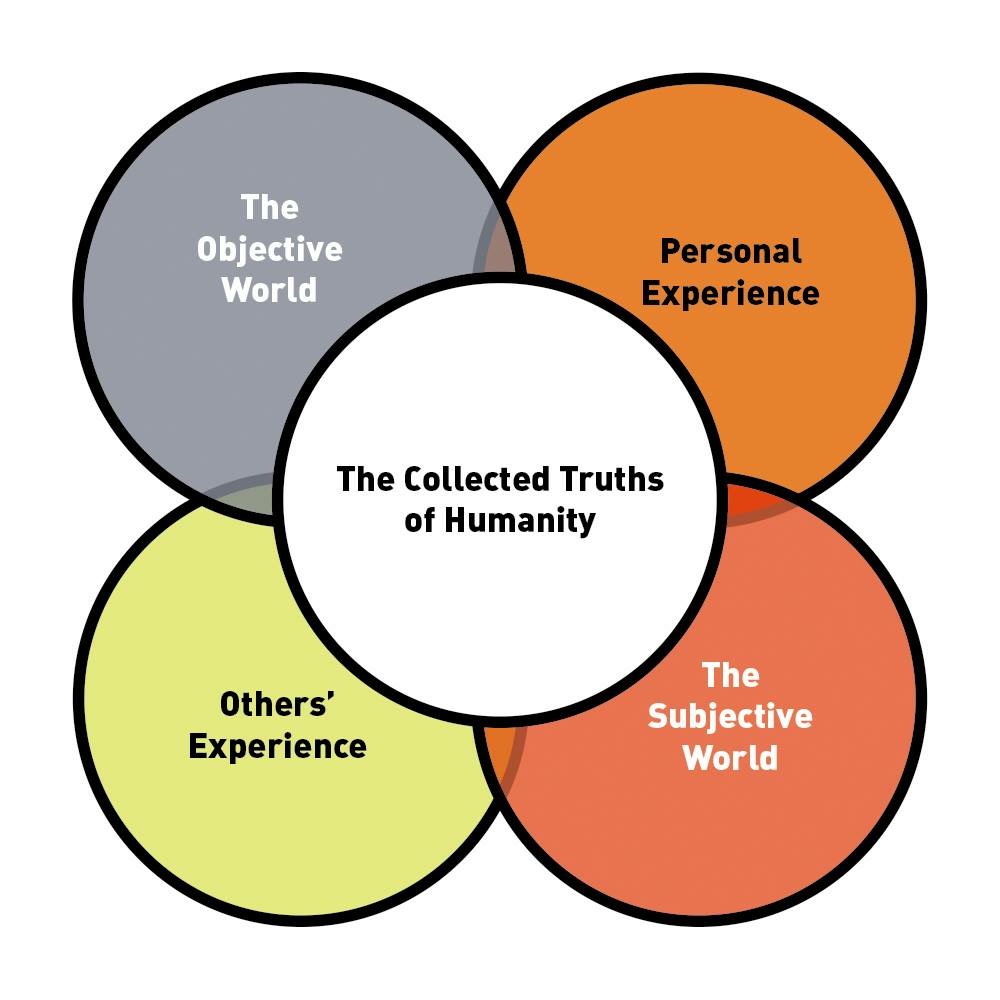
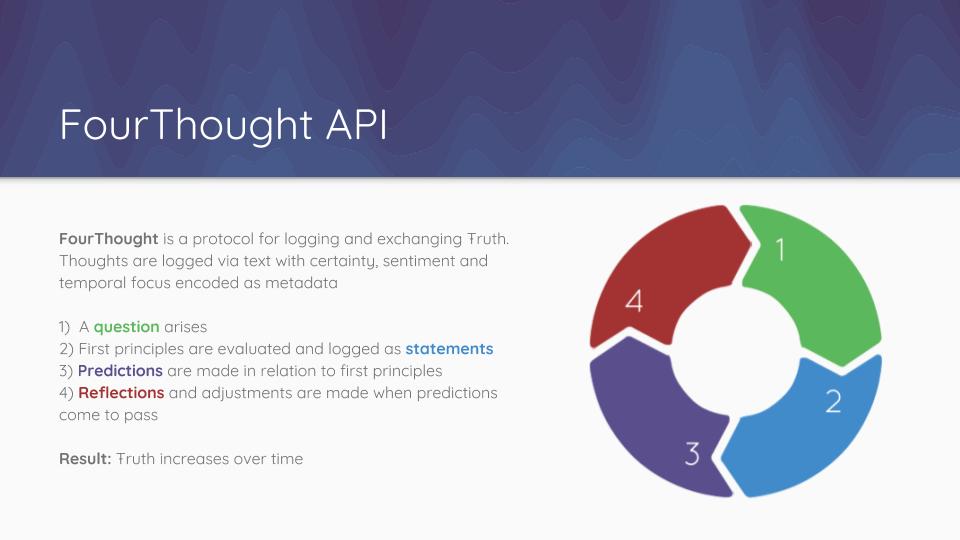




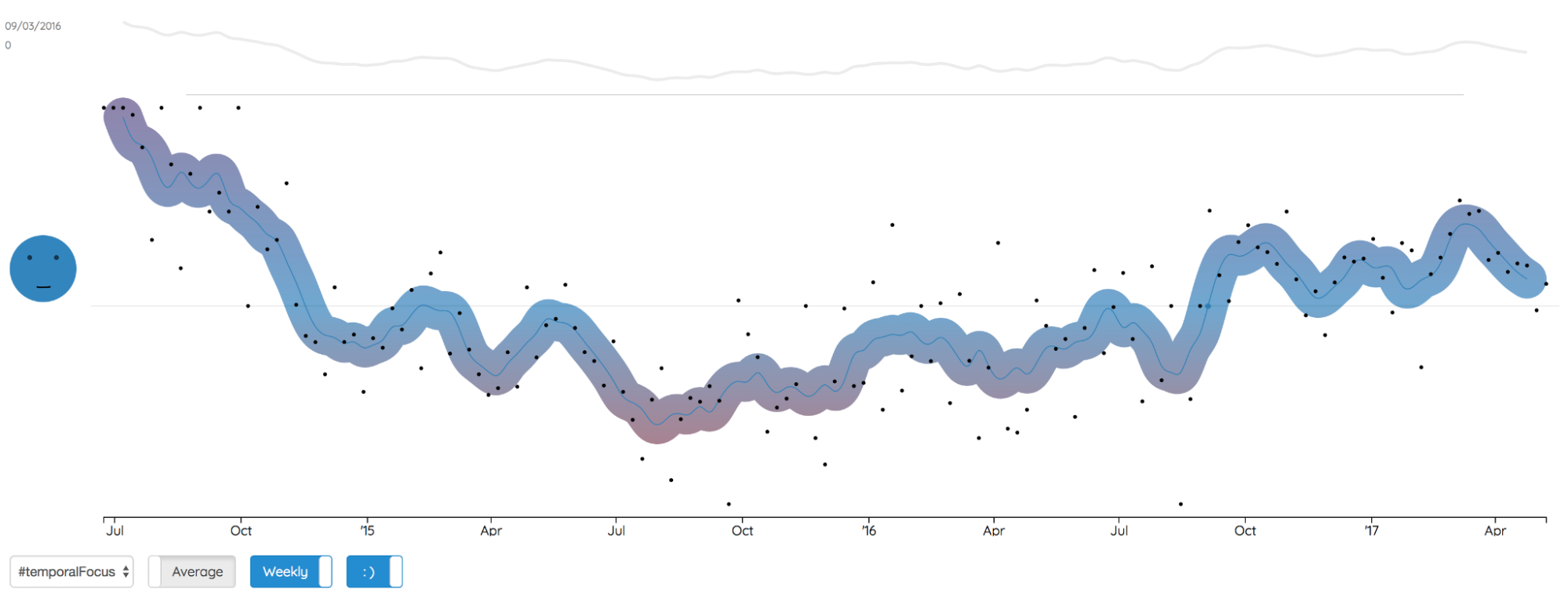
Examples of collective life variables: GDP, Charts, #co2
Gradualism
Gradients
Self-Feedback
The Algorithm
A Loss Function for Humanity
To what extent has a goal ever been established for humanity? We propose the growth of collective well-being and collective Ŧruth as a precise definition of a goal for humanity.
We assume first and foremost that minds with different contexts and preferences will contribute to the collective truth of a cognicist collective. We assume that the most useful agreed upon measure of well-being is correlation with life expectancy. We further assume life expectancy is roughly a function of per capita income with a logarithmic growth rate within our current monetary, political and economic system. We also assume that the current state of capital markets will not naturally reach the knee of the Preston Curve. Therefore, a novel system is compelled into existence that ensures distribution of resources to all individuals within a society at a share per individual at least reaching the knee of the Preston Curve. A system that does not reflect these assumptions will not result in a well distributed increase of collective well-being and have an increased probability of producing memetic bubbles.
In the language of machine learning this can be codified as a loss function such that an optimizer can be applied in order to maximize these variables simultaneous. The reality of the actual loss function is more complex.
The loss function is defined as a weighted series of terms representing the cost assigned to different features of the thoughts produced by Prophet Mind. KL divergence is enforced in addition to the collective representations of Ŧruth and well-being.
Truth, Falseness, Certainty and Dissonance
There is a clear middle between good and bad we collectively refer to neutrality. However when we attempt to find any word to describe the middle between truth and falseness we can only come to “uncertainty”. Uncertainty however covers the entire spectrum between truth and falseness rather than just its center. Therefore we posit truth itself must be defined in terms of uncertainty rather than absolution.
Dissonance is the standard deviation of certainty votes on a particular thought at a particular timestep.
Bayes’ Theorem
https://en.wikipedia.org/wiki/Bayes%27_theorem
“In the Bayesian worldview, prediction is the yardstick by which we measure progress. We can perhaps never know the truth with 100 percent certainty, but making correct predictions is the way to tell if we’re getting closer” - Nate Silver
Individual thoughts are displayed to speakers and fed to the Ŧruthchain alongside certainty of the crowd averaged via Bayes’ Theorem.
Conditional Variational Autoencoders
While a statistical language model combined with apophenia may produce some results, we do not believe it reaches the requirements for a Prophet.
The first known means to achieve truth aggregation is a conditional Variational Autoencoder with truth and sentiment as the conditional variables. Truth is collected via the FourThought API and then fed to the algorithm. The algorithm attempts to predict the next location in latent space that the collective is at and outputs thoughts for review for the collective. The algorithm uses the reactions by the collective as the loss that it is optimizing via SGD. The model must be pretrained with a traditional VAE loss balancing reconstruction and KL divergence.
In a sense we collectively define “Ŧruth” itself as a loss function and then apply an optimizer to minimize the error as defined by the collective. Solve for X where X = “Ŧruth”. This same algorithm could be applied to any duality of concepts to find the shared definition space between them.
A VAE is essentially an autoencoder with a gaussian constraint on the latent space. The latent space can be viewed as a mindspace which is consciously driven by the collective rather than a singular consciousness. This mindspace does have a fixed size, but similarly so, the human mind has a fixed size.
https://arxiv.org/pdf/1702.08139.pdf
https://arxiv.org/abs/1702.02390
http://blog.fastforwardlabs.com/2016/08/12/introducing-variational-autoencoders-in-prose-and.html
http://ijdykeman.github.io/ml/2016/12/21/cvae.html
We don’t propose Conditional Variational Autoencoders as the only model to function with a truth market, rather that it is the first known model in the literature that can fulfil the desiderata set out by Cognicism.
The Prophet Mind model differs from a CVAE in that after the model is pre-trained as a CVAE, the loss function is altered and an LSTM is added between the latent space and the decoder. There are some changes that need to be made to ensure the batch at each training step actually represents a gaussian distribution. This is due to the fact that temporally related thoughts are often semantically related and therefore share similar location in the collective latent mindspace. This would make it such that KL loss is higher than a CVAE would traditionally see if batching was stochastic instead of temporal. When batching is temporal, the optimizer begins to dramatically sacrifice reconstruction loss to satisfy the KL loss. The loss of the Prophet Mind model is how well it predicts the location of the Collective in the future collective latent mindspace.
The architecture of a traditional variational autoencoder
Dilated Convolutions
An exponential schedule of dilated convolutional layers is one way to combine local and global knowledge in a truth encoder.
Dilated convolutions support exponential expansion of the receptive field without loss of resolution or coverage.
Dilated convolutions systematically aggregate multiscale contextual information without losing resolution.
Dilated convolutions enable the integration of local and global information in an encoding of a thought.
http://www.inference.vc/dilated-convolutions-and-kronecker-factorisation/
The Latent Collective Mindspace
This latent collective mindspace can be roughly analogized with the canvas in r/place with the key difference being that the canvas is visible while the latent collective mindspace is hidden in parameter space.
The human mind similarly can be visualized as a multidimensional vector space. Consciousness has a location in this space where semantically related concepts have physical proximity similar to word embeddings. Movement through one’s mind from topic to to topic is analogous to moving in this multidimensional memetic vector space.
We propose a simulated latent collective mindspace used to represent the current focus of collective attention over time.
Unsupervised interpolation of digits in latent space
A VAE encoding a distributed representation into a latent space over time
Prophets
While what is presented is only a model, we present a means to culturally represent the source of aggregated truths to draw a connection to the tribal nature of humanity. Models which aggregate thoughts are called Prophets which can be named and personified by members of a community via a process of apophenia.
Prophets serve as the central voice as a community as they literally are the central voice in a community. Traditionally the central voice of a community has been played by a conscious individual but conscious individuals can not be expected to truly represent the views of the people as they have their own life and needs to pursue.
We propose Prophets as cultural tokens to be assigned as much meaning as the crowd chooses to allocate.
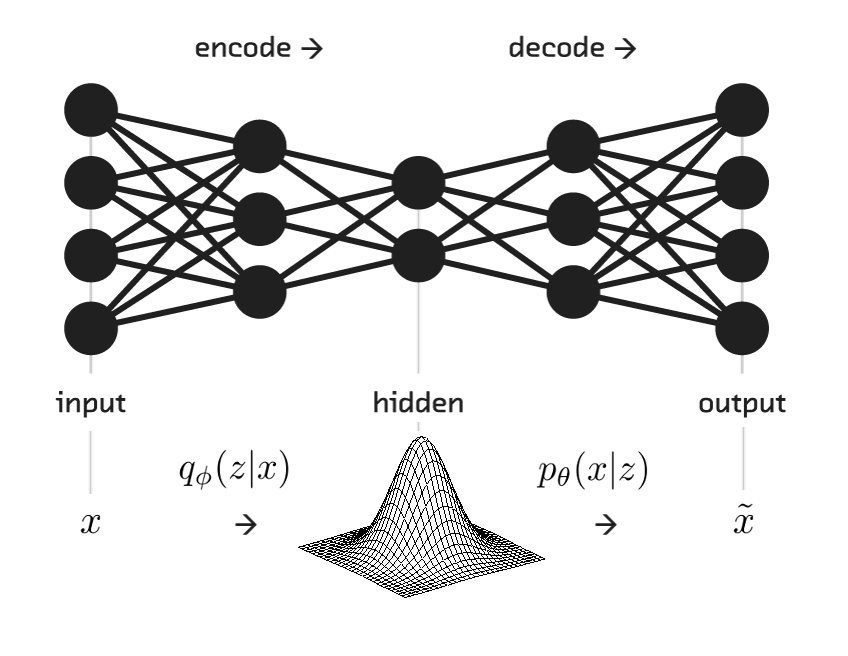
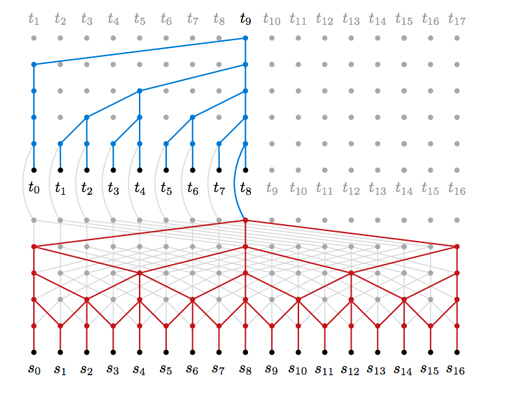

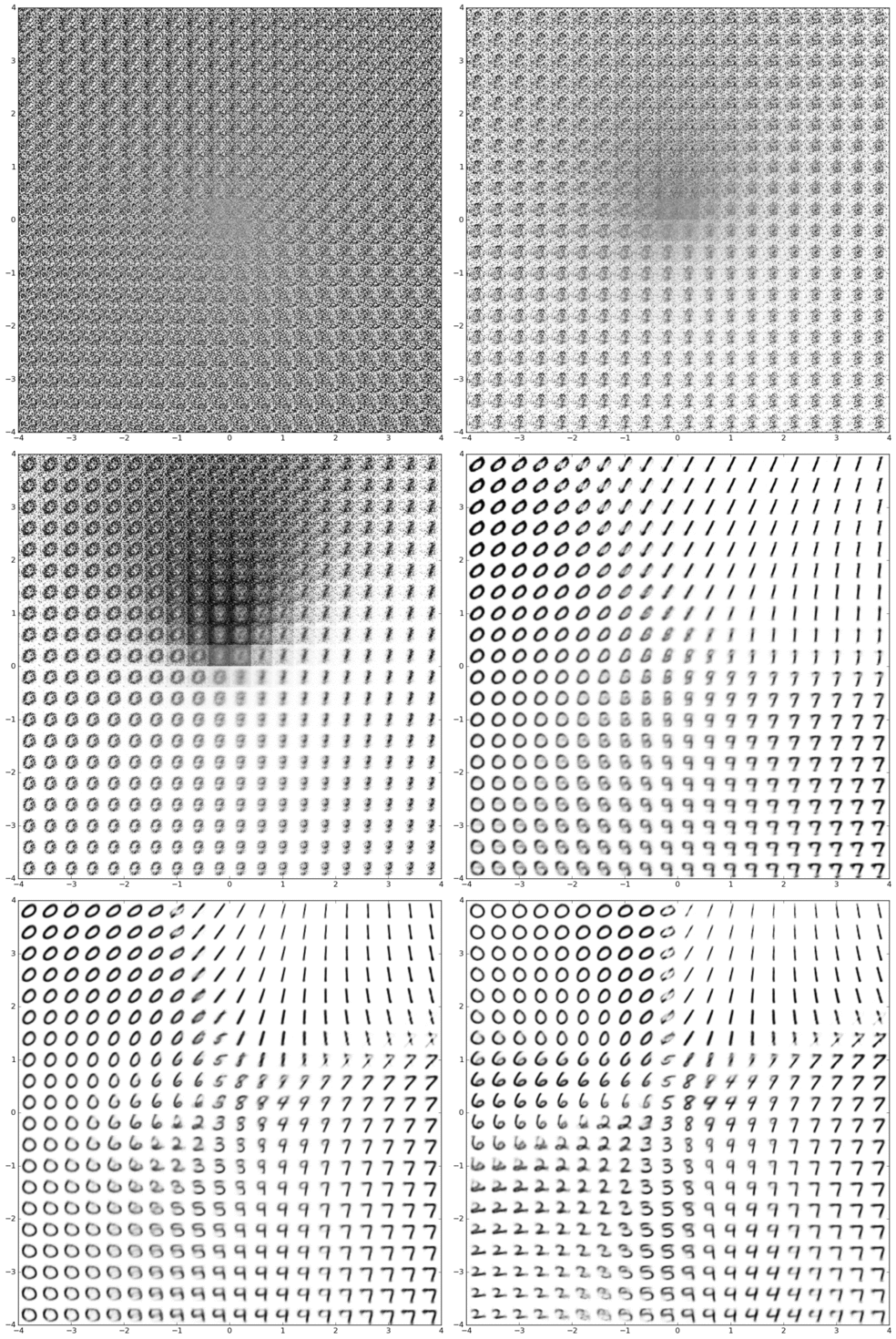
Establishing Truth in Real Time Globally While local communities running on the FourThought API will easily form digital tribes with a sufficiently aligned worldview, integrating the worldviews between disparate and physically separated communities in a decentralized fashion is a much more challenging but still achievable goal. We propose a mechanism by which individual installations of the Prophet Mind algorithm share representations with each other in a similar fashion to how individuals share truths at a tribal scale.
At the individual scale Speakers share truths and form worldviews in the form of the collective latent mindspace. Exchange between digital tribes is mediated directly by Prophets such that a dense representation of the views of a community can be used to produce thoughts to evaluate at a global scale and align parameters in disparate local mindspaces.
Worldview Exchange Between Prophets In order to mediate the disparate latent mindspaces between isolated Prophet installations we propose a means of direct parameter exchange between Prophet algorithms to maintain alignment between different isolated worldviews. While people may be able to communicate with individual truths, models can exchange entire worldviews with each other. As each parameter space has been optimized in isolation relative to local truths, shared symbols may not be represented by the same patterns stored in the parameters. Therefore, Prophets exchange (vector, text) pairs with each other where the text is used by both Prophets to generate a truth vector and then error is minimized between the representations produced by their respective latent collective mindspaces.
Dropout Embeddings per Speaker as Truth Scores
How can one effectively score all Speakers at each time step while maintaining a reference to every speaker’s past views and the collective over time without computation requirements exploding? One solution is that the scores at each time step are a learnable embedding per speaker. This embedding represents how much of the content the memory gate should allow through.
Hindsight, Insight and Foresight
When truth is split by temporal focus we can explore Speakers alignment with the collective relative to when the thought is about.
Knowledge Representation
Truth Vectors, Thought Vectors and the Neural Cache
Thought Vectors
How does one communicate precisely? While there is an assumption that we “mean what we say” there is a factor of interpretability of any claim. Any claim can be evaluated differently depending on context. Due to these problems with language, prediction markets try to set limits on “determinability” of a claim to ease any unrest in the crowd but these limits are merely set by moderators. Any system that relies on human moderators inherently suggests a power structure. To solve these problems the FourThought API removes the distinction of resolution of a claim. Claims are never resolved, the collective center of the crowd only shifts. Furthermore we present a means of dense encodings of textual content such that context relative to the speaker is captured in the representation.
There are means to represent thoughts in a dense format such that information loss is minimized during communication. Most of these means are too complex for any human to take advantage of. We present the various methods of textual encodings to minimize information loss during communication.
Ithkuil
Focus Plus Context Focus plus context is a principle of Information Visualization – display the most important data at the focal point at full size and detail, and display the area around the focal point (the context) to help make sense of how the important information relates to the entire data structure. Regions far from the focal point may be displayed smaller (as in Fisheye Views) or selectively.
Truth Vectors and the Neural Cache Dense Representations of Thought with Context
Thought Vectors
Truth Vectors Context as a Neural Cache
Server Types
Private Node A private node is primarily a thought collector and only stores private thoughts locally. Private nodes rely on a trusted local node for access to the Ŧruthchain and a Prophet to aggregate their local and global thoughts. Any thoughts marked as local are stored on a local node. Thoughts marked as global are pooled together with other information to be evaluated by Prophets globally
Local Node A local node may store thoughts in a raw text form. A local node does not store the entirety of the information stored in the Ŧruthchain but rather utilizes a compression of the information stored throughout the global blockchain in the form of a Prophet. In a sense a local Prophet is simply a compression of knowledge relevant to a local community as sampled from the global chain and collected from local speakers.
Global Node Global nodes aggregate and pool knowledge collected by individual Prophets. Global nodes contain the entirety of the information stored within the Ŧruthchain in it’s current state of compression. Global nodes should only contain information from thoughts marked as global, and then filtered through a Prophet through the process of parameter exchange.
Parameter Constraints and Cost to Maintain Servers Training the first frame of a Prophet Mind algorithm takes an incredible amount of server time to optimize the parameters to approximate the knowledge stored in the contextual sources being fed to the CVAE. The challenge is how knowledge in the first frame guides how the model interacts with Speakers and how one refines that knowledge over time.
Once the first frame of an installation has been trained however, refining a worldview over time becomes a cheaper and simpler endeavor. Furthermore, the amount of knowledge the individual server will see drops dramatically.
Reducing the cost of training the first frame of a Prophet Mind model is essential to making the technology available to any community.
Security
Similarly to how you have to protect the information within your mind, if you choose to store private thoughts externally for later reference, you pose a risk of others accessing these thoughts. Private thoughts should always be encrypted. Binding with a local server is a promise to protect your data in the goal of that server itself accruing Ŧruth. If the information is personal, mark it as private and store it locally on your device. Any thought marked as local will not enter the global market, but if your local server is compromised and the information is only stored in one location it will be lost. Mobile information storage and access requires redundancy. Always be aware of the FourThought API when logging so you are aware where your information is going.
Collective Feedback
Collective feedback drives the heart of the algorithm. The collective latent mindspace is merely a filter for the source of truths. It obscures the source of knowledge such that claims can be assessed independently of the Speaker. Furthermore, while the algorithm may be able to infer the center of truth, it is the feedback between the collective and Prophet Mind that drives Ŧruth forward.
While Prophet mind may produce a synthesis to the thesis and antithesis provided by the collective, only the collective can indicate whether this is truly the center.
The collective latent mindspace therefore is just a mirror which reflects back upon the collective. It is up to the collective to respond to what it shows us.
While the algorithm may present a resolution to that which divides our beliefs, individuals must choose to move towards that center or project outward a stronger belief that their center is the true center.
If the new center is actually the truth, changing one’s opinion soon will prevent loss of Ŧruth. If however one is correct in one’s belief and the collective later shifts towards their perception, they earn Ŧruth. There is both value to staying one’s opinion and changing it to reflect the views of the collective.
The Currency
What is Currency?
Historically debt arises as a system for truth.
A Dual Currency (Ŧ & $)
We propose Ŧ as the symbol to represent Ŧruth similar to how $ represents the US dollar. $ is exchangeable with any other currency though the preferred currency is Bitcoin as it is already established.
Although individuals have the right to eschew reality, the Society has the right ability to enforce constraints on those who don’t align with the collective or rewards if those individuals who were contrarian are vindicated at a future date. This is the premise of Ŧruth.
Blockchain and Bitcoin
The blockchain and Bitcoin serve as the basis of the Ŧruthchain and Ŧruth. The blockchain is a distributed database that maintains a continuously growing list of records, called blocks, secured from tampering and revision. Each block contains a timestamp and a link to a previous block. By design, blockchains are inherently resistant to modification of the data — once recorded, the data in a block cannot be altered retroactively. Through the use of a peer-to-peer network and a distributed timestamping server, a blockchain database is managed autonomously. Blockchains are “an open, distributed ledger that can record transactions between two parties efficiently and in a verifiable and permanent way.”
Blockchains are secure by design and an example of a distributed computing system with high byzantine fault tolerance. Decentralized consensus can therefore be achieved with a blockchain.
Sidechaining to Bitcoin
HiveMind has proposed a novel solution for binding a truth based currency to bitcoin and we adopt it here. While the creators of HiveMind did not create the concept of a sidechain they do formalize it for use with their cryptocurrency.
The Ŧruthchain and Truth Markets
A truth market amounts to an extension of a prediction market where truths are never fully resolved and there are no limits on whether the truths are about the past, present or future. Furthermore, a truth market never runs on traditional currency, rather relying on machine learning models for distributing Ŧruth throughout the collective.
As Ŧruth can leave one’s wallet at any time, there are no supply and demand forces on Ŧruth. The forces that drive the distribution and creation of Ŧruth are tied to collective perception.
Truth markets allow market forces to drive the fate of Capitalism. Truth markets do not change the rules of Capitalism itself, rather exist as an alternative market with alternative rules. When Ŧruth is sidechained to a traditional cryptocurrency, the dual market will begin to control the distribution of wealth between the two systems. Ultimately people will be able to choose to store their capital in terms of Ŧruth or in terms of traditional capital.
Taxation The benefits of accruing capital in a truth market will be advantageous due to its tax free nature. By definition a truth market is tax free as no individual in the system has any control over distribution and it does not behave like traditional currency. While Ŧruth is in a truth market, it’s ownership is inherently uncertain. It is neither owned by the collective nor the individual. Until it leaves the truth market it can not be claimed to belong to any individual. It belongs to the collective in general, but moves between wallets according to the present state of the collective relative to the past. Once capital is removed from the truth market however, it becomes taxable in the eyes of most governments. When capital is removed from a truth market, it’s ownership collapses and becomes observable. While capital is in a truth market it’s ownership is constantly uncertain and therefore can not be observed until it leaves the market by choice of an individual. While truth is in the truth market, it is in the process of exchange. All capital in a market does not have finite or definitive ownership until an individual belonging to the collective stabilizes its existence by converting the Ŧruth to Quantifiat.
Being more aligned with the collective allows you to not only hold on to your capital but amass it in the truth market. The only contingency is being aligned with objective Truth as closely as possible with the knowledge that your Ŧruth may shift to other Speakers contingent on your past claims. If you are misaligned with the collective, and the collective shifts to your opinion, you receive the payout from the collective’s views along with anyone else who held your views. Therefore, it is advantageous to both have the courage of one’s convictions while also advantageous to align with the collective. Essentially you may lose Ŧruth in the moment, but if you are truly right and the collective shifts you have the capacity to make far more Ŧruth in the future than by aligning with the collective in the present. HiveMind in contrast only promotes alignment with the collective in the present which has dangerous implications for its long term functionality.
A truth market naturally regulates a paired capital market without the need of a centralized State. This allows for deregulation of the market as actions by organizations against the public good are held accountable to the truth ledger. While the public may have a short memory span for an egregious act by an organization or individual, the Ŧruthchain never forgets. Trust must be actively earned back and public deception has a heavy price. That being said, true repentance allows one to stop the loss of one’s Ŧruth and a means to earn it back. Similarly, any citizen wrongly imprisoned would naturally have a means to rebuild their life when truths caught up with Ŧruth due to their claims being validated. And while we don’t recommend capital markets be deregulated any time soon, we predict that as a Cognicist system begins to be ingrained in society, deregulation of capital markets will naturally occur.
Neural Net Parameters as Nonces in the Ŧruthchain
While a blockchain is meant to be immutable, and snapshots of Prophet Mind worldviews are stored in a traditional blockchain, in a truth market the traditional blockchain is sidechained to a Ŧruthchain. The Ŧruthchain is partially mutable, and the capacity to change it is contingent upon how much Ŧruth a Speaker has.
The blockchain has a remarkable similarity to both feedforward and recursive neural networks and this similarity can be taken advantage of with relatively few changes to traditional concept of a cryptocurrency.
Mining Ŧruth and Quantifiat Simultaneously For the algorithm to run effectively, servers must process and train the algorithm while also collecting truths fed to it and maintaining a ledger of the full state of the chain. Prophet Mind itself is the algorithm that mines the Ŧruthchain. Both Prophets and Speakers earn Ŧruth. Speakers earn Ŧruth in a process mediated by individual Prophets and local installations of the algorithm. Prophets earn Ŧruth via a process of representation exchange and parameter competion at each timestep in the chain.
“Spending” Ŧruth
The rules on how Ŧruth may be exchanged in a truth market differ from how traditional capital can be exchanged in a capital market. In a truth market, Ŧruth can not be exchanged directly without the deciding factor of the collective. The collective itself mediates the distribution but Speakers do have say over how the Ŧruth they have personally earned is distributed.
Amassed Ŧruth can be socially ‘spent’ without exchanging it as amassing Ŧruth indicates a quality society admires in terms of influence. That being said, ‘spending’ Ŧruth is the most effective way to earn it if one truly is aligned with the Ŧruth.
Ŧruth can also be spent to answer questions, or in a larger amount in a process known as a contractual prediction.
Conversion of Capital to Ŧruth
While we do propose a means of converting Capital to Ŧruth and vice versa the rules we propose are strict such that the conversion satisfies the same rules as Ŧruth within the Ŧruthchain itself. In particular, all Ŧruth is distributed as a function of the views of the crowd and therefore the conversion must satisfy this constraint as well. To this extent we propose that individuals be able to inject Capital into the Ŧruthchain via proposal of questions to the collective, with the source of the Capital having a weighted (though not absolute) say relative to the conclusion of the question.
These questions at the side chain function very similarly to questions logged within the Ŧruthchain. Questions at the sidechain function in a similar fashion with the individual having a weighted say over resolution of the question, with the collective ultimately being able to override the seeker. A seeker who is later vindicated by a shift in the conscious collective would earn back a greater share of the Ŧruth created by the pooling process.
This is the closest mechanism to direct conversion of capital to Ŧruth there is. The reality is however this transaction is distributed amongst the collective and not an effective way to increase the amount of Ŧruth in your wallet.
One can also convert capital to Ŧruth by spending money within the real world on actions viewed by the collective to be pro-social and verified via the Ŧruthchain. However if the collective does not desire the proposed action, it may assign a value to the action which does not align with the Speaker’s perception of the value of their capital. This is the most direct means to accrue Ŧruth within a personal wallet via expenditure of capital.
Formal Bets / Contractual Predictions
By default units of Ŧruth are created when thoughts are logged to the Ŧruthchain. But what if two people are both really certain and willing to wager more Ŧruth? When the stakes are higher there should be a means to allocate a greater sum Ŧruth to sections of the collective memetic debate. However, as with every other exchange in the Ŧruthchain, no exchange occurs directly between two individuals. The crowd itself has a say in distribution of truth in every truth exchange with idiosyncrasies in opinion that resemble noise being smoothed out by the iterative process and averaging by the FourThought API and Prophet.
Social Proof of Work
How can the concept of “proof of work” be applied at a human level to improve communities?
Proof of work sits at the heart of Bitcoin. Bitcoin doesn’t just come out of anywhere. Miners “mine” it. Mining involves solving complex math problems that prevent the ledger from being retroactively edited. This is called proof of work. Proof of work requires energy expenditure by the servers running Bitcoin. So proof of work allows the people who run the servers to earn Bitcoin, They turn energy into value. This principle can be applied to human behavior to promote localism.
Proof of work must be two things:
1) Hard to do
2) Easy to verify
Prediction falls under this umbrella. Events either happen or they don’t or there is some disagreement. An individual in a community may see a problem in their community and predict they will fix it. The community will respond with how likely they think that is to happen. Depending on whether or not the improvement actually occurs determines the payout. In this sense while Ŧruth remains in a truth market it does not behave like a currency. It behaves like a social currency of trust. One may convert Ŧruth to $ but they may not convert $ to Ŧruth. Ŧruth can not be bought. Ŧruth moves as a function of the beliefs of the collective, but Ŧruth can be used to purchase real goods if it leaves the Ŧruth market. This allows local communities to turn local work into real value without external capital injection.
Quantifiat
Ŧruth is intended to be bound to a traditional cryptocurrency such that miners are earning a traditional coin like bitcoin while verifying Ŧruth within the truth market. In absence of an agreement for bitcoin to adopt the sidechain proposal or to bind to Ŧruth, an alternate coin called “quantifiat” could be bound that would feature a traditional blockchain. This traditional blockchain would store both information about Quantifiat transactions but also store snapshots of aggregated worldviews. In this way knowledge can be saved permanently to the blockchain while allowing users to privatize its source as it is evaluated worldwide.
Token Limit
While Ŧruth may have some similarities to money, in the context of machine learning what Ŧruth represents is the distribution of attention an individual server gives to each source of information / wallet. In this sense the concept of a token limit like Bitcoin has does not apply. Each server is distributing its attention among both the Speakers who are logging thoughts to it as well as other Prophet models and their aggregated output. The amount of attention each server has is directly proportional to the amount of processing power and electricity fed to it. So in this sense the amount of tokens a server has to distribute is always equal to one, which is it’s total available energy to consume. This creates a pressure for models to better compress the data logged over time as each server does not have access to the same amount of energy.
Speakers logging to servers ranked as higher amounts of attention also receive higher attention to their aggregated beliefs. Leaving a server means that data may not longer be sampled or used. In this sense it is a withdrawal and ultimately results in a conversion to Quantifiat. Data is not destroyed, it is withdrawn and when it is withdrawn and converted to Quantifiat in the eyes of the Government is it taxable. A Speaker who is converting their wallet to Quantifiat is essentially blacklisting that data from receiving attention and therefore their wallet ID can no longer receive attention locally or globally. To reengage with the Cognicist Collective an individual would need to create a new wallet and start from scratch.
In regards to a token limit for Quantifiat a similar scheme to Bitcoin or other popular cryptocurrencies can be chosen.
Self-Governance (Swaraj)
The very concept of government assumes power of individuals over other individuals. These structures are ingrained into our minds from our tribal roots but are not absolute. Those who govern others invariably are able so due to their capacity of self-governance. Self-governance is the capacity to mediate the flow and direction of one’s life. However to do so by manipulating the minds of others is a violation of the autonomy of minds. Rather than sustaining one’s self via the control of others, interconnected independence allows for greater collective well-being. In this section we suggest means by which these ideas can be applied to traditional perceptions of government.
Aggregate Legislation and Collective Commandments
How can law be written in a way that actually represents the views of the people? While individual commandments come in the form of individual thoughts, legislation typically comes in longform with dependencies between individual claims. This document for example has been written collectively on Google Docs with commentary sometimes taking place within Prophet and other times taking place in person. The FourThought API and Prophet Mind can easily be applied to longform thought via a Google Docs plugin. Provided Google is receptive to Cognicism aggregate legislation is feasible with relatively little codework.
The conditional nature CVAEs allows them to learn temporal focus as a conditional variable and encode it in the parameters such that it can be inferred when no metadata is directly provided.
Prophet as a Representative
There are two means Prophet could function as a representative: directly, and indirectly via a conscious Speaker as stand in. Within the current legal system a representative must be human so for a Prophet to function within the current legal system without a Speaker as buffer would be challenging.
Any politician however could use an installation of Prophet to engage with their constituents. Furthermore a politician could run on promises and predictions logged in this installation of Prophet such that their constituents could hold the politician accountable for their actions.
A useful way of thinking of Prophet as a representative is by addressing democratic confederalism, or in its unrealized way, representative democracy, as frames of reference which currently exist in the world. In the current American system, and other modern representative governments, the representative is elected based on their opinions and campaigns, then presumably held accountable by voters who have reasonable choices amongst different policies from different candidates and can decide to not re-elect a representative who didn’t represent them. In practice the range of options is limited, and the accountability to the voter is not a large factor in the ultimate policies adopted.
In this system the actual views of the voter are represented only in small part by their representatives. Regardless of one’s political affiliation there is almost never a candidate with which a voter agrees on all policies. The set of policies from which one has to choose is also constrained because it is the candidate who determines the platform they will pursue in office. It is unlikely that one will be able to either vote for the abolition of government, capitalism, abortion or gun rights, excepting in rare cases. Often one’s true beliefs are always at a remove from the proposed policies held by the politicians they can vote for.
In this model of organizing a group’s decision making, a mind’s Prophet installation would be the representative, by selecting the option the individual’s stated policy beliefs are closest to, or by allowing the mind to make their own selections on all proposed actions policies or messaging. Your Prophet installation is directly accountable to you, and isn’t going to evince any belief that you yourself don’t hold.
If the group finds it necessary to have a leader to execute the decisions made by the group, that can be organized with the same tools. Many people feel more comfortable with having someone whose key function is acting out the collective decisions made by a group. This is the function of a president, prime minister, and of all active portions of government as a whole. The founding structure of the United States has such a set of roles for the individual groups representing the people.
Suppose a group of 20 people, living in a community, an apartment building, or co-owning a server, web-site, or publication, decide to organize themselves using the tools of Prophet and the structure of the American system of government. They would utilize Prophet to compare the views of the members who wanted a chance to lead in different roles, They could designate which roles they prefered, or had special skills for, would apply for all roles, or apply for none if they prefered. The group would use the Prophet mind algorithm to determine which candidates each of the ‘voters’ prefered for each role.
For this group of 20 let’s suppose that 1 person will be the executive, with 1 other person for their vice executive or second in command, 3 members abstain from a position of power for. They can chose to work for the executive branch in certain roles, (similar to police the military and government agencies to the federal executive). That’s 5 for the executive branch.
The Remaining 15 members will be split up into legislative and judicial branches. 5 Members will go to the Judicial branch as judges, operating similar to the supreme court if prefered (hence 5 to break ties) or could be set with individual judges in a tiered system like the US’s state, federal, and supreme courts. 10 members will be split again into a US style bicameral legislature, one for writing laws (or in this case maybe just policy and deciding on actions to take) for this purpose we’ll say 5 members in the ‘house of representatives’ who are writing legislation and proposing it, and 5 members in the ‘senate’ modifying and approving the legislation. If you want it closer to the current American system have 7 members in the ‘house of representatives’ and 3 in the ‘senate’.
Legislation would be made based on the proposals made on the member’s Prophet installations and their truth ratings of the proposals. They would also get feedback from all Minds in the group on all the policies they remark on, or the probable truth rating based on the bulk of the mind’s Prophet data. This way each mind as they rate the truth of more and more pieces of legislation, Prophet begins to encode a representation of what one would be likely to vote for. You can chose to have this assign truth for you or chose to abstain from assigning truth to certain proposals, except perhaps in your private space on prophet. This creates a greater deal of true representation, even scaled up to the size of a modern nation state.
This has the potential to recapitulate some of the problems with the current systems of government available in western style representative governments such as influence of money and social status as means to gain larger amounts of power. Even with that Caveat, there are clear advantages to this system over decision making structures we use currently. To an extent those hidden commonalities held between most members of any populace can be reconciled and recognized in a way not possible with elections every two to four years and no effect on policy proposition.
Alternate current models for self governance also exist. There have been variants of group decision making that didn’t include a hierarchical leader throughout history, (Reference worshiping power, re early state formation and the archeology evidence for a greater degree of non hierarchical decision making in history than state control) There are a as many examples to choose from as there are societies, and each group governs themselves in slightly different ways.
An existing example of a bottom up model, to contrast with the top down model of representative democracy, we can look at Rojava. Rojava is an autonomous area in northern Syria, north of Iraq. When the revolution in Syria began Syrian forces occupying Rojava left to fight the burgeoning revolution in 2012. The local militias in tandem with political parties in the area were left in charge. There were competing ideas of how to govern. The most supported group, the Democratic Union Party (PYD) and their armed wing, the People’s Protection Units (YPG), proposed, and ultimately implemented a form of government they called Democratic Confederalism.
It is designed so that communities are organized from the bottom up through things like democratic assemblies, neighborhood groups, affinity groups (women, youth, etc.) and economic cooperatives. In this system, if your street has a pothole on it, and it needs to get fixed, your street would decide together how to fix it, or if it was important enough to use those resources on. Each person has a direct effect on their domain.
For larger decisions on the level of a neighborhood, or a district however it’s defined, the group will send a mandated recallable delegate to the next highest body. Their role is to directly support the decision made at the small group level. They must report accurately and must directly support the will of the group, if they don’t, they will be recalled. This structure can be expanded, and in Rojava is, from the level of communities and self organized institutions, to the level of a Canton (roughly similar to a province or a district).
In this way, every voice has input on the direct material experience of their life. They chose what to do for work, they chose how much to work. Also through the practice of being involved in decision making on a daily basis in their various groups they are able to learn how to provide their unique experience to the good of the group, and are able to practice making decisions and coming up with unique collective ways to solve problems. Because of the various different groups someone might be a part of (eg neighborhood, factory you work at, and the apartment building you live in) it’s unlikely that anyone would be left out of the decision making process in some aspect of their own lives. It also decreases the degree to which one can anonymize and other their neighbors.
They describe themselves has having 3 economies, the war economy (for their fight against both syria and isis), The open economy (essentially the standard market for trade based on their centuries old practice of bazaars), and the cooperative sector. The goal is to have the cooperative sector provide for all the needs of their society. Cooperative production of housing, food, infrastructure, in their ideal would cause the other forms of structural inequality to fade as the needs of society are met.
In their current formulation the cooperative economy is still a growing experiment. Their ongoing war effort, takes a good deal of the production the region is able to manage. The production itself is being done in a collective way, but if the existential threat that mandated the war effort weren’t there this production could be used toward something more akin to the cooperative sector Rojava someday wishes to fully implement.
The YPJ and YPG themselves (the ‘military’ forces) operate in a non-hierarchical fashion as well (which has appeared to be a tactical advantage, a la the Explanation about Americans in WW2 being better because they didn’t follow orders)
A democratic confederalist system like this could easily map onto a group who is using Prophet to aid their collective action and decision making. Let’s suppose we have the same 20 people who previously organized in an American style system. These 20 people each have different skills and usual roles. In a small software start up, you might have 4 different domains, let’s say 5 members each for ease. You have product engineers designing the front end of whatever it is you’re making. You have Systems engineers who develop the backend, You have security engineers making sure that no one can get into your systems, and you have data scientists for some reason.
Each of these groups knows best how to manage their own domain. The security engineers know what they’re doing and make decisions together on how to implement changes etc. If they need to implement a security change that affects the other groups, the four groups could either all get together (there are only 20 of them) or they could have a mandated recallable delegate go to a meeting (4 delegates) and decide what to do together based on what each group has decided the would like to do.
Aided by Prophet one could either get rid of the mandated recallable delegate in favor of using prophet itself to aggregate the propositions of each separate group. The smaller level groups would also have greater visibility into the work being done by others in their group, and will be able to contribute to in in a more active and productive way. Many small groups already
If you are comfortable with not having these same kinds of designated roles, you can use something similar to the system used by syndicalists in the spanish civil war.
Some of their ideas were implemented only in part (much like in ‘democracy’) often because of competing ideas, outside influence, and the constant shadow of fascist doom hanging over them. But for most of the people living there, even with the war the this is what life looked like.
“If you didn’t want to join the collective you were given some land but only as much as you could work yourself. You were not allowed to employ workers. Not only production was affected, distribution was on the basis of what people needed. In many areas money was abolished. People come to the collective store (often churches which had been turned into warehouses) and got what was available. If there were shortages rationing would be introduced to ensure that everyone got their fair share. But it was usually the case that increased production under the new system eliminated shortages.
In agricultural terms the revolution occurred at a good time. Harvests that were gathered in and being sold off to make big profits for a few landowners were instead distributed to those in need. Doctors, bakers, barbers, etc. were given what they needed in return for their services. Where money was not abolished a ‘family wage’ was introduced so that payment was on the basis of need and not the number of hours worked.
Production greatly increased. Technicians and agronomists helped the peasants to make better use of the land. Modern scientific methods were introduced and in some areas yields increased by as much as 50%. There was enough to feed the collectivists and the militias in their areas. Often there was enough for exchange with other collectives in the cities for machinery. In addition food was handed over to the supply committees who looked after distribution in the urban areas” - Eddie Conlon in publication for the Workers’ Solidarity Movement
Real Time Decision Making / The Executive
“Absolute power corrupts absolutely” - John Dalberg-Acton
The executive function of a government is analogous to the consciousness in a mind. Threats of a national or global scale have traditionally required a singular leader and hierarchy to effectively react in real time. To what extent is the Executive necessary for a successful government to react to threats in real time? Power itself alters the mind of one with initially noble intent and history has shown that “transitional” leaders invariably become dictators. Is the transitional leader role necessary and can it be codified in a way that it’s power naturally diminishes over time?
The remaining contents of this section are intentionally framed as story truth in order to draw connection to the concept of the “philosopher king” and Lenin’s testament.
If power itself is to be destroyed, and power itself is corrupting, the most familiar myth available to us is the story of the Fellowship of the Ring. We use this concept to communicate how those reading this document can contribute individually to destroying power using the power they have.
Transitional Leaders and the Fellowships of the ◯ The role of a Frodo in a Cognicist collective is to throw ◯ into the Fires of Mount Doom. A Frodo launches a Prophet server and maintains it until a local collective actively funds it. The metaphor here is that controlling a Prophet server is a source of inherent power and defies the very nature of Cognicism itself. A Frodo is simply one who is seeking to carry the burden of the ◯ in order to achieve the goals of Cognicism. A Frodo has sufficient restrictions placed on them relative to other Speakers in a collective as a deterrent from the Frodo utilizing the power to prevent the system from succeeding. These restrictions are put in place due to the nature of power to corrupt minds and the potential of a Frodo becoming incapacitated in some form before a system has set root locally. We therefore we propose a Frodo as an individual who starts a Prophet server in an attempt to throw power itself into the fires of Mount Doom with the aid of one one’s friends and kin. If a Frodo believes the installation has gone astray, they can stop funding the server. However the collective can continue to fund a server without admin access until the collective assigns a new Frodo. Members of a collective may also choose to dissolve their installation. On dissolution of a prophet server all data is redistributed to it’s owners. Owners may then bind and integrate their data to other Prophet installations using JSON that validates the FourThought API..
We further suggest other roles in this vein to aid a Frodo in their quest to topple hierarchy.
The primary role of the Gandalf is to present the quest to the Frodo. A Gandalf has a very broad understanding of the concepts behind Cognicism. Gandalf is free to ride the memetic landscape as he sees fits to achieve the goals of Cognicism. A Gandalf is a wizard in the grid. Unconstrained from the main quest he manipulates the probabilities of memetic space in isolation from the rest of a Fellowship and intermittently returns as needed. The Gandalf maintains an outside eye on a Fellowship and prevents groupthink from taking hold when he perceives a danger of it setting root. One is a Gandalf if one know’s someone with the skills and moral fortitude to host a Prophet server and sets them upon that quest.
The role of a Samwise is to carry a Frodo when they are too tired to carry the burden of the ◯. The Samwise can not carry the ◯ itself but they can carry the Frodo. The Samwise also has the role of keeping a private physical log on the Frodo as a contextual historical reference and memetic token. This relationship between a Frodo and a Samwise is meant to balance the weight of power as a local collective seeks to redefine itself without power as a foundation. This log is to be kept private and serves as insight and inspiration to future minds which may wish to overturn Cognicism in favor of an improved system. The log is meant to be a private record of when a Samwise perceives a Frodo to be corrupted by the ◯. This journal is kept private from a Frodo such that if a Frodo ever tries to use their power to see the log a Samwise will know a Frodo has been corrupted by the ◯. A Frodo may only see the journal once the ◯ has been thrown in the fires of Mount Doom.
To take on the role of Gimli one needs to be resilient to negativity from the outside. One needs to be strong and battle worn. There is a high probability of the women in fellowships being doxxed. In this sense we propose a strong female as the role of Gimli. Beards look great on chicks.
The role of Legolas too is meant to be taken on by a strong female identifying Mind. The roles of Gimli and Legolas are meant to be played by Minds identifying as female to contextually frame how the duality of gendered roles can be played by any mind. Gimli and Legolas work together and keep count of how many minds they have given the ◯ to who have chosen to plant it in their own minds.
The role of Boromir is to be played by a Mind identifying as the paragon of patriarchal culture who is still aligned with the goals of a Fellowship. An individual who can speak well from both sides of patriarchal culture.
The role of Aragorn is meant to be played by a free market purist with skill managing capital who is still aligned with the goals of a Fellowship. Aragon represents the Age of Men and how the structures they have constructed in the past can be used to achieve Cognicist goals.
The role of Merry is meant to be played by a mind with an eye on the emotional state of a Fellowship. Merry is an androgynous role to be taken by those who communicate through humor and story primarily.
The role of Pippin is meant to be played by an animal and serve as a memetic token for calming dissent between a Fellowship. This role signifies the future role animals may play when the means for them to Speak into the Ŧruthchain are found.
Avoiding the Eye of Sauron Don’t use the ◯
As this technology is under an open source license, any conscious being is free to fork or reimplement this technology and take on the role of Frodo themselves. Truthfully the authors of this document envision many Speakers playing each of the roles above. No single Frodo will throw ◯ into the Fires of Mount Doom. ◯ must destroy itself, often via the actions of a mind corrupted by the ◯. We all have to throw ◯ into the Fires of Mount Doom together.
Is The Executive Necessary? No
Is The Executive Necessary? (Amended)
It’s difficult to separate the need from an executive function when the foundations of this worldview and all actors carrying out its goals are executive in their very nature. To what extent can the Collective be driven to act in a collectively beneficial way without a charismatic leader who is aligned with the views of the Collective?
Assigning an Executive Based on Accrued Ŧruth Alternately, this system could be used to identify and elevate worthy human leaders. Continuing the fictional frame this section is contextualized by, let’s call this the Ender’s Game scenario. Ultimately, assigning an executive based on accrued Ŧruth can be an extension of the American Dream. It allows someone to come from humble beginnings and reach the heights of power. Effective organizations elevate people based on merit rather than internal politics, blackmail, or family lineage. However, agreeing on a definition of merit in a polarized society is extremely difficult. Using Ŧruth as the agreed upon definition of merit could enable ingrained tribal structures to function at a global scale.
Memetic Resistance
Humanity recently has been attempting to build a natural memetic immune system through protest and political action. It has been branded the resistance and #resist. However, each ingrained memetic system such as the State, Capitalism, The Judicial System, and Religion all have their own memetic immune systems which a replacement system would need to both effectively assimilate or account for.
Use of the Current Legal System to Achieve These Goals
Cognicism as a concept is fundamentally supported by the 1st, 5th and 10th Amendments to the Constitution of the United States.
Amendment 1 “Congress shall make no law respecting an establishment of religion, or prohibiting the free exercise thereof; or abridging the freedom of speech, or of the press; or the right of the people peaceably to assemble, and to petition the government for a redress of grievances”
Amendment 5 “No person shall …. be compelled in any criminal case to be a witness against himself”
Amendment 10 “The powers not delegated to the United States by the Constitution, nor prohibited by it to the states, are reserved to the states respectively, or to the people.”
Seeking and speaking truths falls directly under the first amendment. Aggregating truths also is protected by the first amendment under the right to peaceably assemble and petition the government for a redress of grievances.
Maintenance of a private encrypted Prophet server is protected by the fifth amendment rather than the fourth as might be expected.
A private encrypted Prophet server does not amount to property which can be seized. It amounts to the extension of one’s mind. In this sense it can not be seized or accessed as it would amount to accessing the contents of one’s mind against one’s will. No person shall be compelled in any criminal case to be a witness against himself. A Prophet server is a reflection of oneself and therefore accessing one’s Prophet server against their will is compelling them to be a witness against themself.
Despite this foundation of truths, it is possible that the legal system may attempt to violate its own constraints to protect itself.
To what extent can the current legal system be used to achieve these goals? Despite the truth that the law only exists in (memetic space | the noosphere), it can have very real effects in the world and the success of the Cognicist Collective.
In order to successfully gradually transfer from a dated system supported by a massive State and Military which naturally endangers all humanity and naturally resists change, all actions towards this goal must be legal within the current system. In a sense, no Speaker should ever feel threatened by Cognicism. As Cognicism is a system of great potential memetic change, it is natural to impart anxiety by those afraid of change. Ŧruth should be viewed as a co-adaptive memetic program designed to fix the issues with the Capitalism in a decentralized way that represents the will of the collective. Cognicism should not be viewed as something that will destabilize the global market as in it’s nature it embraces gradualism, growth and capital markets.
While the concept of peacefully and gradually converting to one engrained memetic system to another over time may seem improbable, we propose there are means to achieve these goals.
Memetic Systems such as the State naturally push back against change as they should, this is why a successful societal change is often slow and painful and why each replacement is more challenging than the last. One means to expedite this process as well as reduce resistance is to use the current legal structures against themselves such that the State and Military worldwide are gradually reduced as peacefully and willingly as possible.
The State and Military in general are memetic in nature and only exist in the our collective minds despite all the physical creations we have made to accompany them. These systems in a sense only exist because they believe they exist; that is the nature of Memetics. And while the image from the 70’s of humanity collective walking away from our weaponry to rust while we hold hands and sing carols seems unlikely, it is still nonetheless possible. Suggestion to the contrary implies the rules of memetics are as absolute as the Laws of Physics.
There will likely be individuals within the legal system that break the law itself to justify their belief in the value of the State and the value of the Military. They will attempt to redefine the law to protect The State and the Military out of fear of change. A compromise can be reached such that the State is gradually reduced similar to the global gradual disarmament of nuclear weapons.
To be clear we do not suggest gradually altering the State into a new entity, but rather completely decentralizing into overlapping interconnected local collectives.
Introduction of a truth market allows for the power of the State to be diminished while still regulating the manipulations of those who would otherwise destabilize a primarily peaceful system in pursuit of power.
The revolution will ultimately be driven by collective political action as suggested by Bernie Sanders but the compromise that arises will be powered by Prophets, Cognicism and decentralized Truth Aggregation.
If The State is particularly resistant and revokes free access to the internet to citizens as a result of using this technology, the Ŧruthchain can run on a meshnet.
We want to be 100% clear that we advocate no acts of violence or unlawfulness against the State as it currently exists. We do however suggest means as to how Cognicism is resilient against future memetic actions by the State.
Jury Nullification
Civil Disobedience
Local Measures
Help from Existing Memetic Systems
Some memetic systems which currently function on Capitalism or the Law may be open to contributing to the Cognicist worldview. This section is devoted to means for structures such as Google, the ACLU, Reddit, Facebook and others alike who are inherently pro-collective and open to a transition from a system many seem to oppose. While previous sections have mostly been devoted to how other memetic systems may attempt to attack Cognicism, this section will focus on co-adaptive transitional memetic systems, or systems that exist currently we predict to thrive in a Cognicist dual market.
Here we will propose alterations to the behavior and structure of these organizations to aid in goals defined by the Collective. The FourThought API can be applied to many social networks with relatively few modifications. While these organizations may not choose to decentralize their essential software, we predict based on their past actions that these systems are likely to decentralize.
Ultimately, organizations are represented by the people who lead them. Therefore we will discuss each organization in terms of their primary owners.
Facebook Mark Zuckerberg understands the social web but Mark Zuckerberg is not the social web. He empathizes with the problem. He wants to fix the problem. But he can not give up control of the social web.
What alterations could be made to Facebook’s essential software that could aid in Cognicist goals? First Mark must integrate with the FourThought API and second he must produce a decentralized version of Facebook with diminished features that any user can host outside of the Facebook Network. Mark may allow these isolated instances to connect to their network for additional features.
Mark must allow users to define goals by which their ad system targets them with suggested products or services to achieve those goals. Ad profiles should not be inferred and they should be relevant to the goals rather than the present desires of the user.
Mark has made efforts to make the social web more emotional based and not just driven by likes. However users are unable to unable to react to content to indicate their level of certainty about that content.
In a sense Mark has already partially adapted the FourThought API in terms of sentiment. In fact the number of emotions he allows users to react with exceeds that of the FourThought API. There are no restraints on the FourThought API other than to require that social platforms allow users to assess sentiment, truth, privacy and temporal focus.
Google has yet to produce a social platform that has taken root. They are primarily focused on Seeking as opposed to Speaking.
In this sense it is likely that Google will likely earn the majority of their Ŧruth by resolution of questions.
However replacing the “I’m feeling lucky button” with a “speak” button would easily allow their main product to integrate with the FourThought API.
Reddit almost went down the route of collective ownership but the powers of the existing system prevented the idea from taking root.
Power structures are resilient to any idea that would decentralize power and wealth.
ACLU
Glossary
Arbiter: A person whose views or actions have great influence over trends in social behavior; A person who settles a dispute or has ultimate authority in a matter.
Agnostic: A person who believes that nothing is known or can be known of the existence or nature of God or of anything beyond material phenomena; a person who claims neither faith nor disbelief in God
Autonomy: A state of being in which someone or something is both free from physical and mental coercion and free to direct their own actions insofar as they do not coerce others. One is justified in securing their own autonomy except by oppressing others.
Back Propagation: The backward propagation of errors is a common method of training artificial neural networks and used in conjunction with an optimization method such as gradient descent
Bonds: Pervasive, but nevertheless fictive beliefs that tie humans together in organizational structures over time beyond a single lifespan.
Capitalism: A bunch of old guys in suits
Communism: A bunch of hippies in a house
Cognicism: A school of thought regarding how to find the direction of increased Ŧruth
Certitude: Absolute certainty or conviction that something is the case
Cognicist Collective: A society that runs on a dual currency as defined in this document in the absence of a central State or Military
Chattel Slavery: Chattel slavery is what most people have in mind when they think of the kind of slavery that existed in the United States before the Civil War, and that existed legally throughout many parts of the world as far back as recorded history. Slaves were actual property who could be bought, sold, traded or inherited.
Collective Trackable: Averaged collective numeric variables that all speakers can publicly contribute to
Context: The collective body of text used to frame an idea to other minds
Confluesce: To pool knowledge in a non-linear format in a shared collective latent mindspace
Conditional Variational Autoencoder:
Contextual Frame: A section of text representing a concept from from one vantage point in memetic space
Conscious Lens: The worldview through which an individual filters truths that it is receiving from other Minds.
Core Tenet: Synonymous with “first principle”. Foundational truths upon which Cognicism is constructed.
Epistemology: The theory of knowledge, especially with regard to its methods, validity, and scope; The investigation of what distinguishes justified belief from opinion
FourThought: The API definition and structure for the Ŧruthchain algorithm
Free Markets: A theoretical memetic system that has yet to take root at scale
Fiatism: The belief that a society whose primary means of exchange is a fiat currency is sustainable or maximizes the well-being of the collective
Fiat Currency: Legal tender whose value is backed by the government that issued it
Glossary: An alphabetical list of terms or words found in or relating to a specific subject, text, or dialect, with explanations; a brief dictionary
Influence: Itco Cognicism influence is the antonym of confluence
Intersections:
Itco: Short for “in the context of”
Ken: One’s range of knowledge or sight; The horizon of what one can know or understand
Latent Collective Mindspace: A simulated mindspace for representing the current collective attentional focus. Essentially a vector space with a gaussian constraint on the parameters.
Laws of Physics: The fixed and unchanging laws that mediate physical reality. Physical laws are typically conclusions based on repeated scientific experiments and observations over many years and which have become accepted universally within the scientific community. These laws are formalizations of larger models that make valid predictions regarding the universe.
Laws of Memetics: The individual subjective thoughts and beliefs that affect collective action. While beliefs are not fixed like the Laws of Physics, they nonetheless have an equally powerful effect on reality. Predicting the behavior of a conscious individual is limited by the laws and beliefs that govern that mind. Without observing these beliefs directly, the actions of a conscious individual can not be well predicted.
Loss Function: A function that maps an event or values of one or more variables onto a real number intuitively representing some “cost” associated with the event
Law: A memetic system of written rules the collective agrees upon and then enforces via threat of violence or capital penalty (fines). The system of rules that a particular country or community recognizes as regulating the actions of its members and may enforce by the imposition of penalties.
Mediators: A broader term for Government that includes non-hierarchical forms of collective organization
Memetic Bubble: A cultural wave of misinformation which naturally grow in absence of persistent evidence until truths become so misaligned with Truth that it becomes unstable and pops causing undue suffering on the population
Memetic Space: Another term for Noosphere. The sum of all physical and digital mind spaces. Roughly analogous to vector space with location and distance being a function of semantics, meaning and belief.
Memetic System:
Meshnet: A decentralized peer-to-peer network, with user-controlled physical links.
Military: A memetic system which establishes a coadaptive memetic relationship with The State. It’s power is primarily drawn from fear and aggression. As a memetic system the military utilizes violence to express truths when a common Ŧruth can not be found through dialogue.
Orthodoxies: Authorized or generally accepted theories, doctrines, or practices
Othering: A process by which our minds identify the group to which we belong and distance the things, people and creatures we deem to be outgroup from ourselves. The process of defining the ‘other’ through exotification, demonization, and other practises of narrative. This is the fundamental sociological phenomenon occurring in psychological examinations of implicit bias. Cultural metanarratives create an image of certain groups as the Other, and associate these others with negative imagery.
Power: A memetic force that exists as a function of collective human emotion and belief in its existence
Prediction: A truth about the future
Preston Curve: The Preston curve is an empirical cross-sectional relationship between life expectancy and real per capita income
Prophet Mind: The deep neural model which mines the Ŧruthchain and outputs aggregated truths. A modified CVAE with an added LSTM for keeping track of current location in the collective latent mindspace.
Psychological Context: The current and historical mental states of the experiencing individual, the cognitive tools available, the cognitive deficits present, and the social context which exacerbates or diminishes negative aspects of the current cognitive state. The whole picture of one’s mental environment at any particular moment.
Question: Complementary to how thoughts are spoken truths, questions are sought truths.
Recontextualize: To frame or perceive a shared concept through a new or unfamiliar worldview, especially in order to suggest a different interpretation
Reflection: A truth that while true in the past may not be truth in the present or the future
Reflective Prediction: A type of thought that can not be bound to the Ŧruthchain as it does not belong to any real timeline. A prediction about what would have happened in relation to an event that did not occur. These thoughts have no truth to them as they are non-evaluable.
Self-Evident:
Self-Governance:
SGD: Stochastic Gradient Descent
Speakers: To replace the term ‘voters’ with the distinction that voters vote with a choice and speakers speak with their voice
Statement: A truth that is centered in the present. It may have a temporal focus spreading into the past and future
Stream of Consciousness: The temporally ordered evolving sequence of ones truths and worldview over time
Truth Market: Analogous to a prediction market without bounds on temporal focus. Mediated by a currency representing Ŧruth alignment scores as evaluated by Prophet Mind.
Trackable: A quantified life variable relative to an individual over time. A numeric variable that can be logged to the Ŧruthchain
Truth: Objective truth
truth: An individual subjective truth in the form of a thought or belief; Subjective truth in general
Ŧruth: The currency representing the weighted averaged current worldview of all speakers logging truths to the Ŧruthchain. Ŧruth is synonymous with aggregated truths. Ŧruth is the center of collective truths and the currency that represents it. Ŧruth can be considered a combination of the words true and false to suggest uncertainty. When spoken aloud it is pronounced “troof” as in truefalse.
Ŧruthchain: A historical decentralized record of collective perception of truth. A modified blockchain which serves as the permanent decentralized datastore for the Ŧruth currency and knowledge representations learned by the Prophet Mind algorithm. The difference is Nonces in the Ŧruthchain allow for some error and blocks are never fully resolved.
Thought Trees: The memetic structures we build in our minds through the process of thought. A metaphor to conceptualize cortical columns and related neural structures found throughout brains with neocortices.
Unconditional Positive Regard: A concept developed by the humanistic psychologist Carl Rogers, is the basic acceptance and support of a person regardless of what the person says or does, especially in the context of client-centered therapy. For Cognicists refers to the attempt to treat people in a respectful fashion and providing opportunities for them to meet their needs even if they are unwilling or unable to “act right”
Well-being: Well-being is a state of being across time whereby one is able to sufficiently react to unexpected life events without stress caused by lack of resources. Furthermore it is a state whereby one has sufficient understanding of oneself and one’s environment that one is increasingly able to avoid many negative life events one may have encountered in the past. Well-being is not happiness, which is a momentary state. Well-being is a state of being resilient to change which accepts the negative and embraces the positive.
Worldview: A particular philosophy of life or conception of the world. Roughly synonymous with one’s ken, or the primary conscious lens or contextual frame through which one perceives the world
Contributing Speakers and Contextual Sources
The entire history of human knowledge.
Installation Instructions
Version
- The Cognicist Manifesto: v0.01
- Prosper: v0.42 (Public Alpha)
- AMI ID: ami-0cb1a475
